Diane Keaton's Complex Legacy Acknowledges the Duality of Public Figures
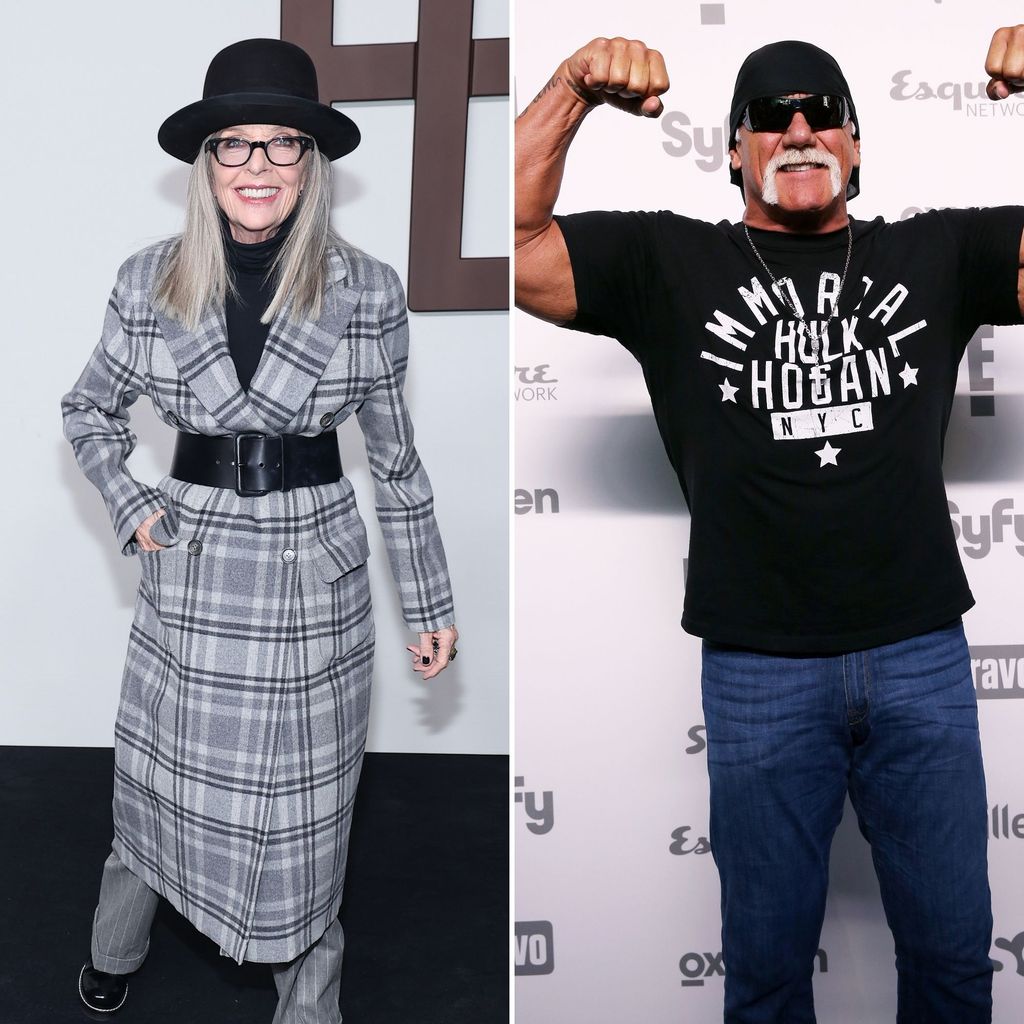
The sudden passing of Diane Keaton on October 11, 2025, at 79 years old, prompted a wave of sorrow and tributes for an individual who impacted innumerable people through her artistic contributions. Keaton graced the screen in beloved films like Annie Hall, The First Wives Club, and Something’s Gotta Give — films that many grew up watching and enjoy revisiting when the mood is right.
However, in the days following her demise, her death also ignited more serious discussions concerning aspects of the late actress’s life that weren't as universally admired, such as her enduring friendship with and defense of her former boyfriend, Woody Allen. The filmmaker, who wed Soon Yi Previn, the daughter of his ex-partner Mia Farrow, in December 1997, was also accused of sexually assaulting his adopted daughter with Mia, Dylan Farrow.
As Keaton, who adopted her own daughter and son in her 50s and famously championed her decision to remain unmarried for most of her adult life, was lauded for her feminist perspectives and unconventional choices, many found it challenging to reconcile their perception — or perhaps their idealized image — of who they thought she was with who she might have truly been.
That reaction isn’t exclusive to Keaton’s death, Dr. Wilsa Charles Malveaux shared with Us Weekly in a phone interview, and it’s also a deeply human response rooted in “not just the movies and the roles” a celebrity like Keaton portrays, “but even just what they let people see.”
Diane Keaton's Dating History Through the Years
Because it’s easy to cultivate a one-sided connection with the actors, artists, musicians, and athletes so many of us look up to, it's sometimes harder to remember that public figures often lead a double existence: “You have the person, the complete, actual human being — the other half of their true self — that we typically don’t get to observe,” Malveaux further explained. “I believe people get caught up admiring, and in some instances, idolizing, the public image and overlook that it’s still a human being. And nobody is entirely good or entirely bad. We all possess imperfections.”
This dynamic was evident after the deaths of Hulk Hogan, who passed away on July 24, 2025, at 71, and NBA star Kobe Bryant, who died on January 26, 2020, at 41. Both men received widespread praise immediately following their deaths, but, similar to Keaton, they triggered broader conversations about their complex pasts in the days and weeks thereafter.
(Hogan used racist epithets to describe his daughter’s former boyfriend in 2007, and stated in the same discussion that, “I am a racist, to a point.” He later apologized for using the term. Bryant was accused of felony sexual assault in July 2003; the criminal charges were dropped the following year.)
Perhaps one of the more perplexing realities many fans encounter after the death of a public figure with a controversial history is that other celebrated individuals — often also highly admired by the public — will often come forward to defend the deceased. This can lead one to question their own perceptions and convictions.
“In Diane Keaton’s case, supporting Woody Allen, we are aware of what has been alleged about him by his daughter and by his ex-partner,” Malveaux stated. “And there is certainly a need and an imperative to believe survivors of sexual assault. We don’t know the nature of his relationship with Diane Keaton, but she wasn’t just backing some random acquaintance.”
She elaborated: “There are individuals and other celebrities, too, who believed him when he claimed innocence and denied the allegations. We are, in a way, judging matters through the court of public opinion and based on information we gather from the media, social media, and the press — but that isn’t the complete picture, so it’s genuinely difficult for us to know [how to feel].”
According to Malveaux, this is the juncture at which cognitive dissonance plays a significant role in what a person decides next. “So, essentially, you have two conflicting notions: you believe this person is virtuous and aligns with your moral principles — but then you discover they are linked to a heinous crime. These two ideas don’t coexist harmoniously in your mind and they cause you discomfort.”
The outcome is usually one of three possibilities, she added. An individual will modify their beliefs to suit the new reality as they now understand it, or they’ll conclude “they no longer consider this a good person.” With this resolution, “those two concepts are no longer in opposition.”
Some individuals will also opt to “disregard the aspect of the idea that is troubling to them. They will simply ignore the accusations, for instance, or they will steer clear of situations that might emphasize where those two things clash.”
This pattern of behavior is particularly pertinent when considering the lives and legacies of Keaton, Hogan, and Bryant. For many, Keaton will forever remain an extraordinary actress and an inspiration for women, despite her support for a man who allegedly harmed a woman. Hogan will also be remembered as a wrestler who motivated others — including Black wrestlers such as Kazeem Famuyide — to pursue the sport, despite the racism he admitted to. And Bryant, a father of four daughters and a coach to many young girls in his later years, will also always be the man accused of sexual assault.
Ultimately, this is where the perennial question arises: is it possible to separate the artistic creation from its creator? I personally have two Harry Potter-themed tattoos that I acquired in 2012 and 2015, respectively — years before author J. K. Rowling first expressed her anti-trans views. I consider myself a staunch advocate for the LGBTQ+ community, and I have often wondered if I should alter the tattoos in some meaningful way. But they remain, because there’s a part of me — the part that first picked up Harry Potter and the Sorcerer’s Stone in 1999 and was introduced to a universe that sustained me through challenges and triumphs for years — that still cherishes the series and everything it has brought into my existence.
Perhaps one approach to alleviating the conflicting aspects of this discussion is realizing that when we laud a celebrity, we are not truly celebrating that entire individual. “We need to acknowledge how much we are projecting onto the public image and the persona” that someone presents, Malveaux told Us. “We need to recognize that even though we might become fond of the persona, they are still a human being, and we shouldn’t be surprised if something surfaces that doesn’t align with our values.”
Most crucially, she also stated, “We must acknowledge that [in any given situation] we do not possess all the facts. As much information as we may have access to, it is not the complete picture.”
Woody Allen Reacts to 'Annie Hall' Costar and Ex Diane Keaton's Death
In the end, it is incumbent upon each of us to reconcile our personal values with how we consume popular culture and whom we individually admire, celebrate, and look up to. For me, that has meant refraining from engaging directly with Bryant’s legacy but gladly conversing with some of the now-grown women he coached; it also signifies that I’ll likely retain my Harry Potter tattoos and will certainly continue to watch a Diane Keaton film from time to time (I've never been a wrestling enthusiast and have no desire to become one). That is something I am content living with for the present — and it is something that I, and all of us, always have the capacity to alter in the future if that is what we choose to do.