Drew Barrymore Finds Levity and No Regrets in Her Adolescent Rehabilitation
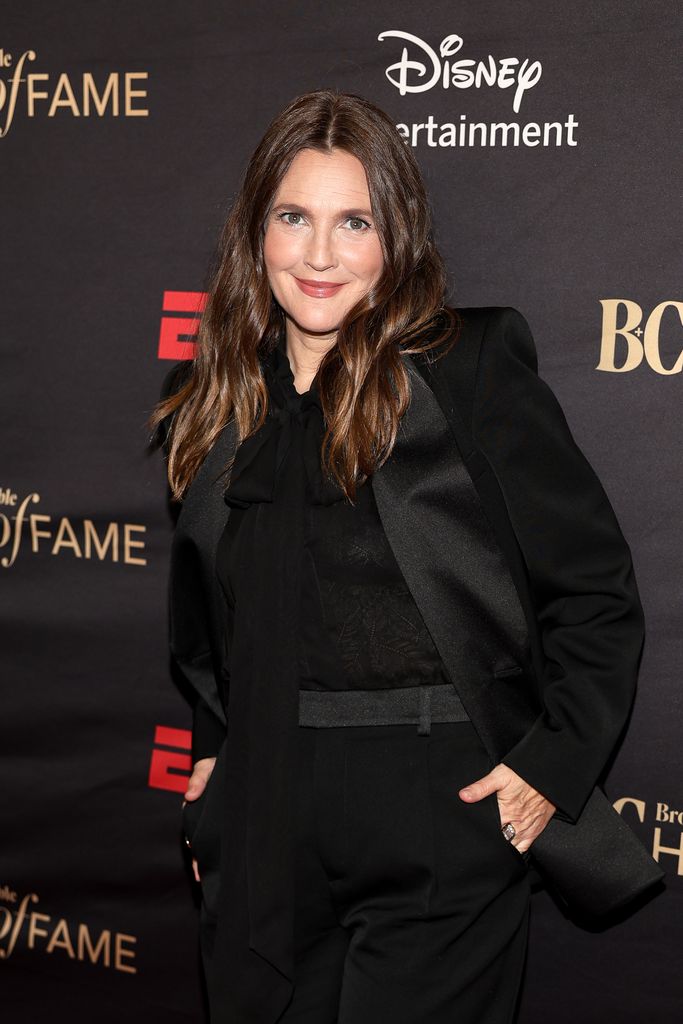
Drew Barrymore reflects on her adolescent period, expressing no regrets whatsoever.
During the Friday, October 24, episode of The Drew Barrymore Show, Barrymore confided in Mae Martin, “I, too, was removed from my home and placed in an institution for two years,” speaking about her time in a teen drug rehabilitation center, and stating that receiving assistance “was the most beneficial experience of my life.”
Martin, 38, replied, “That was news to me. I mean, I was aware you had a rebellious youth — as did I, and I also attended rehab and such — but I wasn't aware you were in one of those specific types of facilities.”
The actor from Wayward, a movie depicting two adolescents at a school for troubled young people, revealed that the narrative draws partial inspiration from Martin’s childhood companion, Nicole, who participated in a comparable program.
Drew Barrymore States That Lacking a 'Conventional Family' Is 'Heartbreaking'
Barrymore communicated to Martin, who identifies as nonbinary and uses they/them pronouns, that their depiction of such an establishment was remarkably precise.
She commented, “I wasn't aware of that about you, but observing the series, its realism was striking.” She added, “It felt excessively genuine to me in that aspect, making it clear you were presenting a truly authentic viewpoint.”
Martin concurred, mentioning that now, in adulthood, they possess “a strong sense of protectiveness” toward young individuals potentially enduring comparable challenges.
They elaborated, “And I'm not sure about you, but currently, as an adult, I feel deeply protective of adolescents, having undergone the experience of being labeled with a disorder at such an early age for behaviors that are somewhat… yes, I believe that entire experience informed the work.”
Both also concurred that viewing the show isn't a somber or disheartening ordeal, notwithstanding its theme. Barrymore further disclosed she encountered a form of emotional collapse at age 40, but remarked that her circumstances have since vastly improved.
She expressed, “We strive to recover, ideally, and we discover individuals who prompt us to speak honestly and ultimately embrace the antithesis of shame, which typically accompanies any impulsive conduct or societal declarations like ‘that's unsuitable for your age’ or ‘your actions are ungovernable.’” She concluded, “That feeling is shame. And to exist under the burden of shame is debilitating.”
Barrymore further revealed that, contrary to common assumption, she discovered a sense of “levity” while undergoing rehabilitation.
She explained, “I realize that may sound unbelievable, but it offered encouragement to articulate my truths, to be courageous, and to perceive both humor and strength in my personal path.” She continued, “And genuinely, it's the most positive event that ever occurred to me. I cherish much of it as sacred, yet it was far from simple. It was incredibly difficult, and I recognized that the sentiment you conveyed in the series authentically reflects a life journey where one must be shattered before healing.”
Barrymore has previously spoken openly about her challenging history, recounting her personal experiences in an exclusive conversation with Us in February 2025.
She reminisced, “My mother entertained a diverse array of individuals.” She continued, “The environment wasn't as secure as it ought to have been — however, in my younger years, it felt more fantastical. My perception of not having a typical childhood doesn't equate to feeling deprived of one. It simply wasn't a conventional, innocent youth, yet I never harbor resentment about it.”
The actress from 50 First Dates commenced using intoxicants such as alcohol at age 9 and cocaine at age 12.
Drew Barrymore and Dermot Mulroney Shed Tears During the ‘Bad Girls’ Get-Together
She further stated, “The mere idea of ‘no’ fueled my rebelliousness.” She elaborated, “It was as though it didn't pertain to me. ‘No’ incensed me, but it turns out that ‘no’ is crucial and offers significant advantages. It can significantly enhance your sense of security and being looked after, even if you resent it initially. It implies that you are being supported or contained by someone or something.”
Should you or an acquaintance be grappling with substance dependency, please reach out to the Substance Abuse and Mental Health Services Administration (SAMHSA) National Helpline at 1-800-662-HELP (4357).