NY Times Sues Justin Baldoni Seeking $150K After Actor's Defamation Claim Dismissed
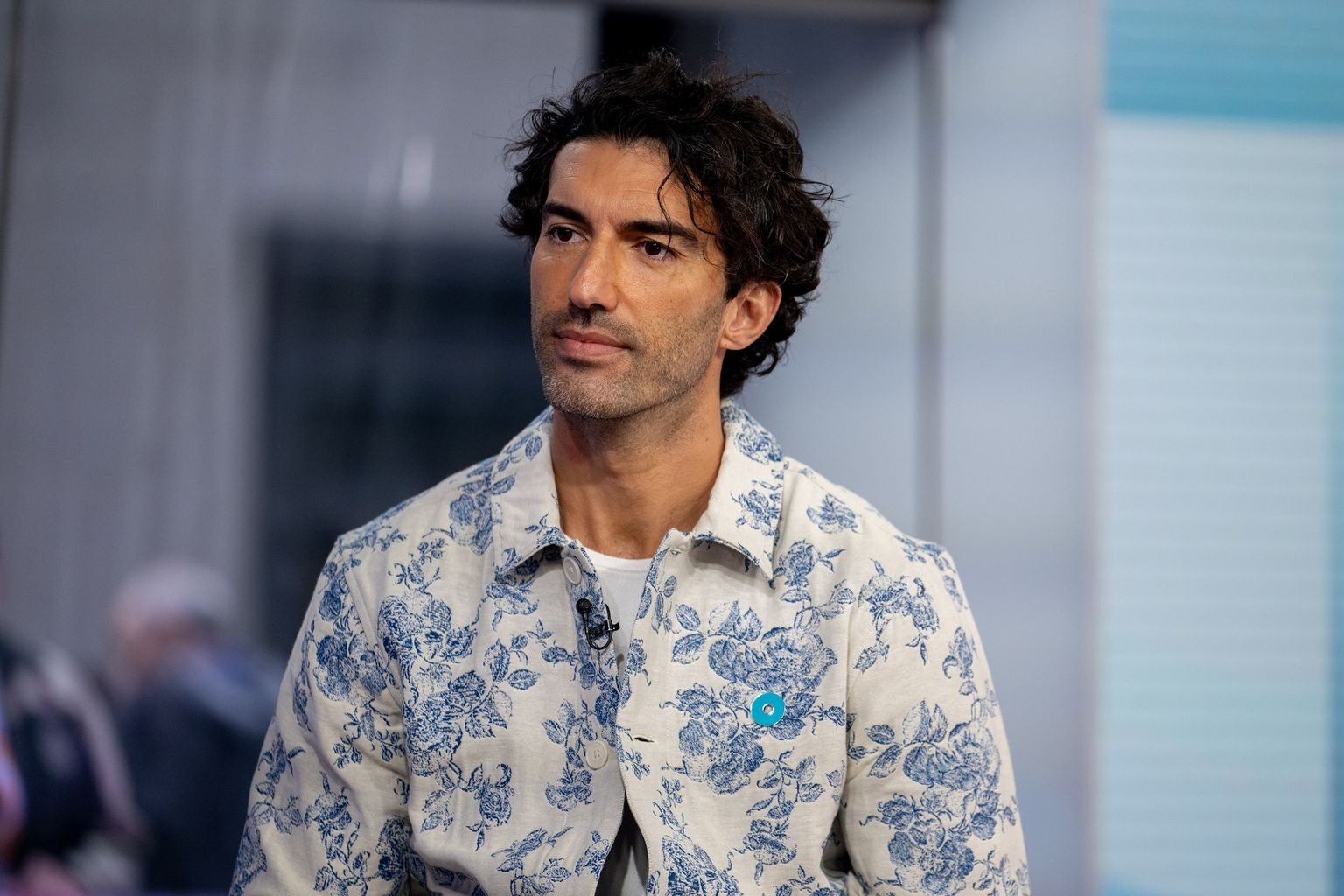
In September 2025, The New York Times initiated legal action against Justin Baldoni's production entity, Wayfarer Studios LLC, stemming from a previously dismissed defamation claim Wayfarer had brought against the newspaper.
Baldoni and Wayfarer had initially filed a $250 million lawsuit against The New York Times in December 2024, alleging that the publication defamed the actor through its reporting on Blake Lively’s sexual harassment complaint concerning her director and costar on "It Ends With Us."
Baldoni and his partners claimed that The New York Times deliberately selected specific information to misguide its audience regarding his disagreement with Lively, as presented in their December 2024 piece titled "We Can Bury Anyone: Inside a Hollywood Smear Machine." The New York Times has consistently affirmed the accuracy of its journalistic work.
June 2025 marked a major legal defeat for Baldoni and Wayfarer when Judge Lewis J. Liman rejected Baldoni's defamation lawsuit against The New York Times, along with his $400 million countersuit against Lively. Court records acquired by Us Weekly indicate that three months subsequent to this, The New York Times commenced legal action against Wayfarer, seeking to recover a minimum of $150,000 in expenses incurred due to Baldoni's invalidated legal challenge.
Justin Baldoni Addresses Situation Publicly, Posts Heartfelt Message on Instagram
Continue below for a comprehensive overview of the legal matter.
What Prompted Justin Baldoni's Lawsuit Against The New York Times?
Us verified that Baldoni and Wayfarer were part of a collective of 10 complainants — which also comprised public relations professionals Melissa Nathan and Jennifer Abel, alongside It Ends With Us producers James Heath and Steve Saraowitz — who initiated legal action against The New York Times concerning its December 2024 piece titled "We Can Bury Anyone: Inside a Hollywood Smear Machine."
A primary grievance was their assertion that The New York Times and its journalists, Megan Twohey, Mike McIntire, and Julie Tate, allegedly “selectively presented and modified communications, removing vital context” to portray Lively in a more positive light in her sexual harassment complaint against Baldoni. The legal filing contended that Lively — against whom the actor also simultaneously filed a countersuit — orchestrated a “calculated and deceptive” media strategy by fabricating “sexual harassment claims to gain complete authority over all facets of the production [of It Ends With Us].”
In their legal action, Baldoni and the other plaintiffs asserted, “The Times' report predominantly relied on Lively's unsubstantiated and self-benefiting account, adopting it almost word-for-word, while ignoring substantial evidence that disproved her assertions and revealed her actual intentions.”
Baldoni explicitly challenged the claims made in the Times article, which stated he frequently went into Lively's It Ends With Us trailer while she was nursing and on one occasion displayed a “pornographic video” showing the spouse of another producer.
Baldoni's legal representatives asserted in their filing, “This allegation is unequivocally ridiculous.” They continued, “The video referred to was a (non-explicit) recording of [producer Jamey Heath’s] wife during a home birth — a deeply private moment devoid of any sexual connotation. To twist this harmless incident into an act of sexual harassment is egregious and demonstrates the extreme measures Lively and her associates are prepared to take to slander the plaintiffs.”
Responding to Wayfarer's defamation claim, a representative for The New York Times informed Us that the responsibility of “an unbiased news entity is to pursue factual information wherever it may direct.”
“Our narrative was thoroughly and diligently investigated. It stemmed from an examination of thousands of pages of original materials, including the exact and extensive text messages and emails cited in the piece,” a spokesperson for the publication replied. They added, “These same texts and emails formed the core of a discrimination complaint lodged in California by Blake Lively against Justin Baldoni and his colleagues.”
The spokesperson stated that The New York Times intended to “forcefully contest the legal action.”
Court Official Reveals Texts and Emails in Justin Baldoni and Blake Lively Legal Dispute
What Led to the Rejection of Justin Baldoni’s Lawsuit Against The New York Times?
Baldoni faced a twofold disappointment in June 2025 as Judge Liman rejected both his legal action against The New York Times and his $400 million counterclaim against Lively.
In his decision and order filed on June 9, Judge Liman determined, “The Wayfarer Parties have not asserted that Lively is accountable for any declarations apart from those in her CRD complaint, which are protected.” He further stated, “The Wayfarer Parties have claimed that [Lively’s husband Ryan] Reynolds and [publicist Leslie] Sloane issued further statements accusing Baldoni of sexual wrongdoing, and that the Times made additional statements alleging the Wayfarer Parties were involved in a defamation campaign.”
The judge continued, “However, the Wayfarer Parties have not put forth that Reynolds, Sloane, or the Times would have genuinely questioned the veracity of these statements given the information accessible to them, which is a prerequisite for defamation liability under relevant statutes. The additional claims brought by the Wayfarer Parties are also unsuccessful. Therefore, the Amended Complaint is to be dismissed completely.”
Judge Liman offered Baldoni and his legal representatives an opportunity to revise the invalidated claims concerning breach of implied covenant and tortious interference with contract, but the filmmaker's attorneys chose not to pursue this option.
In June 2025, Baldoni’s lawyer, Bryan Freedman, informed People, “The Court’s ruling on the motion to dismiss has absolutely no bearing on the fact that no harassment or smear campaign occurred, and it does not impact our strong defense against Ms. Lively’s allegations.” He added, “Discovery is moving forward [in Lively’s lawsuit], and we are convinced that we will succeed against these accusations, which lack factual support. Rather than amending the current claims, our clients will explore other legal avenues open to them.”
Lively’s legal counsel, Esra Hudson and Mike Gottlieb, celebrated the rejection of the countersuit as “an absolute triumph and a full exoneration for Blake Lively,” as stated in their communication to Us.
“As we have maintained from the outset, this ‘$400 million’ lawsuit was a fabrication, and the Court recognized its true nature,” they commented then. “We anticipate the subsequent phase, which involves pursuing legal costs, triple damages, and punitive damages against Baldoni, Sarowitz, Nathan, and the other Wayfarer Parties who engaged in this oppressive legal action.”
What Was The New York Times' Rationale for Suing Justin Baldoni and Wayfarer?
According to court documents obtained by Us, The New York Times Company pursued “compensatory and punitive damages” amounting to at least $150,000, linked to Baldoni’s overturned defamation allegation, in a petition submitted to New York’s Supreme Court in September 2025.
The corporation charged Baldoni with contravening New York’s anti-SLAPP legislation, which targets lawsuits designed to “suppress freedom of expression and burden publishers by compelling them to allocate time and funds to unwarranted legal battles.” Should Baldoni be determined to have breached this statute, he and his Wayfarer colleagues could face demands to cover “court costs and legal fees” associated with their initial lawsuit.
“It is now broadly accepted that journalistic reporting on subjects of public concern is covered by this law,” the New York Times lawsuit claimed.
The legal document accused Baldoni of improperly pursuing claims of “false light” and “promissory fraud” against The New York Times, specifically concerning the release time of “We Can Bury Anyone: Inside a Hollywood Smear Machine.” In his initial complaint, Baldoni alleged that The New York Times broke a pledge to delay the article's publication until “noon on December 21, 2024,” which would have allowed the filmmaker sufficient time to formulate a reply.
The New York Times released the piece shortly after 10 a.m. ET on December 21, but this occurred only after “obtaining feedback from the legal representative for Wayfarer and its associated entities,” as stated by the publication.
“The Amended Complaint attempted to interpret the email as a guarantee that the Article would not be released prior to noon on December 21, 2024,” the Times' legal counsel contended.
Blake Lively, Ryan Reynolds 'Experience Relief' Following Dismissal of Justin Baldoni Lawsuit
The New York Times Company later contended that Judge Liman’s decision in June 2025 to throw out Baldoni’s defamation claim demonstrated that the actor’s allegations “were without factual or legal foundation.”
“The District Court's judgment unequivocally shows that Wayfarer and its associated companies initiated and maintained the legal action against The Times without significant factual or legal grounds,” The New York Times affirmed.
The New York Times Company is requesting “reasonable expenses, legal fees, and outlays” in accordance with New York civil rights legislation, in addition to “any further remedy [the] Court considers fair and appropriate.”
Regarding this most recent lawsuit, Baldoni’s attorney Freedman commented to People: “Regardless of the outcome, we will not yield to influential figures, even when confronting seemingly insurmountable challenges.”
“We persist in standing firm for a clear purpose: the quest for truth, even when facing powerful adversaries,” Freedman elaborated. “Our refusal to betray our principles, irrespective of the difficulties or results, stems from a fundamental belief that defending truth and justice is important. If existing laws shield established media in this fashion, then perhaps it is our duty to initiate that reform.”
Concurrently, Lively’s sexual harassment court case involving Baldoni is anticipated to commence in March 2026.