Africa’s Style Game: Nations Dazzle in Traditional Attire at the 2025 Africa Cup of Nations.
The 2025 Africa Cup of Nations (CAN), hosted in Morocco, is rapidly becoming as much a showcase for traditional African attire as it is for football prowess. National teams are increasingly opting for culturally rich outfits instead of, or alongside, their standard jerseys, generating significant buzz and celebrating African craftsmanship on a global stage.
Several teams have already made a statement with their sartorial choices. Nigeria’s Super Eagles arrived in beautifully embroidered green kaftans and matching hats, while Mali’s Eagles sported striking black and gold or blue and white bogolans. Zimbabwe’s Warriors showcased colourfully detailed suits, all of which have garnered widespread praise on social media, though many of the designers behind these creations remain uncredited. The CAN’s inherent passion and broad reach are powerfully highlighting the artistry and fashion emerging from across the continent.
Côte d’Ivoire, the reigning 2024 African champions, are particularly prominent in this trend. The Ivorian players, nicknamed the Elephants, arrived in Morocco wearing stunning Kita cloth trench coats. These coats, designed by Ivorian-Lebanese designer Elie Kuame, were adorned with Adinkra motifs – symbolic representations drawn from the heritage of the Akan people – in white and gold thread, layered over crisp white shirts and trousers. Kuame’s “prêt-à-couture” brand, established in 2006 and based in Abidjan since 2017, champions African fashion as a luxury offering, showcasing its diverse beauty.
Alvin Junior Mak, the designer behind the Democratic Republic of Congo (DRC) outfits, is another rising star. Born in the DRC and later relocating to Paris, Mak deliberately chose to produce the pieces directly within the DRC, collaborating with local artisans. The result is a collection of sculpted jackets featuring the leopard motif – a symbol closely associated with the DRC national team – branded with his sustainable ready-to-wear label, JmakxParis.
Burkina Faso’s Étalons have also embraced the trend, partnering with Burkinabé brand Free Design. Designer Ahmed Ouedraogo created a white tunic featuring green and red stripes – the colours of the national flag – embellished with symbolic details on the collar and chest. The outfit is completed with matching white trousers and a hat, representing a proud display of national identity.
Beyond the national teams, global brands are also capitalizing on the CAN’s cultural momentum. Daily Paper is collaborating with Moroccan artist Hassan Hajjaj on his Kech United project, a cultural program in Marrakech that blends football, art, fashion, and music. This partnership highlights Daily Paper’s commitment to African culture and its connection with global youth communities through a series of flagship events.
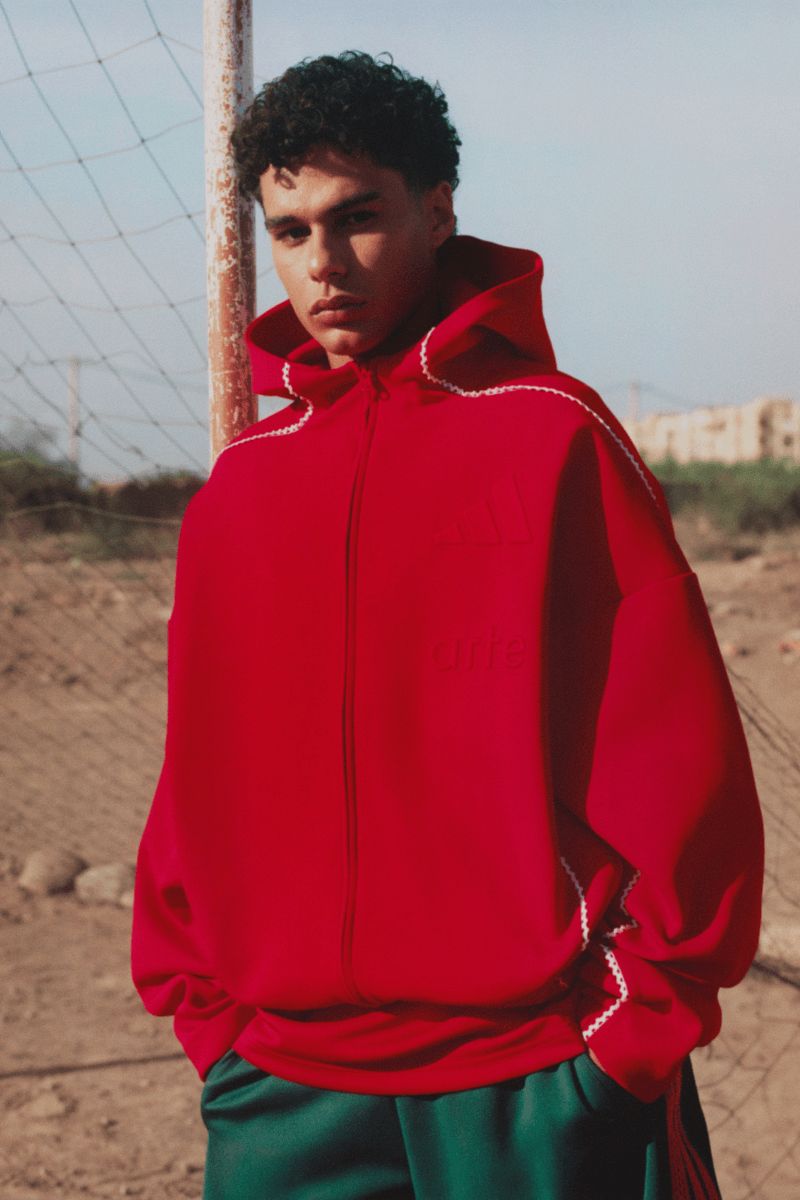
Further collaborations include Arte Antwerp and Adidas, who have jointly created a collection inspired by Morocco’s Atlas Lions. Spotted on two players before their opening match, the collection features a beige knitted jumper with green Adidas stripes and red logos, a red sweatshirt with white piping, and various tops in red, white, or black with complementary detailing, alongside a black leather jacket.
Puma is also making a significant impact. As the official ball supplier for the CAN, they’ve unveiled the Itri model, featuring stars representing Morocco and geometric motifs inspired by zellige, a traditional Moroccan mosaic art. Additionally, Puma has partnered with Olympique de Marseille to release jerseys celebrating the seven African diasporas present in the city, representing countries participating in the tournament, such as Senegal, the Comoros, and Algeria.