Armani's Future Hinges on Lucrative Beauty and Eyewear Licenses as Potential Buyers Emerge
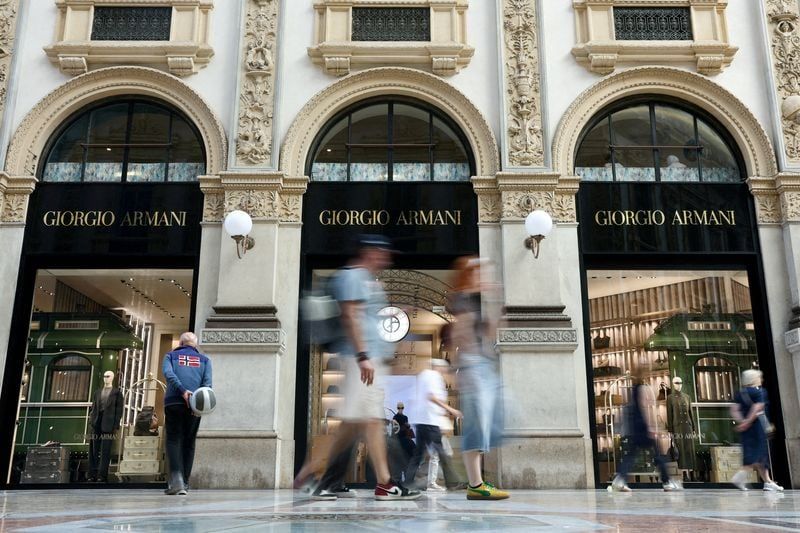
The business value of Armani extends significantly beyond its traditional roots in luxury fashion. Following the recent passing of its founder, Giorgio Armani, the designer's name is intrinsically linked to highly successful beauty and eyewear licenses. Analysts suggest that these lucrative categories will be pivotal in determining the future of the brand and crucial for any prospective buyers.
Last year, the fashion house, established five decades ago, reported revenues of €2.3 billion ($2.71 billion), marking a 5% decline from the previous year. This dip occurred amidst a global slowdown in luxury spending and a broader shift towards casualwear, which diminished the appeal of Armani’s classic suits. However, company filings reveal that this figure nearly doubles to €4.25 billion when factoring in sales from its beauty and eyewear lines, products manufactured under license since 1988 by L’Oréal and EssilorLuxottica, respectively.
Giorgio Armani's will, which was published shortly after his death on September 4, explicitly named L’Oréal and EssilorLuxottica, alongside French luxury conglomerate LVMH, as potential purchasers of his iconic business. Industry sources and analysts estimate that Armani-branded perfumes and beauty products within L’Oréal's extensive portfolio generate approximately €1.5 billion annually, while Armani eyewear contributes around €500 million to EssilorLuxottica’s sales. Reuters' calculations, based on company filings, indicate that the Armani Group receives just over one-tenth of these substantial sales as royalties.
According to an industry insider who has worked with a potential suitor, the sales of these licensed products will be a fundamental element in determining Armani's valuation in any potential transaction. While the Armani Group's operating profit, heavily reliant on its fashion division, contracted to just 3% of net revenue last year, the beauty and eyewear segments boast considerably higher profitability. L’Oréal reported an impressive overall operating profit margin of 20% last year, with EssilorLuxottica's standing at nearly 17%, underscoring the financial strength of these licensed categories.
HSBC analyst Erwan Rambourg noted that while the Armani brand represents "great eyewear, great beauty, a great legacy," its ready-to-wear fashion division "is not the hottest on the planet" today. Recognizing the critical importance of these collaborations, Giorgio Armani's will mandates that priority for any sale should be given to groups with whom his company "already has a partnership." The license agreement with EssilorLuxottica, in which the designer held a 2% stake, was renewed in 2023 for a 15-year term, while the partnership with L’Oréal extends until 2050.
Both EssilorLuxottica and L’Oréal confirmed last week their intentions to assess a possible investment in Armani, with the will outlining an initial 15% stake to be held by them. A subsequent, larger stake is slated for transfer to the same buyer or could be offered via a public listing. LVMH, under the control of French billionaire Bernard Arnault, expressed its honor at being named as a potential partner in the will.
For L’Oréal, maintaining control of the significant Armani beauty license through a large stake acquisition would be more strategically impactful than for EssilorLuxottica. A potential bid by L’Oréal for Armani could mirror the approach taken by beauty giant Estée Lauder, which acquired fashion label Tom Ford in 2022, retaining the fragrances while granting long-term licenses for apparel and eyewear to other entities. Morningstar analyst Dan Su highlighted Armani's "highly regarded" status as a beauty brand and its position as one of the most recognized names in the booming men's fragrance market. L’Oréal CEO Nicolas Hieronimus even described its “Stronger With You” fragrance as a "phenomenon" among younger men. However, integrating and managing a full-fledged fashion label in addition to its core beauty business could introduce considerable complexity for L’Oréal.
Despite their long-standing collaboration, a full acquisition of Armani could prove challenging for EssilorLuxottica. While the company ventured into fashion by acquiring streetwear brand Supreme in 2024, it has consistently emphasized its overarching goal of evolving into a med-tech group, making a substantial fashion house acquisition somewhat divergent from its stated strategic direction.
Conversely, LVMH, with its profound and extensive expertise across the luxury sector, would possess the capability to manage a comprehensive acquisition, thereby bringing the entire suite of Armani’s diverse businesses in-house, according to several industry experts. The French conglomerate could seamlessly integrate eyewear operations through its existing Thelios unit, while beauty is already a core component of its expansive portfolio.
However, LVMH might encounter difficulties in integrating Armani beauty and eyewear into its in-house operations in the immediate future, primarily due to the long-running existing licenses with L’Oréal and EssilorLuxottica. Furthermore, LVMH CEO Bernard Arnault would also need to navigate and potentially cohabit with a foundation established by Giorgio Armani, which is stipulated to hold de facto veto powers over key decisions. As analyst Erwan Rambourg succinctly put it, "LVMH and L’Oréal are like chalk and cheese," highlighting the distinct operational philosophies and strategic alignments of the named potential buyers.