August Retail Sales Surge Past Expectations Amid Economic Headwinds
U.S. retail sales demonstrated unexpected strength in August, recording their third consecutive month of solid gains as consumers increased spending across a wide array of goods and services, including dining out. This robust performance, which surpassed economists' forecasts, signals a continued resilience in the economy despite growing headwinds. However, persistent concerns over a weakening labor market and the inflationary impact of tariffs cast a shadow over this strength, posing potential downside risks to sustained consumer spending.
The Commerce Department reported a 0.6% rise in retail sales last month, following an upwardly revised 0.6% increase in July. This figure significantly exceeded the Reuters poll forecast of a 0.2% rise. On a year-over-year basis, sales were up an impressive 5.0%. While economists estimate that inflation-adjusted monthly sales rose by a more modest 0.2%, the broad nature of the increase indicates underlying consumer confidence. Ellen Zentner, chief economic strategist at Morgan Stanley Wealth Management, commented, "The American consumer appears to be in good spirits. That's good news for the economy, but it may heighten debate over how aggressively the Fed needs to cut rates."
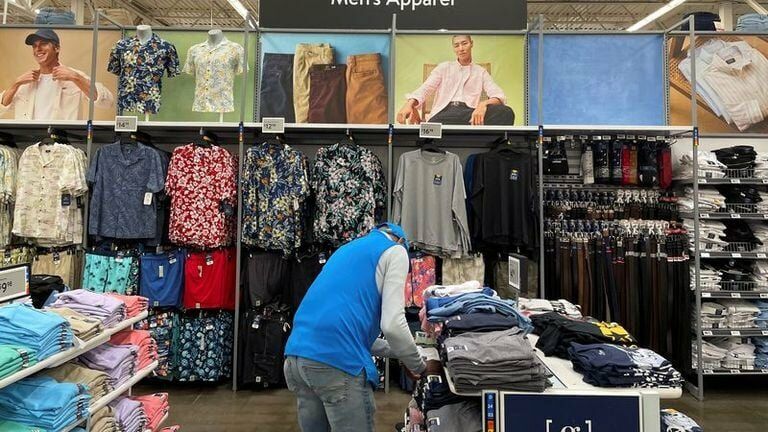
Spending increased across numerous categories. Receipts at auto dealerships rose 0.5%, though this likely reflected higher prices given a reported decline in units sold. Clothing store sales advanced 1.0%, while sporting goods, hobby, musical instrument, and book stores saw an increase of 0.8%. Food and beverage stores recorded a 0.3% rise, and service stations reported a 0.5% increase amid higher gasoline prices. Online sales experienced a significant jump of 2.0% after a 0.6% rise in July, suggesting consumers might be accelerating purchases before tariff-related price hikes fully take effect, as noted by Stephen Stanley, chief U.S. economist at Santander U.S. Capital Markets.
The consumer's willingness to spend extended to services, with sales at food services and drinking places—a key indicator of household finances—climbing 0.7% after a slight dip in July. Core retail sales, which exclude volatile categories like automobiles, gasoline, building materials, and food services, rose 0.7% last month. These core sales, closely corresponding to the consumer spending component of GDP, led the Atlanta Fed to raise its third-quarter GDP growth estimate to a 3.4% annualized rate, up from an earlier 3.1% pace, following a 3.3% growth rate in the previous quarter.
Despite the positive retail sales data, the Federal Reserve is still widely expected to implement a quarter-percentage-point interest rate cut. The main concern for the Fed remains a softening labor market, characterized by meager job gains and rising unemployment. While strong sales data might urge caution against aggressive rate cuts, it's unlikely to deter a move given widening cracks in employment. The central bank had paused its easing cycle earlier due to uncertainty surrounding the inflationary impact of import duties.
Tariffs continue to be a significant economic factor. The government reported that consumer prices in August increased by the most in seven months, driven by higher costs for food and apparel, among other products. A separate report from the Labor Department showed import prices also increased for a second consecutive month, with higher costs for consumer and capital goods and motor vehicles. Michael Hanson, an economist at J.P. Morgan, indicated that the lack of a substantial decline in import prices, despite a surge in the effective tariff rate, suggests these additional costs are being borne almost entirely by U.S. businesses and consumers, contrary to the administration's claims.
The weakening labor market poses a direct threat to the observed strength in consumer spending. A Bank of America Institute survey revealed that lower-income households are disproportionately affected by the labor market's fragility, experiencing the slowest growth in after-tax wages and salaries since 2016. The survey also highlighted weaker spending growth among younger individuals and Generation X. Samuel Tombs, chief U.S. economist at Pantheon Macroeconomics, cautioned that households no longer hold excess liquid assets, and job security concerns are rising, which could temper discretionary spending going forward.
Beyond consumer spending, other economic indicators offer a mixed picture. While a separate Fed report showed an unexpected 0.2% rise in factory production in August, partly due to a rebound in motor vehicle output, tariffs continue to cast a long shadow over the manufacturing sector. Trade policy remains fluid, with ongoing fine-tuning of country-specific deals and product-specific tariffs. Furthermore, a pending Supreme Court ruling concerning the legality of universal tariffs in November adds another layer of uncertainty to the economic outlook.