Azores Turns Textile Trash into Treasure Through Sustainable Fashion Workshops
The Regional Secretariat for the Environment and Climate Action in Portugal, based in Ponta Delgada, Azores, recently played a pivotal role in the 16th Azores Waste Week, held from November 22 to 30. This regional initiative ran concurrently with the 17th European Week for Waste Reduction, focusing efforts on crucial environmental awareness and sustainable practices. A highlight of the week was a series of creative workshops dedicated to sustainable fashion, designed to engage and educate the community on responsible textile management.
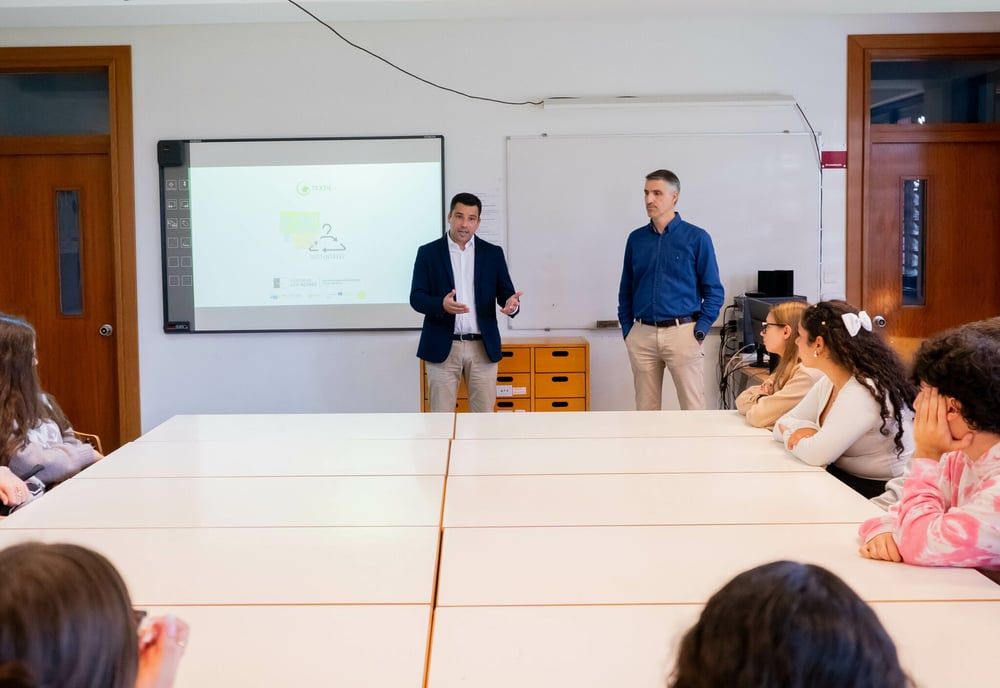
As an integral part of both the 16th Azores Waste Week and a broader regional project, a series of ten innovative workshops on sustainable fashion and environmental awareness were launched. These workshops spanned all Azorean islands, including online sessions, with the explicit goal of demonstrating how textile waste can be imaginatively repurposed. Regional Secretary for the Environment and Climate Action, Alonso Miguel, underscored this objective at the launch event held at Tomás de Borba Primary and Secondary School in Angra do Heroísmo, emphasizing the potential to give textile waste a renewed purpose.
Alonso Miguel further elaborated on the workshops' ambitions, stating that they aimed "to stimulate creativity, motivation, and critical thinking among participants." The core message was to illustrate the feasibility of transforming used clothing into novel products, fostering sustainable fashion practices, or simply extending the lifespan of existing garments and accessories. This approach seeks to instill a mindset of resourcefulness and conscious consumption within the community.
The broader impact of the Azores Waste Week was significant, encompassing 114 awareness-raising actions across the archipelago. These included 20 activities on Pico, 23 on São Miguel, 12 on Terceira, 14 on Faial, nine on Santa Maria, 10 on Graciosa, nine on São Jorge, 12 on Flores, and five on Corvo. Alonso Miguel highlighted that the initiative covered five essential thematic areas: clean-up operations; reuse and preparation for reuse; prevention and reduction at source; waste sorting and recycling; and a dedicated focus on waste electrical and electronic equipment.
Participation in these regional actions was robust, involving 143 diverse entities. This extensive network included public administration bodies, local authorities, private companies, waste management entities and operators, educational establishments, environmental associations, non-governmental organisations, and individual citizens. These collaborative efforts, carried out at a regional level, primarily aimed to foster proper waste management awareness, provide information on appropriate waste destinations, and promote prevention and reduction at source, thereby contributing to the minimisation of waste production on each island.
Alonso Miguel, speaking at the launch of the sustainable fashion workshops, also addressed the unique challenges faced by the Azores. He noted that due to the geographical location, archipelagic specificities, and the small size of the territory, the region encounters increased difficulties and significant additional costs associated with the transport, management, and treatment of waste. This context underscores the critical importance of effective waste management strategies for the islands.
For the Regional Government, waste management and the promotion of a circular economy are priority issues. The Regional Secretariat for the Environment and Climate Action is particularly focused on developing innovative solutions to ensure a reduction in waste generation and establish a sustainable management model, especially concerning challenging waste types such as textiles, as reported on the Azores government portal. This commitment reflects a proactive stance towards environmental stewardship and resource efficiency.
In response to these challenges and priorities, the 'INTERREG MAC-TEXTIL: Weaving a Sustainable Future' project was conceived. With a substantial financial allocation of approximately 200,000 euros, this project is slated for implementation in the Azores between 2025 and 2027. Its overarching goals are to significantly boost the circular economy within the textile sector, reduce imports and dependence on unsustainable textiles, and actively promote the reuse, recycling, and efficient management of textile waste across Macaronesian regions, specifically in the Azores and Madeira.
In practical terms, the MAC-TEXTIL project aims to facilitate a transition towards a more sustainable production and consumption model. This involves reducing the fraction of textile waste that is incinerated or sent to landfills, while simultaneously encouraging its reuse and recycling through the application of technological solutions, creative approaches, and management and cooperation models tailored to the regional context. The project is a collaborative effort, involving regional and local governments, academia, with participation from universities such as the Universities of the Azores, Las Palmas de Gran Canaria, La Laguna (Tenerife), Cape Verde, and São Tomé and Príncipe, alongside various other technology centers. It also incorporates civil society organizations and NGOs, including AJITER and the Gaspar Frutuoso Foundation, as well as the Madeira Chamber of Commerce and Industry, signifying a broad, multi-stakeholder commitment.
Concluding his remarks at the event, Alonso Miguel stressed the imperative to "act, innovate and change habits." He emphasized that textile waste management is not solely the responsibility of governments, companies, or the fashion industry. Instead, it is a collective and individual responsibility for each person, beginning with small, impactful actions in daily life. This call to action highlights the critical role of personal commitment in fostering a more sustainable future for the Azores and beyond.