Bangladesh Textiles Embrace AI for Enhanced Traceability and Sustainability
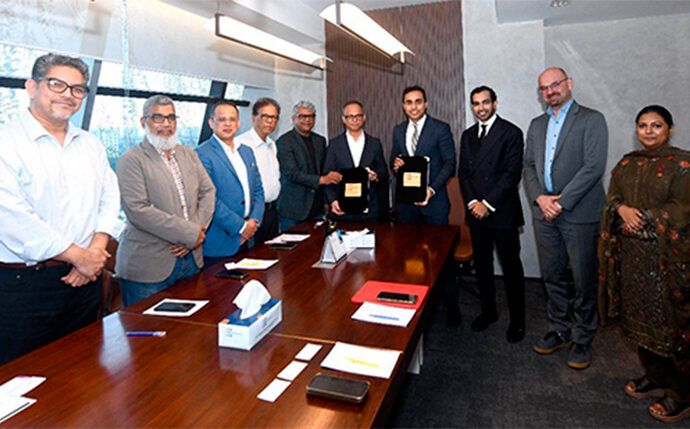
Bangladesh's textile sector is embarking on a significant digital transformation, following an announcement from its leading manufacturers' federation, the Bangladesh Garment Manufacturers and Exporters Association (BGMEA). The BGMEA has forged a strategic partnership with Digital Bridge Partner, an expert in B2B ecosystems, to integrate artificial intelligence (AI) into the industry. This ambitious project aims to substantially enhance traceability and competitiveness across the local manufacturing landscape.
A cornerstone of this initiative is the imminent rollout of a Digital Factory Passport (DFP) across factories in Bangladesh. This innovative tool is designed to function as a comprehensive framework for social and environmental compliance for manufacturers. Crucially, the DFP is expected to streamline and simplify the often time-consuming brand-commissioned audits that have historically posed a significant challenge for the textile sector. The BGMEA emphasized that the DFP will act as a unified digital platform, optimizing factory-level data management and reporting, thereby reducing "audit fatigue" and boosting the efficiency of monitoring sustainability performance.
The BGMEA's leadership, including President Mahmud Hasan Khan and Vice-President Vidiya Amrit Khan, views this collaboration as a pivotal step towards elevating Bangladesh's global standing. Their vision is to position the nation as a premier destination for international brands seeking to source garments produced under ethical conditions, with due respect for both the environment and workers' rights. This strategic move underscores a broader commitment to sustainable and responsible manufacturing practices.
The stakes are particularly high for Bangladesh, a country deeply reliant on its textile sector, which accounts for an impressive 80% of its exports, 20% of its GDP, and provides direct employment for four million people. The industry has faced challenges, including a 20% tariff imposed by Donald Trump at the US border. Despite this, the US ranks Bangladesh as its third-largest apparel supplier, following China and Vietnam, while the European Union recognizes it as its second-largest supplier of textiles and clothing. Historically, this strong position was secured partly due to competitive labor costs, especially as China saw a rise in its minimum wage in the early 2010s, though this has also led to a high dependence on the sector.
Recent trade figures further illustrate the industry's significant contribution. In 2024, the United States imported $7.5 billion worth of Bangladeshi textiles and clothing, placing Bangladesh behind only China, Vietnam, and India among its top suppliers. Concurrently, the European Union's imports of Bangladeshi textiles and clothing reached €4.3 billion in the same year, reaffirming the country's vital role in the global apparel supply chain.