Barbour Jackets and the Rise of Cherished Imperfection
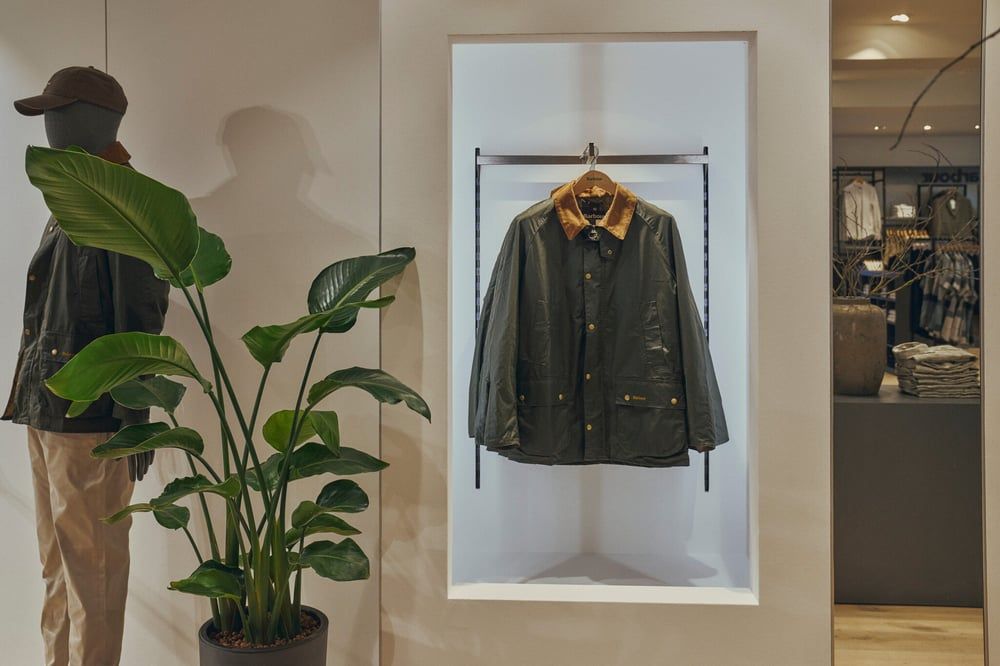
The crisp air of autumn has finally settled over New York City, bringing with it a subtle shift in the urban landscape. The streets no longer carry the distinct scent of summer's decaying refuse, and while dinner plans are enthusiastically discussed, calendars remain mysteriously full until November. Subway cars are now commanded by boisterous high schoolers, and among the city's finance professionals, one particular sartorial cue signals the season's true arrival: the Barbour jacket.
This embrace of the Barbour jacket, though seemingly a minor detail, carries a deep historical resonance. Tracing its roots to 1894, the Barbour brand was founded by Scotsman John Barbour, who initially sold rugged oilskins to sailors and fishermen braving the harsh weather of northeastern England. By the 1930s, its durable outerwear had become standard issue for motorcyclists and even the British submarine service. The company's prestige was further cemented by royal warrants, signifying its regular use by kings and queens during their outdoor pursuits, notably on Scotland's often-damp Balmoral estate.
Today, the Barbour jacket serves as a distinct emblem of a particular social stratum, often worn by individuals whose professions rarely expose them to inclement weather. It functions as a classic coastal shibboleth, where its power as a signifier intensifies with age and wear. Patches of mending stitches hint at forgotten mishaps, while faded shoulder spots evoke distant college adventures. Each jacket, in its unique state of wear, tells a deeply personal story known only to its owner.
A Barbour jacket isn't conventionally "attractive" in the glossy fashion sense; rather, it exudes an air of practical competence. Priced at approximately $400, it's comparable to brands like Patagonia, yet often carries a deeper sentimental value, frequently being a gift passed down through generations. Its robust brass zippers operate flawlessly, the tartan lining offers comforting warmth without overheating, and the perpetually askew collar lends it an effortlessly rakish charm. The brand even accommodates requests for longer sleeves by simply adding extra cotton, a practice many wish other apparel companies would adopt.
Paul Stephan, Barbour's Vice President of Marketing for North America, attests to this profound connection, noting, "One of the unique things about our brand is that we always hear the stories that come with the garments. 'This was bought for me by my parents or handed down for me by my grandparents.' We’ve heard stories of a jacket that’s lasted 40, 50 years." This remarkable longevity is sustained by a simple yet crucial secret: rewaxing.
Rewaxing is the key to maintaining a Barbour jacket's iconic water resistance, nurturing its material, and protecting it from wear. Historically, owners would mail their coats for service or visit a Barbour or Orvis store. Now, convenience has improved significantly; jackets can be dropped off at various retail locations, including Nordstrom, and returned within approximately four weeks. For an immersive experience, one can even visit Barbour boutiques in places like Washington's Georgetown or New York's Upper East Side to witness the rewaxing process firsthand, a strangely calming 15-minute spectacle akin to watching crayons being made.
Despite its benefits, the art of rewaxing remains somewhat of an insider secret. Many Barbour owners are unaware of the practice, only realizing its importance when their jacket has lost its protective qualities. However, this niche knowledge is slowly spreading, fueled by a growing consumer appreciation for items that exhibit genuine patina—the beautiful signs of prolonged use and affection.
This trend extends beyond Barbour. Recently, GQ highlighted how Gen Z shoppers are enthusiastically acquiring weathered LL Bean Boat and Totes, originally priced around $40, for hundreds of dollars, valuing the natural wear and tear. Similarly, many households, like the author's, possess a collection of well-used, stained, and imperfect items—like an LL Bean tote with the wrong address—that have become cherished, ironically more valuable because of their imperfections.
Recognizing this market shift, Barbour launched its "Re-Loved" program in 2019, allowing customers to sell back their excessively tattered jackets for an $80 store credit. Company artisans then meticulously clean, mend, and rewax these garments, sometimes adding distinctive contrast-color patches or tartan to give them new personality, before reselling them. Thousands of these "Re-Loved" jackets, starting at $325, have found new homes, appealing to consumers who appreciate character and a more accessible price point, particularly younger, environmentally conscious shoppers already drawn to secondhand goods.
Paul Stephan emphasizes the program's success: "We’ll take in that jacket, clean, repair it to make it feel like new again. But it comes with the character that it was preowned, and there is such a big market for that nowadays. Shoppers will come straight to Re-Loved sometimes, in part because it’s a more approachable price point. Talk about a younger, let’s say, a college consumer: They’re shopping second hand anyway. This lets us be part of the conversation." This year, designer Paul Smith even collaborated on his own line of "Re-Loved" Barbours, featuring vibrant purple patches and unique cuts.
This widespread glorification of the well-worn harkens back to a childhood fascination with hand-me-downs—like the author's father's butter-soft, beat-up college jeans. The enduring appeal of genuine wear stands in stark contrast to factory-applied distressing, which rarely achieves the authentic look of long-term use. This distinction is central to programs like Levi Strauss & Co.’s "Secondhand" initiative, launched in 2020, which buys back and resells denim to extend its life and offer "character at a discount."
Numerous other American companies, including Coach, Carhartt, Patagonia, Arc’teryx, and Filson, have introduced similar "re-loved" programs, specifically targeting Gen Z and millennial consumers who prioritize sustainability and durability. The rise of resale sites and a younger generation's embrace of vintage items have transformed collecting, even in high-value sectors like handbags and watches. What was once a quest for mint condition and maximum resale value has shifted to a hunt for unique signs of wear and original configurations, as noted by Tony Traina, author of the Substack "Unpolished," which celebrates timepieces that are "slightly scuffed" but authentically preserved.
Traina observes, "I think younger people are so tired of all the digital stuff. Everything around them is digital. Obviously this is why they feel nostalgic for a pre-technology time. And preowned and vintage anything hearkens back to that. Collectors appreciate the wear that comes naturally with these types of watches and—and are loving that and putting a value on that—instead of things looking all artificial and minty." This sentiment resonates deeply with personal choices, such as the author's decision to specifically request "DO NOT POLISH" when having a 1956 Girard-Perregaux watch repaired, cherishing its decades-worn, uneven bracelet.
As fall deepens, the opportunity to embrace this appreciation for enduring quality and authentic wear is ever-present. The author recently had a Barbour rewaxed at the Madison Avenue store and discovered that throughout the season, customisation pop-ups for "Re-Loved" items are appearing at Bloomingdale’s stores in New York, Chicago, and Norwalk, Connecticut. These pop-ups offer uniquely designed, character-filled jackets, providing the perfect chance to acquire a distinctive piece. So, the next time friends admire your unique new jacket, you can confidently respond, “What, this old thing?”