Billionaire Tax Sparks Fierce Debate: Arnault vs. Economist on France's Economic Future
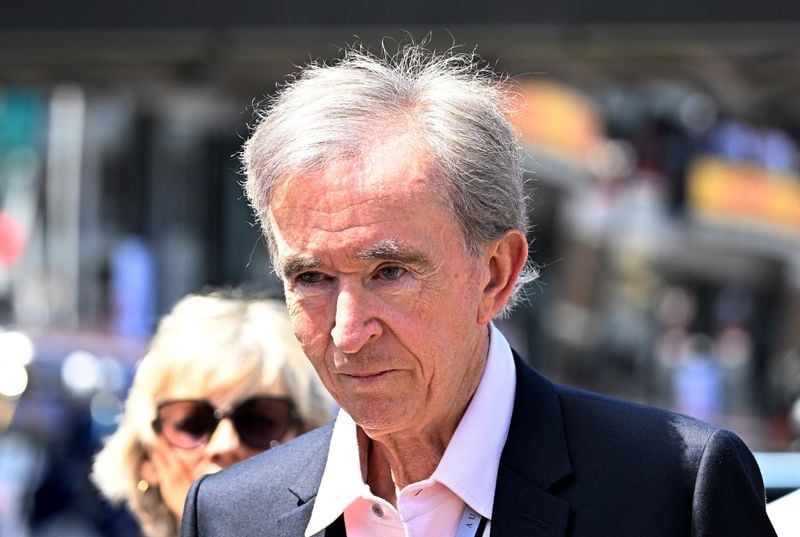
Bernard Arnault, the chairman of luxury goods conglomerate LVMH and France's wealthiest individual, has vehemently criticized a proposed 2% tax on billionaires, labeling it an attack on the nation's economy. Arnault further denounced the plan's architect, economist Gabriel Zucman, as a "far-left ideologue." This contentious tax, which would apply to fortunes exceeding €100 million ($117 million), has garnered significant political momentum in France, placing Prime Minister Sébastien Lecornu under immense pressure from the Socialist Party. The Socialists threaten a confidence vote, potentially toppling his government, if the tax is not included in the 2026 budget.
In a strong condemnation, Arnault conveyed to Britain's Sunday Times that the debate surrounding the tax "is clearly not a technical or economic debate, but rather a clearly stated desire to destroy the French economy." He intensified his critique of Zucman, accusing him of being "first and foremost a far-left activist" who employs "pseudo-academic competence" to advance an agenda aimed at dismantling the liberal economic system. Arnault firmly asserted that this liberal system is "the only one that works for the good of all," underscoring his belief in its fundamental importance for societal prosperity.
Responding to Arnault's severe accusations, Gabriel Zucman, a distinguished professor at France’s École Normale Supérieure and the University of California, Berkeley, firmly refuted the claims. Taking to X, Zucman stated, "I've never been an activist for any movement or party," clarifying that his professional work is meticulously "grounded in research, not ideology." This response aimed to separate his academic contributions from the political label ascribed to him by Arnault.
Despite Arnault's assertions, Zucman's work has consistently highlighted economic disparities, particularly the issue of taxation among the ultra-rich. He was notably among 300 economists who publicly endorsed the economic platform of the left-wing Nouveau Front Populaire alliance prior to last year's legislative elections. In recent media appearances, Zucman has frequently articulated that the ultra-rich often bear a proportionally lighter tax burden compared to many other citizens, a significant gap that the proposed levy is specifically designed to address and rectify.
The proposed tax enjoys considerable public backing, signaling broad societal approval for greater wealth redistribution. An Ifop poll, commissioned by the Socialist Party this month, revealed a striking 86% approval rating for the measure. This strong public sentiment, combined with the Socialist Party's unwavering political stance, places significant pressure on Prime Minister Lecornu as he navigates the complex landscape of France's upcoming budget decisions, with the integrity of his government potentially at stake.
This escalating dispute between France's richest man and a prominent economist, played out against a backdrop of political maneuvering and strong public opinion, underscores a deep ideological divide. At its core, the debate encapsulates fundamental questions about economic fairness, the role of wealth in society, and the very structure of France's economic future, making it a pivotal moment in the nation's ongoing political and economic discourse.