Chanel Elevates Luxury Retail in China with Immersive Store Renovations and Client-Centric Strategy
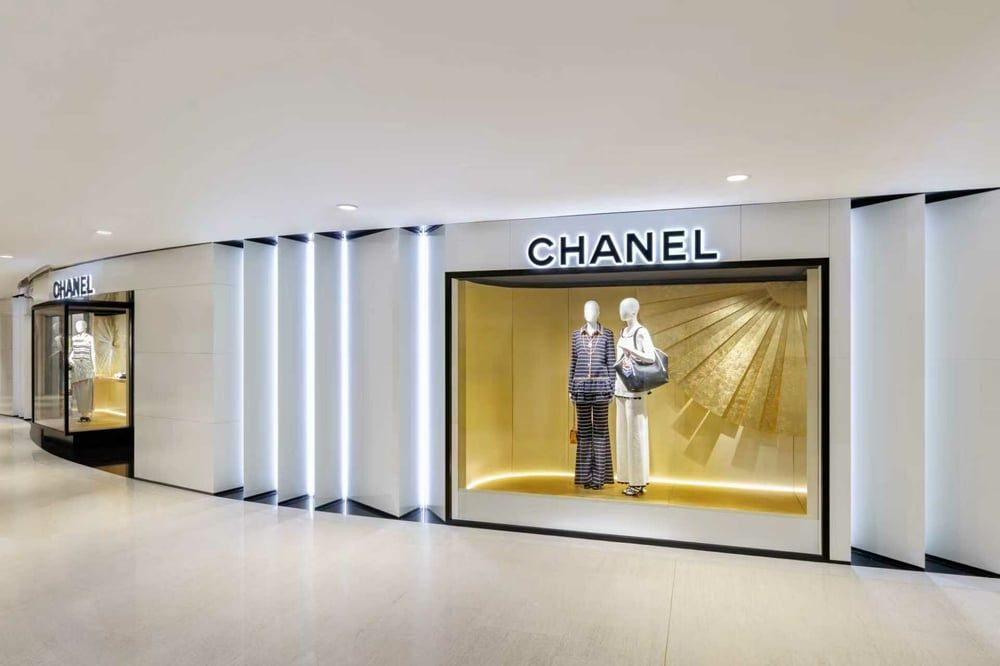
Chanel has recently made a definitive statement on the future of luxury retail with the significant renovation of its landmark boutique at Shanghai’s Plaza 66. This strategic investment, which included the addition of a new watches and fine jewellery space, goes beyond a mere refresh and has been described by an executive as an essential moment for the brand. It profoundly solidifies Chanel's commitment to the vital Chinese market. Bruno Pavlovsky, President of Chanel fashion and Chanel SAS, emphasized in an exclusive interview with FashionNetwork.com that this location is "one of the key boutiques that we have in the world." The primary objective of this extensive renovation is to optimize the client journey, adapting to the post-pandemic trend of customers seeking high-contact, immersive physical retail experiences once again.
The Plaza 66 boutique is strategically positioned as Chanel’s core in China, intently focused on "offering the best of Chanel." Its unparalleled strategic value is underscored by its status as one of Chanel’s most vital global boutiques, consistently ranking among the top-performing locations in the country, and situated within one of Shanghai’s most commercially active luxury malls. Designed by renowned architect and long-time Chanel collaborator Peter Marino, the major renovation presents a dynamic expression of Parisian refinement and cherished house codes. The stunning, three-storey space provides a truly luxurious shopping experience, featuring expansive displays of ready-to-wear, bags, and shoes, alongside its new, exclusive Watches & Fine Jewellery boutique. The space has been meticulously crafted to cater equally to the brand’s two core client segments: established top clients and new patrons making a singular purchase, ensuring all visitors encounter the highest possible standard of service and a sophisticated, meaningful brand engagement.
Chanel employs a highly differentiated strategy across its three key Shanghai locations: Plaza 66, IFC, and Peninsula, consciously avoiding any standardized approach. While Plaza 66 and IFC function as the primary high-traffic hubs, welcoming the majority of the brand’s clientele, the Peninsula location is positioned as a unique destination boutique. This latter store specifically caters to traveling Very Important Clients (VICs) seeking a more intimate, less conventional experience, metaphorically described as a "little chain" designed to connect with these discerning clients. The unifying principle across this entire network is the "one boutique is one story" model, which ensures that each location narrates a distinct, city-relevant narrative, reinforcing its role as an experience generator rather than a simple replication.
The brand's enduring success is firmly anchored in dual strategic pillars: innovation and emotion. Chanel firmly asserts it "never replicates" a boutique, instead focusing on bringing genuine value to the local context rather than engaging in a mere competition for size. Pavlovsky articulated this philosophy: "We never replicate. Every market is a specific market with a dedicated brief. For each boutique, we sit down with Peter Marino and the team to ensure the design is adequate for that city and its context within the mall. We are not interested in competing to have the biggest boutique. Our focus is purely on what is best for our client—what are their expectations, and what do they want to see from Chanel. What we have achieved in China, through this dedicated approach, is our great fortune and the true centre of our success."
This commitment to bespoke design and client focus is further mirrored in the launch of the Chanel & Moi initiative, deemed both "key" and "strategic" for cementing future client relationships. This innovative program transforms previously "invisible" after-sales services into "visible" experiences, allowing clients to observe skilled craftspeople and technicians working on their products. By validating the importance of the aftercare moment alongside the purchasing moment, the brand fosters long-term relationships built on trust and consideration, ensuring clients feel "taken into consideration" far beyond the initial sale. Pavlovsky explained, “The Chanel & Moi initiative is extremely important for us and for the House of Chanel. Previously, this essential service was largely invisible. By bringing everything under the Chanel & Moi banner, we aim to make this dedication to service visible to our clients, while simultaneously making our teams proud to deliver it.” This approach, by fostering an environment where clients feel truly valued, is building deeper trust, allowing clients to comfortably raise concerns or discuss product changes. This positive shift is viewed not as an overnight transformation, but as a continuous "journey" that has placed the brand in a significantly better position than it occupied just two years ago, with continuous improvements expected in the coming years.
Chanel is confident that its current strategy is moving decisively in the right direction, evidenced by its tangible results. Crucially, this positive momentum is heavily amplified by the Chinese market, where the local team is lauded as a "super activator." This team’s exceptional ability to implement and embody the client-centric strategy ensures that the desired level of customer engagement is being realized efficiently. In summation, Chanel is relying on sustained effort, the strategic visibility of its services, and superior local execution in markets like China to build stronger, deeper client relationships that secure its position for the future. Chanel maintains an optimistic outlook for the remainder of 2025 and into 2026, driven by its positive business performance. However, according to Pavlovsky, the brand’s formula for sustained success is overwhelmingly measured by client experience and satisfaction. He highlights that offering the best experience makes the sales process a "follower"—meaning revenue naturally tails exceptional service. Consequently, Chanel’s strategy is focused on consistently delivering superior engagement and products to reinforce the brand’s unique identity in fashion and luxury. Despite facing an economic environment that is "not always easy," Pavlovsky is confident in the performance of the Chanel teams, making their positive forecast for the future robust.