China's Luxury Market Sees Rise of Domestic Brands as Foreign Giants Recalibrate
A notable shift is underway in China's luxury market, underscored by an unexpected visit from Bernard Arnault, chairman of LVMH and one of the world’s wealthiest individuals. During his September trip to Shanghai, Arnault diverted from the usual itinerary of inspecting his global empire’s boutiques. Instead, he explored Chinese luxury brands, making purchases at Songmont, a minimalist leather goods label, and spending half an hour admiring the craftsmanship at Laopu Gold, a homegrown jeweler located among international giants like Cartier and Van Cleef & Arpels. This seemingly small gesture carries significant symbolism, hinting at a new chapter for luxury, particularly within China.
This anecdote reflects the rapid transformation of China's $49 billion luxury market. As the national economy faces headwinds, spending on established foreign premium brands has decelerated. In contrast, Chinese consumers are increasingly investing in homegrown labels. This rise of domestic brands is reshaping one of the world's top luxury markets and compelling global players to reassess their strategies.
Online retail platforms have been instrumental in fueling this domestic surge. Data from BigOne Lab, analyzed by Bloomberg News, reveals that five prominent Chinese brands across handbags, apparel, fragrance, cosmetics, and jewelry have significantly outpaced seven foreign rivals in sales growth over the past two years. For instance, Laopu Gold’s e-commerce sales soared over 1,000% in the first three quarters of this year compared to two years prior, while Songmont’s online bag sales saw approximately 90% growth. Conversely, major international brands like Gucci and Michael Kors experienced online bag sales slumps of over 50% and 40% respectively in China. Other Chinese labels such as Mao Geping Cosmetics, perfumier To Summer, and luxury clothing brand Icicle have demonstrated similar impressive growth in their categories. On Tmall, China's largest online retailer, some Chinese brands are now rivaling or even surpassing overseas counterparts in revenue; Laopu Gold's Tmall store generated $630 million over 12 months, far exceeding Van Cleef & Arpels' $57 million, and Mao Geping's $125 million more than doubled Bobbi Brown's sales.
This domestic resurgence occurs against a backdrop of contraction in the broader Chinese luxury market. Bain & Co. estimates a decline of up to 20% last year, marking its steepest drop since at least 2011. Despite tentative signs of recovery, executives express "caution" and "uncertainty." The anticipated post-lockdown spending boom for international luxury firms has largely failed to materialize, contributing to significant share price declines for giants like LVMH (down 30% from its 2023 peak) and Kering (plunged 60% since its 2021 high). Overall, consumer spending in China, which briefly spiked after COVID-19 restrictions eased, has since largely flatlined, impacting global luxury houses.
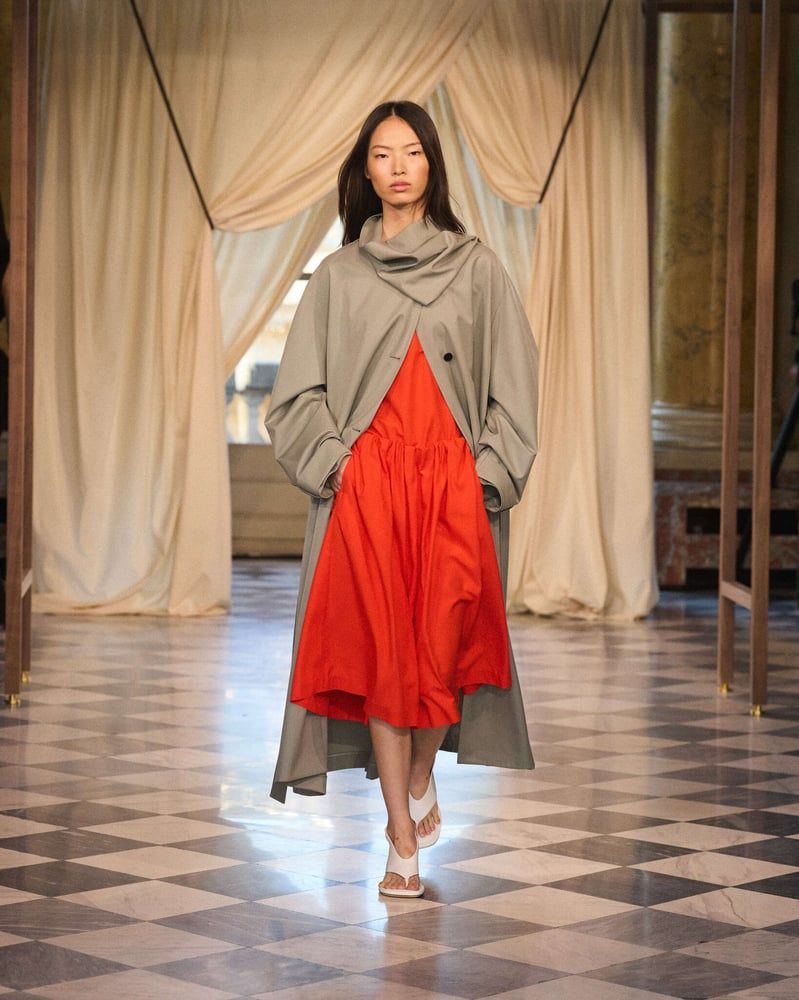
One contributing factor to the shift towards local brands is their more accessible pricing. For example, ICICLE’s cashmere and wool Aircoat is priced between $1,123 to $2,808, while Max Mara's comparable 101801 coat costs over $4,200. Similarly, Songmont's bucket bags, seen by some social media users as an alternative to Hermes’ Picotin Lock, retail for about $421, a stark contrast to Hermes' $5,054 to $8,016 price tag. This trend of consumers globally seeking premium-looking items at lower price points is not unique to China, as weariness grows over continuously rising prices from established big-name brands.
However, price is not the sole determinant of success. Jacques Roizen of Digital Luxury Group highlights that Chinese beauty brands, contrary to common perception, are not just competing on price. They are "building rich brand universes and prioritizing storytelling," a strategy that serves as a "wake-up call and a warning" to Western prestige beauty brands. This narrative is often deeply rooted in craft and cultural pride, resonating strongly with younger Chinese shoppers who increasingly seek items tailored to their identity rather than just Western logos as symbols of sophistication. Brands like To Summer and Songmont skillfully draw from local history, art, and everyday life, championing a message that modern luxury can be proudly Chinese. Songmont, for instance, emphasizes "Eastern aesthetics" in its designs and store concepts, while To Summer crafts scents from traditional ingredients like tea and osmanthus, using porcelain from Jingdezhen. ICICLE embodies Confucian ideals of harmony and restraint.
This strategy is particularly effective online, where marketing can be finely tuned to local consumers. Songmont’s podcast, celebrating the self-worth and diverse life values of urban women, has resonated deeply, striking a chord beyond what global brands have achieved. This shift in consumer preference is evident in individuals like Wan Yihuan, a 30-year-old Shanghai finance worker, who has transitioned from being an "Hermès and Tom Ford addict" to embracing a $210 Songmont bag and Mao Geping makeup, stating, "Now I just want things I truly like."
Among the new Chinese players, Laopu Gold is particularly noteworthy for its robust physical store performance, achieving over 100% revenue growth since early 2024, in contrast to Tiffany and Bulgari’s double-digit declines. Its sales at Beijing's exclusive SKP mall increased over 200% in the first half of the year, and it recently opened a store in Plaza 66, becoming the first domestic brand to establish a presence in all ten of China’s top-tier malls.
These premium Chinese brands are actively challenging the "Made-in-China" perception, once synonymous with low-cost manufacturing. They emphasize slower, more premium manufacturing processes, effectively conveyed through localized marketing. ICICLE, for example, acquired a factory that also produces for Max Mara. Songmont utilizes full-grain cowhide and gold-plated hardware, crafted by experienced artisans. Laopu Gold incorporates intricate filigree and enamel glazes, while Mao Geping, China's answer to Bobbi Brown, engages millions of fans online through makeup application tutorials on local models.
The appeal of these brands is beginning to extend beyond China's borders. In London, a 16-year-old like Naomi Jiang now considers Songmont over marquee labels, valuing its design and value proposition. Executives from brands like Songmont, To Summer, and Mao Geping express global expansion ambitions. To Summer's CEO, Elvis Liu, stresses the importance of a global market for sustained competitiveness, noting that relying solely on the Chinese market places brands at a disadvantage against internationally backed rivals.
Despite their impressive growth, obstacles remain. Few domestic brands have achieved annual revenues exceeding 10 billion yuan ($1.4 billion). Michelle Cheng, a retail analyst at Goldman Sachs, points out that while hot products can achieve 1 to 5 billion yuan, further growth requires strong management, talented staff, and a long-term vision. The current high growth figures also stem from a relatively low base; Western brands still dominate China’s personal luxury segment, accounting for 63% ($31 billion) of sales last year, with no Chinese brand holding more than 0.5% market share.
The bigger psychological risk lies in the possibility that the same economic malaise affecting European brands could eventually impact domestic ones. As Cheng notes, true luxury growth requires rising wages and a growing middle class, both currently challenged by economic headwinds. This sentiment is echoed by consumers like Guo Wenjun, a 37-year-old who, facing job uncertainties and high expenses, has shifted from spending over $70,000 on luxury items to buying budget alternatives. For her, "Luxury used to make me feel like a queen... Now it no longer has that magic," signaling a profound change in consumer perception and a potentially volatile future for the luxury market, both foreign and domestic, in China.