China's Shifting Tides: Global Brands Face New Normal Amidst Domestic Rise
The business landscape in China has undergone a fundamental transformation for numerous international enterprises. A delicate economic environment and subdued consumer demand are compelling executives to fundamentally re-evaluate their brand strategies, intensifying competition with a burgeoning array of strong domestic rivals. This shift signals a long-term adjustment, moving beyond temporary market fluctuations to a new paradigm of operation.
Global corporations, spanning from Uniqlo owner Fast Retailing to furniture giant IKEA, are increasingly expressing a pessimistic outlook on China. Several have retracted their earnings guidance, while others are simply resigning themselves to what they describe as a new "normalisation" of market conditions. This somber assessment underscores how the Chinese market, burdened by factors such as the lingering trade war, fierce price competition, a rise in nationalism, and an increasingly cost-conscious consumer base, is becoming a significant hindrance for many businesses already grappling with higher US tariffs.
Jon Abrahamsson Ring, CEO of IKEA franchisor Inter IKEA, articulated this challenge, stating, "We need to find smarter ways of producing so the prices become even more competitive, and we need to learn to be even more relevant for the Chinese market." He further acknowledged that consumer confidence within China remains a substantial hurdle. This sentiment is echoed across various sectors, as a notable shift in spending patterns is adversely affecting global retailers, with frugal consumers increasingly gravitating towards online platforms like Alibaba's Taobao in search of discounted prices.
Evident examples of these struggles include Uniqlo owner Fast Retailing, which experienced a decline in sales and profit in China, its largest market boasting 900 stores, even as its North American revenue simultaneously surged by 24%. Similarly, Nike reported its fifth consecutive quarter of sales drops in the Greater China market, battling intense competition from powerful domestic brands such as Anta and Li Ning. In response, Nike recently deployed US basketball luminaries LeBron James and Ja Morant to China in an effort to re-engage and attract consumers.
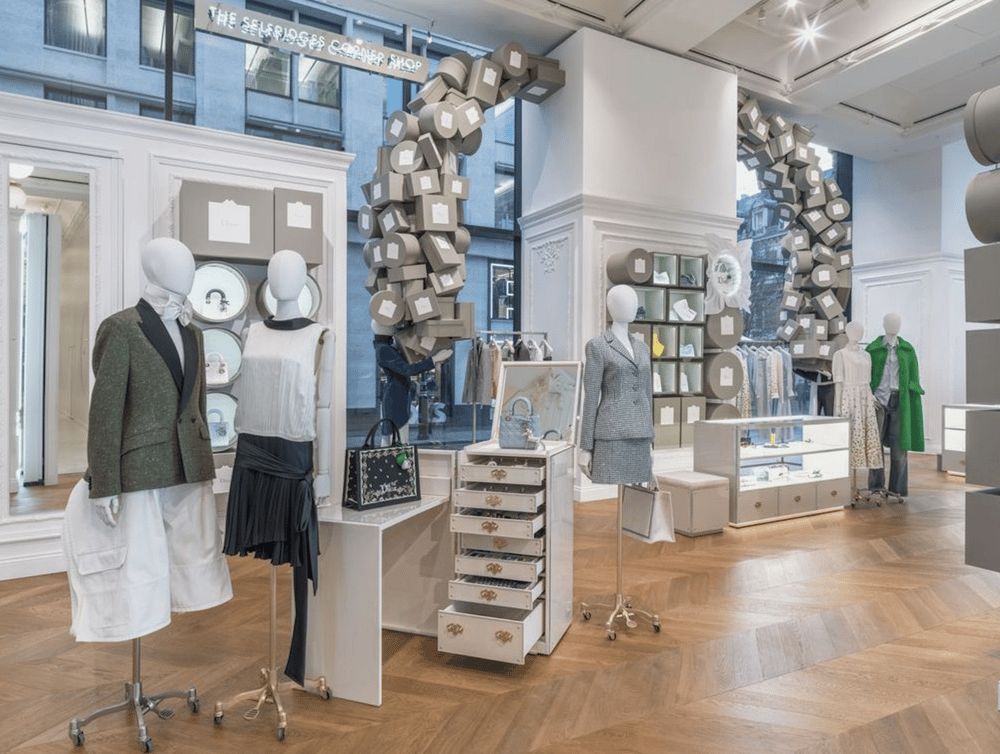
However, not all firms are experiencing the same downturn. Notably, the luxury sector in China, which accounts for approximately one-third of global luxury sales, appears to be holding up with greater resilience. LVMH, for instance, reported better-than-expected third-quarter sales, primarily bolstered by improved Chinese demand. The company highlighted that shoppers responded exceptionally well to innovative new store experiences, such as the distinctive ship-shaped Louis Vuitton boutique in Shanghai. LVMH CFO Cecile Cabanis remarked, "What we see is whenever we are bringing an initiative or an innovation or a new retail disruption initiative, it creates immediately... interest and excitement and consumers respond very quickly."
Adding to the mounting challenges for established global brands is the rapid ascent of more affordable, home-grown alternatives across an extensive range of categories, from automobiles and coffee to fashion. Projections from Frost & Sullivan suggest that the market share of Chinese cosmetics brands is poised to surpass that of foreign brands for the first time in 2025, reaching an estimated 50.4%. Companies like Urban Revivo, often labeled as China's answer to Zara, are among a growing cohort of domestic firms now eyeing expansion into international markets.
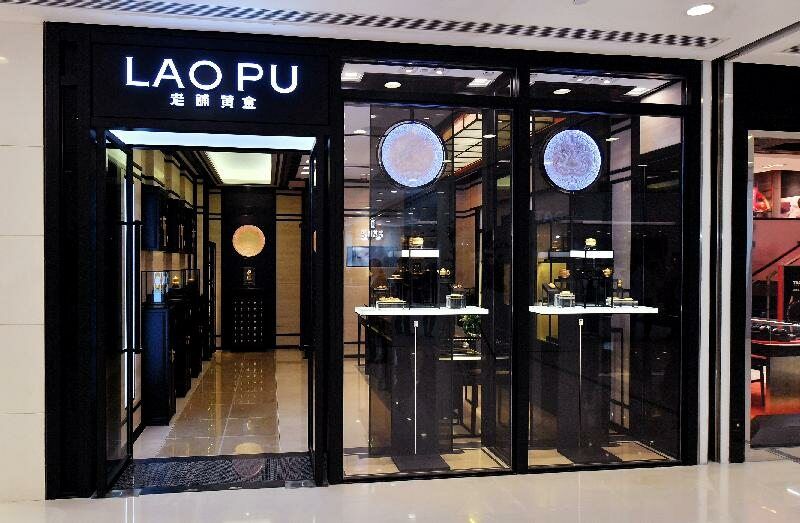
Another striking success story is the jewelry retailer Laopu Gold, frequently referred to as the "Hermes of gold." Its shares have astonishingly soared by 214% this year. Laopu Gold successfully leverages deep Chinese cultural heritage, which has resonated powerfully with consumers. Frost & Sullivan data indicates that 77.3% of Laopu's customer base also patronizes luxury brands such as Louis Vuitton, Hermès, Cartier, Bulgari, and Tiffany & Co., demonstrating its ability to compete at the high end.
China's persistent deflationary pressures further underscore the necessity for more proactive policy measures, as weak demand and ongoing trade tensions continue to weigh heavily on the nation's $19 trillion economy. Upcoming economic indicators, including Chinese GDP growth and retail sales data, along with a series of earnings reports from global companies, are expected to provide investors with more comprehensive insights into the overall health and future trajectory of the world's second-largest economy.