China's Singles' Day Sale Stretches to Five Weeks Amid Economic Slump
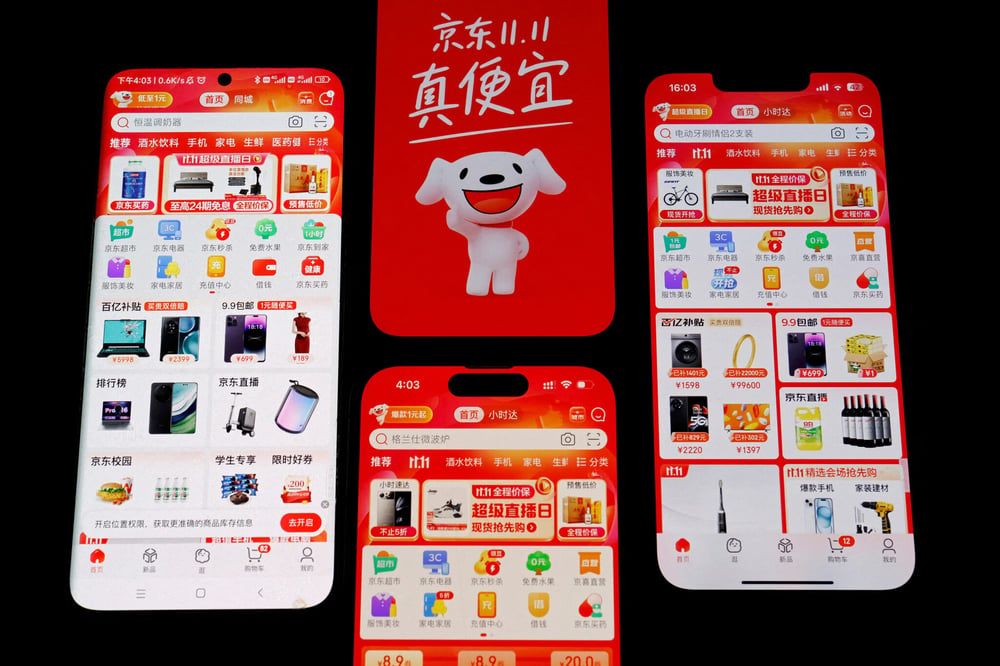
Chinese retailers have dramatically extended their annual "Singles' Day" sales event this year, stretching the traditional one-day bonanza into a marathon of up to five weeks. This unprecedented elongation by industry giants like Alibaba and JD.com is a direct response to a challenging economic environment, aiming to ignite consumer interest amidst struggling consumption rates across the nation.
The world's second-largest economy has been grappling with subdued consumer spending throughout the year. This weakness is attributed to a confluence of factors, including the lingering effects of U.S. President Donald Trump's trade policies, intense domestic competition, extreme weather events, and an ongoing crisis in the property sector, all of which policymakers are actively trying to address.
At a recent launch event in Shanghai, Alibaba unveiled an "unprecedented" investment strategy for this year's Singles' Day, which is widely recognized as the industry's biggest sales spectacle. This includes a substantial commitment of 50 billion yuan ($7 billion) in subsidies specifically targeting its top-tier 88VIP members. Alibaba's sales period commenced on Wednesday evening, aligning with the industry-wide trend to run promotions until November 11, the original date commemorating the "single" digits of 11/11.
The early indicators from Alibaba's extended sale period are noteworthy, with the company reporting that 35 brands, including international names like Nike and L'Oreal, alongside local powerhouses such as Anta and Proya, collectively surpassed 100 million yuan in merchandise sales within the first hour. Beyond direct subsidies and coupons, Alibaba is also leveraging artificial intelligence, integrating AI tools into its search and recommendation functions. This new AI-powered system is projected to boost click-through rates by approximately 10%.
Instant retail, promising one-hour delivery for online orders, is another significant focus this year. Both Alibaba and JD.com have poured billions into subsidies to channel shoppers towards these rapid delivery services, which have demonstrated a growth rate exceeding that of overall e-commerce. JD.com initiated its campaign on October 9, coinciding with the end of China's eight-day Golden Week holiday, while ByteDance's Douyin, the domestic counterpart to TikTok, also launched its promotions on the same day.
The timing of these extended sales follows a worrying trend observed during the Golden Week holiday, where consumer spending fell to a three-year low despite an increase in travel. This suggests that longer promotional periods might not necessarily translate into increased spending. For some consumers, the excitement appears muted. Deng Lei, a 49-year-old Beijing-based meditation studio owner, shared her sentiment, stating, "It has been less exciting than ever. The only thing I'm looking for is a pair of comfortable sports shoes, but I haven't spotted any I really like yet."
During a press briefing, JD.com announced plans to offer over 100,000 "hit" products at their lowest prices of the year. A particularly eye-catching deal includes 50,000 pairs of thermal long johns priced at a mere 2 yuan ($0.30) each, with shipping included. Jacob Cooke, co-founder and CEO of WPIC Marketing + Technologies, anticipates that products focused on helping consumers "look good, feel good"—such as beauty brands, outerwear, and packaged food and drink—are likely to perform strongly this year.
Conversely, product categories that saw a boom in 2024, particularly home appliances, which benefited from government subsidies, are expected to see a decline. Nomura analysts forecast a 20% drop in home appliance sales during the fourth quarter. Cooke suggested a possible shift in consumer priorities, noting, "Maybe people don’t buy that appliance this year, but they upgrade their phone," highlighting new Apple models as a potential driver of demand.