Claire's France Employees Sue US Parent Over Alleged "Artificial Insolvency"
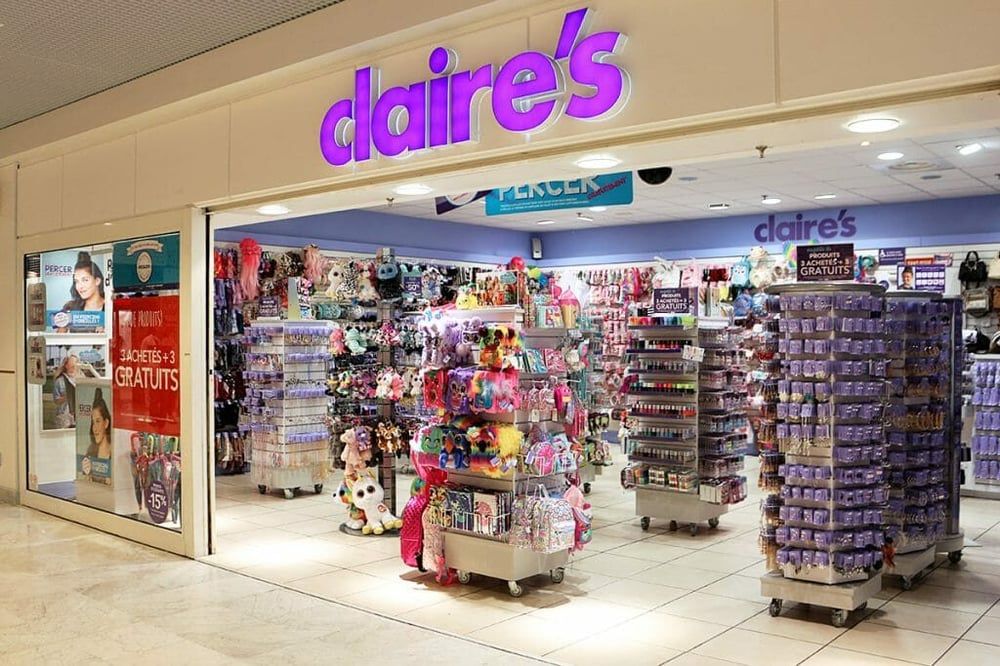
Claire’s France, the French arm of the U.S. accessories giant Claire’s, was officially placed in receivership by the Paris Commercial Court on July 24. This move follows the parent company's announcement of its intent to withdraw from the French market, a decision made amidst broader global financial pressures facing the retailer. While a process to find potential buyers through a call for tenders is underway, the situation has escalated with a significant legal challenge from the French subsidiary's employees.
On September 3, the French staff's social and economic committee (CSE), backed by the CFDT and CFE-CGC unions, filed a formal complaint with the French National Financial Prosecutor’s Office (PNF). The complaint levels serious accusations against the Claire’s group, citing "serious irregularities in the management of the company." Specifically, the staff representatives allege "artificial insolvency" and "opaque intra-group financial flows" that they believe led to the current financial predicament.
In a letter addressed to both the PNF and the public prosecutor, which has been reviewed by FashionNetwork.com, the staff representatives articulate their concerns that the situation could "characterize several economic and financial offenses within the framework of the receivership procedure." This development is particularly alarming for more than 1,000 employees across 250 stores who now face the looming threat of redundancy. The complaint underscores a stark contradiction: Claire’s France had reported a net profit of €1.3 million just one year prior, leading to the assertion that "no exceptional event justifies the transition from profitability to a declaration of cessation of payments in less than six months."
The CSE’s legal team has pointed to a series of suspicious financial activities, primarily focusing on intra-group cash transfers. These transactions, they claim, "rapidly and inexplicably drained" the French subsidiary’s funds. The lawyers allege that these transfers were executed by the Claire’s group, whose parent company is based in the United States, without the necessary transparency or proper documentation, and crucially, "to the detriment of the French subsidiary’s social and financial interests."
Further elaborating on the legal filing, the pace and alleged opacity of these financial movements raise serious questions about the very existence of written agreements between the various subsidiaries. The complaint also casts doubt on the French entity’s compliance with its tax reporting obligations, suggesting the possibility of "tax evasion organized by the Claire’s group," which is notably controlled by two American pension funds. The lawyers contend that the group "literally emptied the coffers" of the French unit, providing no evidence of legitimate transfer pricing agreements or any intra-group support mechanisms that would justify such substantial fund transfers.
Under French law, companies undergoing receivership are mandated to provide employee representatives with comprehensive documentation detailing the causes of financial distress. However, the CSE asserts that it has not received the crucial file submitted to the commercial court, nor the full financial details essential to independently verify the company’s claims of insolvency. The complaint also shines a light on Claire’s complex capital structure: Claire’s France is wholly owned by Claire’s UK, which is then owned by a Swiss subsidiary. This Swiss entity is controlled by Claire’s Holding (Luxembourg), itself owned by a company based in Gibraltar. The lawyers argue that "this layered structure, combined with opaque intra-group financial flows, enables fund transfers out of France without contractual justification and and creates the conditions for artificial insolvency."
The National Financial Prosecutor’s Office is the appropriate authority for such investigations, holding jurisdiction over complex financial crimes that include misappropriation of corporate assets, fraudulent bankruptcy, breach of trust, and aggravated tax fraud. This case echoes a similar situation in the retail sector from April 2023, when a judicial investigation was initiated into Financière Immobilière Bordelaise and its owner, Michel Ohayon—known for acquiring Camaïeu and Go Sport—for alleged misuse of corporate assets, bankruptcy, aggravated fraud, and organized money laundering.