Converse Struggles: Nike CEO Faces Pressure to Sell Iconic Brand
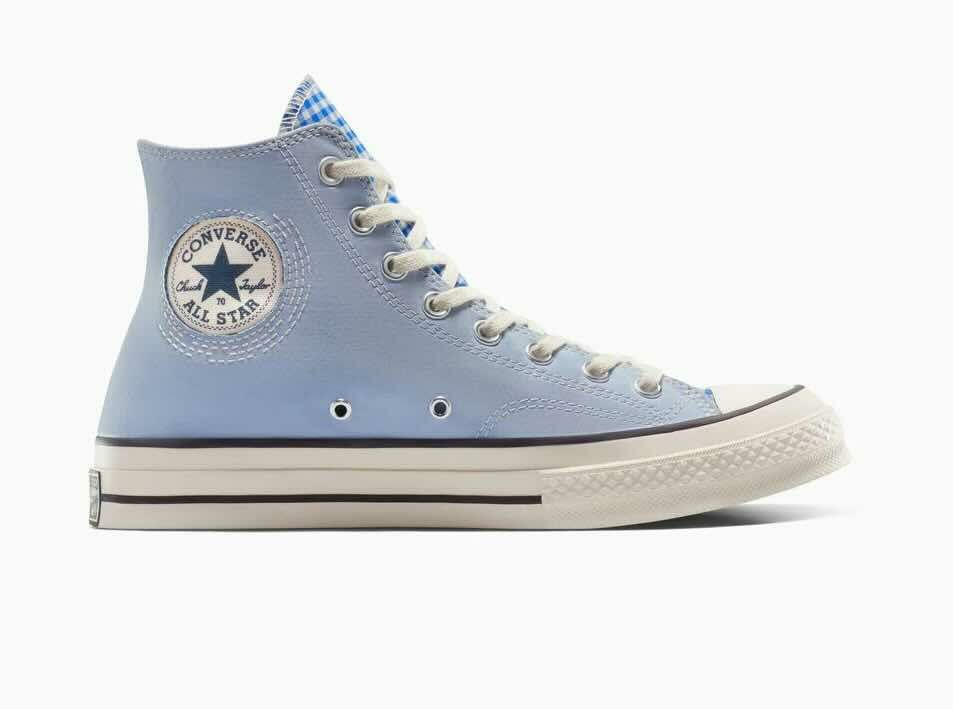
The iconic Converse Chuck Taylor All Star, once celebrated by Mark Ronson and Bruno Mars in "Uptown Funk," appears to be facing significant challenges. Just weeks after a high-profile Yves Saint Laurent fashion show where Chucks were conspicuously absent, Nike Inc.'s CEO, Elliott Hill, revealed a substantial 28% decline in Converse sales during the first quarter, excluding currency fluctuations. Faced with this underperformance from what he views as a minor brand, Hill is presented with a compelling argument to divest Converse, or at least entertain potential acquisition offers.
The current market landscape sees consumers actively seeking alternatives as the fervor for Adidas AG’s Samba sneaker begins to wane. While Converse is known for its cyclical popularity, having enjoyed a boom in the early 2000s, it surprisingly isn't capitalizing on the resurgence of other fashion trends from that era, such as skinny jeans and khaki jackets. Despite the prevailing nostalgia, consumers are not yet trading their Adidas three stripes for the familiar starred ankle logo of the Chuck Taylor.
Elliott Hill is actively working to reverse this trend. During the first-quarter earnings call, he informed analysts about new management at Converse and the "early stages of a global market reset" for the Chuck Taylor. He hinted at "aggressive actions to better position the brand for profitable growth," likely involving strategic inventory clearance and the introduction of fresh designs, a tactic successfully employed by Nike for its Air Force 1s, Air Jordan 1s, and Dunks. However, with the monumental task of steering the entire Nike empire, the challenges at Converse are increasingly becoming an unwelcome distraction for Hill.
From a financial perspective, a sale of Converse appears viable. Bloomberg data estimates Converse's revenue at $1.4 billion this year, and Morningstar analyst David Swartz suggests a sales multiple of 1-2 times. Considering Nike acquired Converse for a modest $305 million in 2003, a sale generating between $1.4 billion and $2.8 billion would comfortably avoid any write-downs, representing a significant return on investment for Nike.
For a company projecting nearly $47 billion in revenue this year, the proceeds from selling Converse would not dramatically alter Nike’s financial standing. The true value of offloading the brand lies in enabling Hill to dedicate his full attention to more pressing strategic imperatives. These include confronting agile disruptors like On Holding AG and Deckers Outdoor Corp.'s Hoka in the athletic footwear space, and intensifying competition with Adidas in the rapidly evolving fashion-forward segments.
Hill would not be alone in making such a move, as disposing of non-core assets is a common corporate strategy. Recently, VF Corp. agreed to sell its Dickies workwear division to Bluestar Alliance for $600 million, and earlier this year, Levi Strauss & Co. divested Dockers to Authentic Brands Group for up to $391 million, setting clear precedents for streamlining brand portfolios.
Brand management companies, such as Bluestar Alliance (which also acquired Off-White from LVMH last year) and Authentic Brands Group LLC (owner of Reebok), emerge as natural suitors for Converse. While Morningstar's Swartz noted Converse could fit into VF Corp.’s portfolio alongside Vans and The North Face, VF has lately been a seller rather than a buyer, focused on reducing its debt load through sales like Supreme to EssilorLuxottica SA. Private equity firms also present a compelling alternative; 3G Capital’s $9.4 billion acquisition of Skechers USA Inc. in May underscores their interest in footwear. Converse's size makes it an ideal target for a cash-rich financial buyer who might believe that, freed from Nike's shadow, Converse could unleash a wave of creativity and turbocharge sales. This could also position it for a future acquisition by a company like VF within a typical three to five-year private equity exit window.
However, a sale of Converse is not without risks. Firstly, prevailing tariffs have exerted downward pressure on footwear valuations, as seen with Foot Locker Inc.’s and Skechers’ recent acquisitions, which did not command premium prices; Converse’s current underperformance further complicates this. Secondly, there is a distinct possibility that a new owner could revitalize Converse into a formidable competitor for Nike. Authentic Brands, for instance, has significantly invested in Reebok, a strategy that appears to be yielding results with sales climbing from $1.6 billion in 2020 to $5 billion in 2023.
Despite these potential drawbacks, the sheer volume of challenges confronting Elliott Hill — including persistent tariffs, cautious consumer spending, and fierce competition from Adidas under CEO Bjorn Gulden — makes a disposal a logical and attractive option. Amidst a landscape with few easy victories, selling Converse would undoubtedly stand out as one such win for Hill.