Cucinelli’s Department Store Reliance Faces Test Amid Saks’ Financial Woes
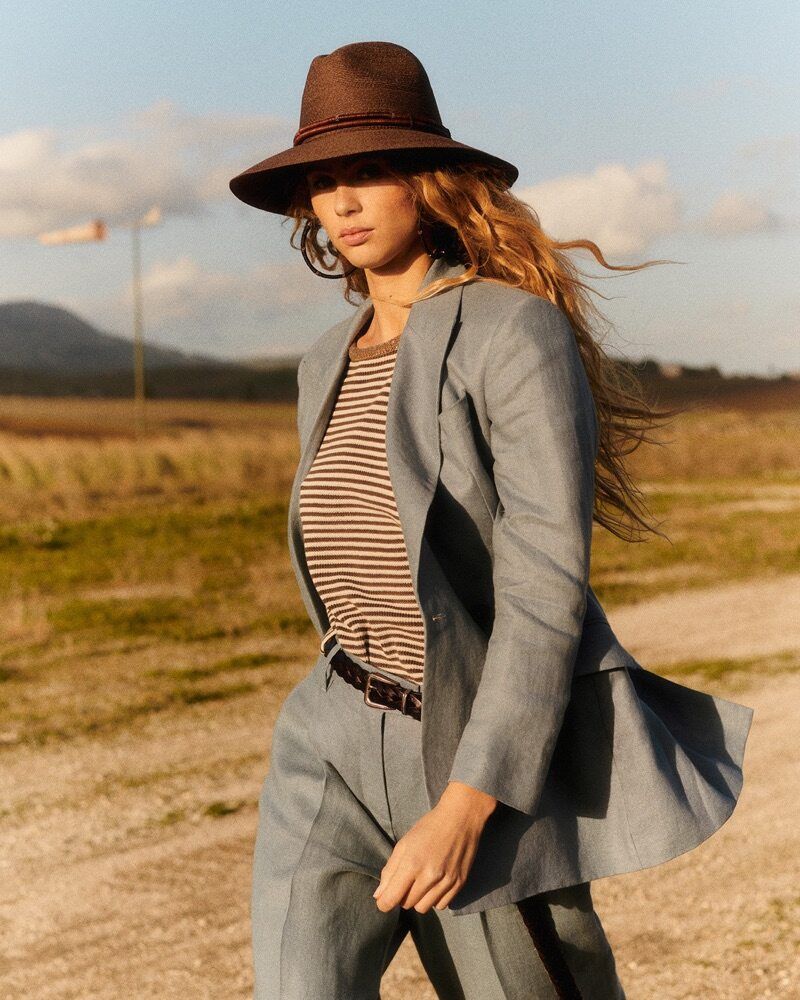
Italian luxury brand Brunello Cucinelli, famed for its high-priced cashmere goods – sweaters often retailing for $3,000 – has maintained a significant reliance on department stores, a strategy now facing scrutiny as Saks Fifth Avenue’s parent company, Saks Global, struggles with substantial debt.
Saks Global, formed through the merger of Saks Fifth Avenue and Neiman Marcus, recently saw its CEO depart amidst reports of impending bankruptcy following a missed interest payment exceeding $100 million. This situation has brought increased attention to the business models of companies like Cucinelli, which have heavily invested in partnerships with high-end department stores, an area of the retail landscape facing growing uncertainty, particularly within a currently sluggish global luxury market where direct-to-consumer sales are increasingly favored.
Despite the concerns, Brunello Cucinelli is reaffirming its commitment to its existing strategy, prioritizing the wholesale channel. Founder and Chairman Brunello Cucinelli stated in an interview with Reuters that the company anticipates minimal disruption. He reported only a one-month delay in payments from Saks Global and confirmed no operational issues thus far. “We don’t foresee any economic risks, except for extremely limited ones,” Cucinelli explained, adding that any potential losses would be a rarity in the company’s 45-year history, noting an average annual loss of just 0.1% from multi-brand partners.
However, Cucinelli does exhibit greater exposure to the department store sector than many of its luxury competitors. Co-CEO Luca Lisandroni previously highlighted the brand’s strong relationship with Saks, citing “best results ever” in US stores and emphasizing the retailer’s “great centrality” within the global luxury market. Currently, approximately 36% of Brunello Cucinelli’s revenue stems from wholesale channels, while 64% is generated through its own retail outlets, indicating a heavier reliance on multi-brand distribution compared to peers.
Over the last decade, a broader trend within the luxury industry has been a shift towards direct retail control, allowing brands greater authority over pricing, inventory management, and profit margins. Prada now derives 90% of its sales from retail, Moncler 81%, Zegna 87%, and Kering (Gucci’s parent company) 75%.
Despite broader market headwinds, Cucinelli has demonstrated resilience, catering to a particularly affluent customer base. The company experienced growth in both wholesale and retail channels during the first nine months of 2025 and subsequently raised its full-year revenue growth forecast to 11–12% in December.
Morningstar analyst Svetlana Menshchikova suggests that a potential Saks bankruptcy or restructuring could result in “delayed payments, limited bad-debt exposure and maybe some lost sales if the department stores would fail to replenish their stock.” She emphasized Cucinelli’s consistent highlighting of US wholesalers as crucial clients and an integral component of its brand identity and business model, but believes the company’s global reach and strong financial position will mitigate any severe impact.
Saks Global’s financial difficulties reflect wider challenges within the $417 billion global luxury market, which is currently navigating a period of stalled sales growth. The company, encompassing Saks Fifth Avenue, Neiman Marcus, and Bergdorf Goodman, missed a December interest payment and is reportedly preparing for bankruptcy proceedings, as reported by the Wall Street Journal.
Brunello Cucinelli himself credited department stores with playing a vital role in the brand’s success and expressed continued confidence in Saks and the 400 multi-brand stores with which the company collaborates globally. He stated that 40% of the brand’s business is conducted through multi-brand partners, a relationship he “absolutely delights” in, describing department stores as the “true custodians of the brand.” He further underscored his belief in the multi-brand model, stating he would consider acquiring Saks Global if he were an interested investor.