Curry's New Chapter: From Under Armour Split to Sneaker Free Agent Frenzy
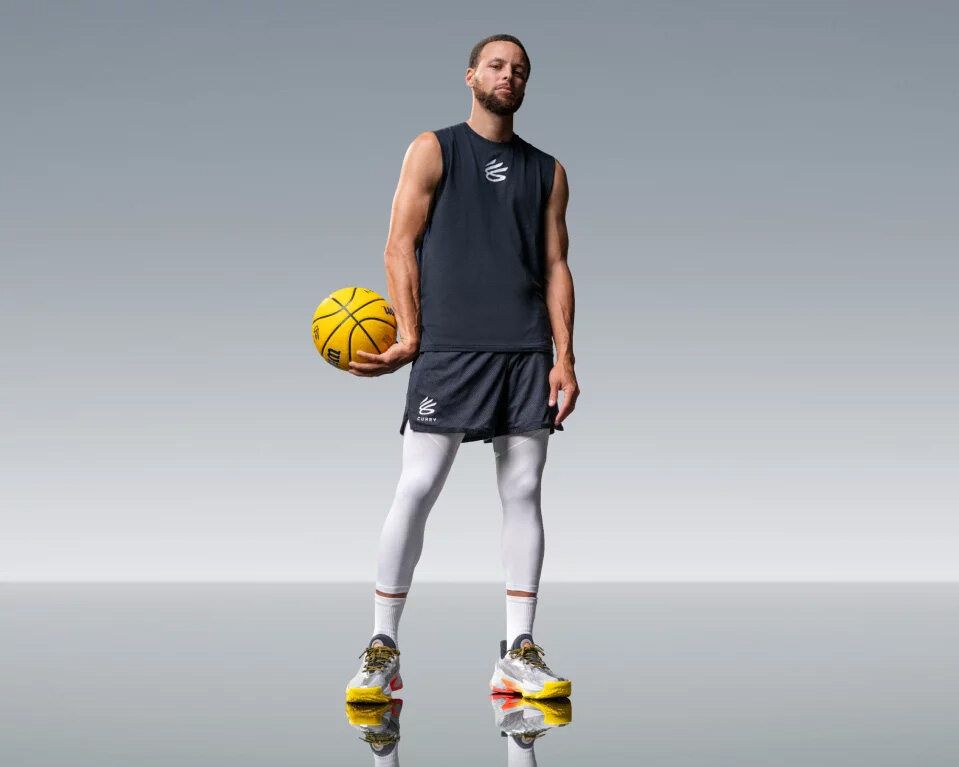
NBA superstar Stephen Curry recently signaled a new chapter in his career by warming up in Nike shoes, just a day after officially parting ways with Under Armour. This striking turn marks the end of a decade-long partnership that once held immense promise for both the athlete and the sportswear brand, transforming Curry into one of the biggest sneaker free agents in sports history.
The alliance between Curry and Under Armour began in 2013, culminating in the launch of his first signature sneaker in 2015. This period coincided with Curry’s meteoric rise, as he led the Golden State Warriors to an NBA Finals victory over LeBron James's Nike-sponsored Cavaliers. The partnership was instrumental in helping Under Armour, originally known for apparel, establish a significant foothold in the footwear market. There were aspirations for the "Curry Brand" to rival Nike's dominant Jordan Brand, with Under Armour's founder, Kevin Plank, even envisioning the company surpassing Nike as the world’s largest sporting goods entity.
However, these lofty ambitions ultimately fell short. Sources familiar with the situation indicate that Curry and his advisors grew increasingly frustrated by what they perceived as underinvestment in the brand. Simultaneously, the Curry division's sales figures reportedly failed to meet expectations for both the company and the athlete. A core issue was the limited appeal of the shoes as casual footwear, a crucial segment dominated by "sneakerhead" culture, which accounts for the vast majority of industry sales. While Under Armour projects its basketball sales, including the Curry division, to reach up to $120 million this year—less than 3% of its anticipated $5 billion annual revenue—Nike's Jordan Brand alone generated over $7 billion in its last fiscal year.
A specific point of contention for Curry was Under Armour’s attempt last year to recruit college basketball phenom Caitlin Clark to the Curry Brand. Despite pursuing Clark, Under Armour’s offer reportedly trailed Nike’s total pitch, leading Clark, now a WNBA star, to sign with Nike. In a joint statement, Under Armour and a public relations firm representing Curry acknowledged a "thoughtful and respectful" decision, citing "a mutual understanding that a separation was best for both."
The separation agreement, announced recently, includes some unfinished business, with Under Armour set to debut the final Curry shoe in February and release the last products from the partnership through October. Financially, ending the Curry deal is expected to contribute to a nearly $100 million increase in restructuring costs for Under Armour. During his tenure, Curry had been granted significant authority and equity, including being named president of the Curry Brand and receiving $75 million in stock in 2020 as part of his compensation package. While the shares have since fallen by half and were not scheduled to vest until 2029, the agreement ensures Curry will receive a prorated amount.
The parting comes as Under Armour undergoes a significant strategic shift under the renewed leadership of Kevin Plank, who returned as CEO in early 2024 after stepping down in 2020. Plank’s turnaround efforts include job cuts, increased automation, and a 25% reduction in product offerings. Crucially, the company is re-focusing resources on its original core businesses: football, flag football, and baseball, which are now seen as bigger priorities than basketball. Despite this, Under Armour asserts its continued commitment to basketball and confirmed that players like NBA star De’Aaron Fox and college standout MiLaysia Fulwiley, signed to the Curry Brand, remain under contract with the company.
Curry now presents a rare and immensely valuable opportunity for the world’s largest sportswear companies. As one of the highest-profile global athletes, his star power is comparable only to Michael Jordan and LeBron James, both of whom have lifetime deals with Nike. Securing Curry means partnering with the greatest shooter of all time, not just for the remainder of his playing career—which he anticipates lasting another four to five seasons—but also into his retirement. Industry insiders widely expect major brands like Nike, Adidas, and Puma to vigorously pursue him.
Any future discussions with Nike, however, might carry a degree of awkwardness. The sportswear giant notably botched an opportunity to re-sign Curry in 2013, four years after he first signed with them as a pro. During a haphazard pitch meeting, executives reportedly mispronounced Curry’s name and used a slide deck featuring another athlete’s name. Despite this historical misstep, Nike remains the dominant force in basketball, boasting a roster that includes Caitlin Clark, Victor Wembanyama, and Shai Gilgeous-Alexander. Other brands are also making inroads: Adidas with Anthony Edwards, New Balance with Cooper Flagg, and Chinese brands Anta and Li Ning gaining traction in the U.S.
When asked about wearing Nike shoes last week, Curry playfully responded, "I know it’s weird seeing me in something that’s not my own shoes. I’m going to have some fun with this." He described the moment as "new beginnings," and stated his intention to focus on "aggressive growth" in the sneaker industry, which he acknowledged is "difficult," requiring "your best effort to create something sustainable."