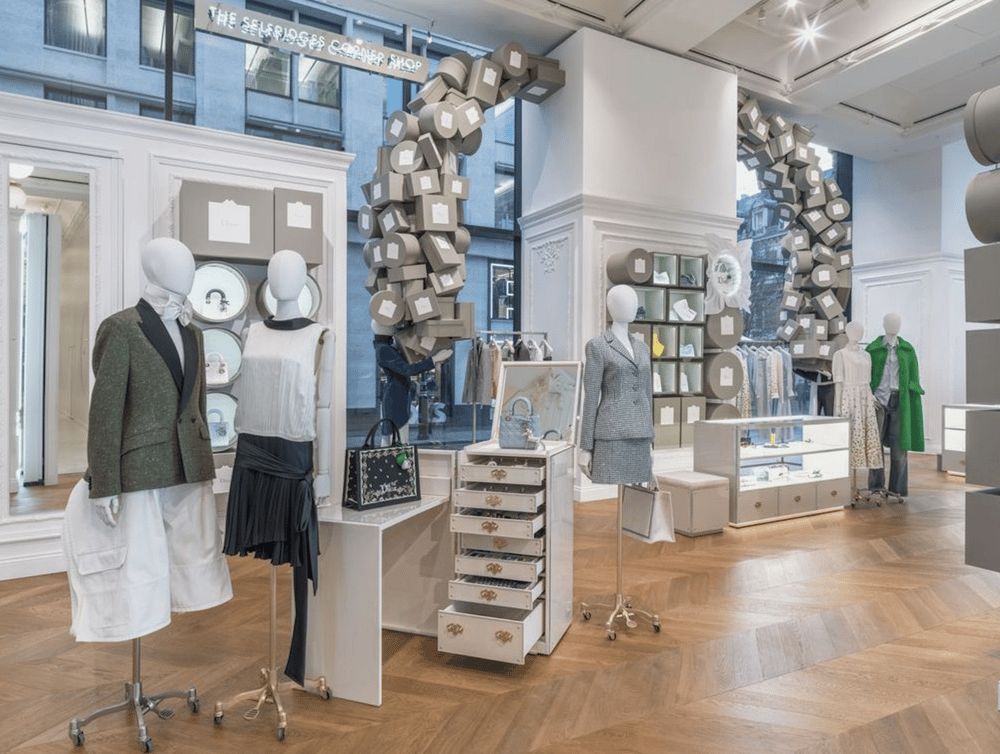
Department Stores Face an Existential Overhaul in the Age of AI and Experience Economy
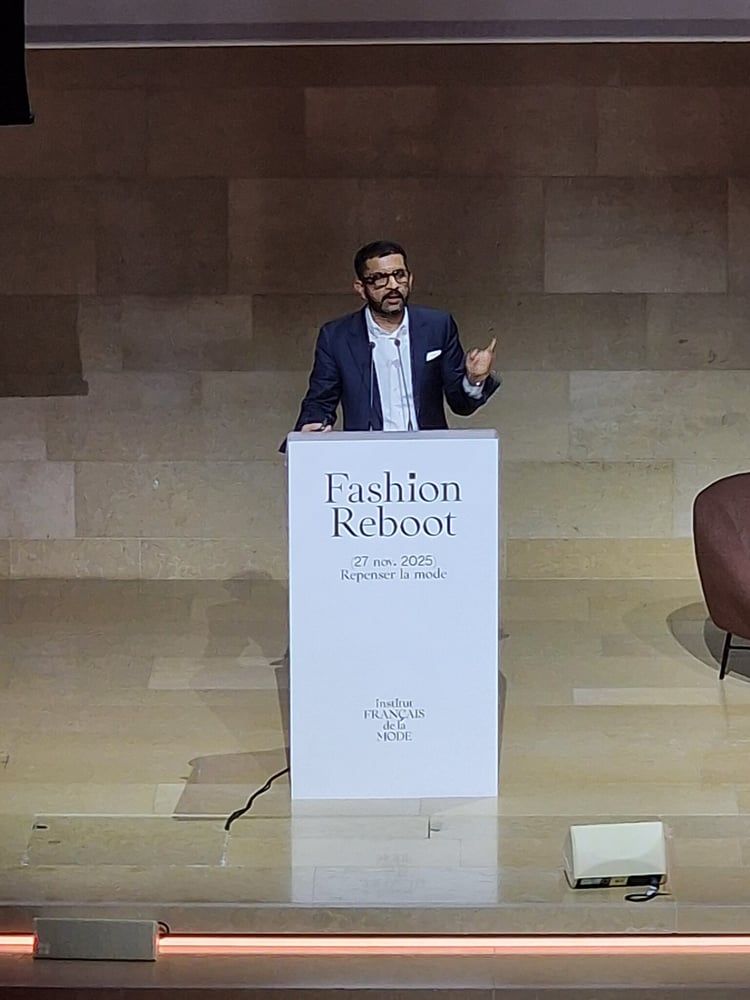
The question of whether department stores will endure in the next two decades isn't a matter of "if," but "how." Selvane Mohandas du Ménil, who leads the International Association of Department Stores (IADS), underscores that these iconic retail establishments, integral partners to premium and luxury brands, are currently navigating a profound transformation driven by evolving customer expectations and a redefinition of their very role. This crucial analysis was presented at the Institut Français de la Mode’s (IFM) Fashion Reboot day in Paris, highlighting the global challenges and future trajectory of the sector.
A significant factor in this transformation is a geographical redistribution of wealth, with countries like the US and China increasingly becoming hubs of significant fortunes and luxury consumption. More critically, however, is the profound generational shift in wealth. Younger generations, particularly in the US and Europe, possess substantially less wealth compared to baby boomers. This economic disparity means that major life investments, such as the purchase of a first home, are delayed by over 20 years compared to the 1990s, and even expectations around car ownership are shifting globally.
Mohandas du Ménil emphasizes that these shifts in major purchasing power indicate a transition from an economy centered on possession to one driven by "use and experience." This fundamental change presents a significant challenge for department stores, whose traditional business model remains firmly anchored in the sale of physical objects. Consequently, alternative consumption models, such as ultra-fast fashion, gain traction as younger generations seek more accessible and immediate forms of consumption.
Adding to these pressures is an increasingly fierce competitive landscape, exacerbated by technological advancements and the rise of highly efficient industrial players, particularly from China. Mohandas du Ménil points out that in today's retail environment, there will always be someone who can offer products cheaper, faster, and more efficiently. Shein serves as a stark example of an industrial platform achieving extreme efficiency, and this trend is not isolated but rather an early iteration in China's industrial evolution, raising questions about future platforms that could replicate this efficiency while also addressing environmental and social concerns. Historic players, including department stores, must acknowledge this industrial shift as inevitable and explore new avenues, possibly through public-private partnerships, to respond.
Given the impossibility of winning a price war against these new competitors, the IADS representative advocates for a strategic pivot. Department stores must move beyond price competition and instead focus on a clear "editorial direction and curation." This involves defining a precise target audience and making deliberate choices about product assortment and brand partnerships. Harrods, for instance, has explicitly declared its focus on catering to just 0.005% of the global population, illustrating the power of such focused curation. However, this also implies the necessity of making strategic exclusions, which requires difficult but clear decisions.
These strategic choices are already manifesting in innovative concepts globally, such as the Instagrammable WOW Centre in Madrid, Tamburins' unique flagship in a Seoul basement, and Louis Vuitton's yacht-shaped concept venue in Shanghai. The competitive landscape for department stores has also expanded dramatically. Their rivals are no longer just other retailers across the street but rather entities like Netflix for entertainment, Erewhon for food experiences, Cheval Blanc for hospitality, and Third Space for community and belonging. The core question for department store leaders now becomes: "how do you adapt?"
This adaptation is further complicated by technological developments and the mainstream adoption of generative AI. Historically, software served sellers, enhancing their ability to sell. However, AI is rapidly becoming a tool for consumers, aiding or even replacing them in the purchasing process. A study by OpenAI revealed that 2.1% of ChatGPT queries in the first half of the year related to shopping, a seemingly small proportion that nonetheless represents 50 million daily searches and is steadily increasing. This signals a new reality that transcends traditional e-commerce visibility and SEO strategies.
Such a paradigm shift necessitates entirely new strategies, potentially involving partnerships with AI giants like ChatGPT, Gemini, or DeepMind. This raises fundamental questions for department stores, which are traditionally built on singularity, pleasure, emotion, and human conversation: "how do we sell the experience on ChatGPT?" The IADS executive also highlights the emerging concept of "agentic AI"—AI's ability to set goals, plan, and execute complex tasks without continuous human supervision—a concept Amazon describes as not "science fiction."
Department stores are beginning to grapple with the implications of AI. The Chalhoub Group in the Middle East has launched Layla, an AI chatbot capable of personalizing interactions based on preferences and trends. However, Mohandas du Ménil expresses reservations, noting that these tools are limited by existing data and cannot fully replicate the richness of in-store experiences or guarantee optimal information sharing. Furthermore, a crucial challenge lies in the generational divide: while capital remains concentrated among baby boomers, younger generations are far more fluent in current technological shifts, making it imperative to attract both demographics.
To address mature customers, department stores face three strategic options: celebrating them (potentially alienating younger demographics), selling them "eternal youth" (risking sincerity issues), or positioning them as "bridges between generations." While a convincing example of the latter is yet to emerge, it is considered a vital avenue for structuring offers, brand assortments, and services. Beyond these choices, other challenges include the development of retail media, the role of private labels, the reinvention of loyalty programs, and the integration of second-hand solutions, many of which lack profitable business models currently.
Ultimately, a profound shift in value is underway. While Amazon efficiently serves those who merely wish to buy things, the department store is evolving into a destination where customers spend the time they've saved elsewhere. Department stores are caught in a "pincer movement" between two dynamics: cool, high-consuming but less affluent younger generations, and less "cool" but higher-purchasing mature customers. Each brand must define its strategy between these poles to invest wisely for the future. Moreover, they are not alone in this equation; customers and brands are key stakeholders. For instance, if LVMH decides to develop its own second-hand offers for its bags, a significant portion of department store business and profits could be impacted, underscoring the deep interdependencies within this resilient, yet evolving, business model.