Digital Dominance Over Thanksgiving Weekend as Shoppers Prioritize Budgets and Online Deals
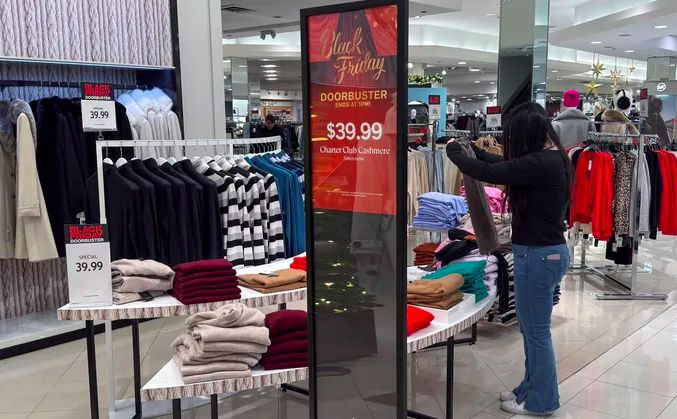
Thanksgiving shopping saw Americans increasingly shift to digital channels, with online spending rising 5% compared to the previous year. Consumers leveraged laptops and phones to secure deals, opting out of braving brisk weather and the traditional in-store frenzy of the Black Friday weekend. While early online sales figures suggested a promising spending trend, the atmosphere at major physical retailers for Black Friday bargain-chasing was notably subdued, a stark contrast to past years characterized by throngs of people queueing post-Thanksgiving morning.
Many who did venture out into brick-and-mortar stores expressed caution, admitting they were adhering to strict budgets. This apprehension stemmed from lingering concerns over inflation, which remains above-trend, and a softening labor market. Grace Curbelo, 67, from New Rochelle, New York, articulated this sentiment at the Woodbury Common outlet center, stating, "I'm being much more careful. I'm not sure how the economy will turn, and I don't want to put myself in debt."
Overall online spending on Thanksgiving Thursday surged by 5.3% year-over-year, reaching $6.4 billion, according to Adobe Analytics. This data, which vets e-commerce transactions across over 1 trillion visits to U.S. retail sites, surpassed expectations. Adobe noted that the rise in online shopping has significantly diluted Black Friday's traditional importance, with promotional offers now extended across several weeks leading up to the event. Vivek Pandya, director of Adobe Digital Insights, highlighted that discounts were comparable to the previous holiday season, with shoppers increasingly utilizing promotional codes found online, often through social media influencers, to secure additional savings during Cyber Week.
The persistent shadow of higher prices influenced consumer behavior throughout the shopping period. U.S. retail sales in September increased less than anticipated, partly due to elevated prices. Moreover, tariffs, previously introduced by President Donald Trump, contributed an estimated 4.9 percentage points to retail prices, according to the non-profit Tax Foundation. Software firm Salesforce's early data further indicated that average online selling prices in the United States were 8% higher than the previous year, significantly outpacing the 5% global average. Caila Schwartz, director of consumer insights at Salesforce, attributed this to both the impact of tariffs and sustained spending by affluent households, who continue to shop despite low consumer confidence among most income groups. This trend also suggested retailers were striving to protect their margins.
Compounding the caution, U.S. consumer confidence dipped to a seven-month low in November, as reported by The Conference Board. Fewer households were planning to purchase motor vehicles, houses, or other big-ticket items over the next six months, and vacation plans also saw a decline. With unemployment nearing a four-year high, shoppers adopted a more selective approach to their purchases.
Despite the widespread caution, a segment of the population continued to drive significant spending. The wealthiest 10% of Americans—those earning at least $250,000 annually—accounted for approximately 48% of all consumer spending in the second quarter of 2025, a steady increase from around 35% in the mid-1990s, according to Moody's Analytics. Schwartz from Salesforce noted, "Higher income consumers are a little more resilient, and that's why we're seeing strong growth in categories like furniture and luxury." This was exemplified by shoppers like Heather Cheatham, 50, of Lynchburg, Virginia, who began her Black Friday at Sephora, hunting for Armani eye tints without a set budget, having already purchased multiple gifts for her children.
The physical Black Friday experience was distinctly different this year, according to Marshal Cohen, chief retail adviser at Circana, who observed stores and malls across New York and New Jersey. The characteristic early-morning rushes and long queues outside retailers were largely absent. Among the retailers Cohen visited, Target "won the morning" by distributing swag bags to its first 100 customers, while Walmart gained momentum later in the day as foot traffic gradually increased. Even early bird shoppers, like Quantavius Shorter, a 40-year-old diesel engine mechanic from Atlanta, found themselves among only a dozen people waiting in freezing temperatures at 5:59 a.m. at a local Walmart. Shorter secured a Roku flat-screen smart TV for $298, a significant discount from its usual $500 price, perfectly fitting his smaller Christmas budget.
Beyond the consumer landscape, the shopping day was also marked by labor actions. In Europe, Amazon warehouses in Germany experienced strikes, and separate protests were planned outside Zara stores in Spain. Domestically, Starbucks' workers union escalated their ongoing indefinite strike, extending it to 26 additional U.S. stores on Black Friday.