EU Parliament Weakens Corporate Due Diligence Law Amid Shifting Political Tides
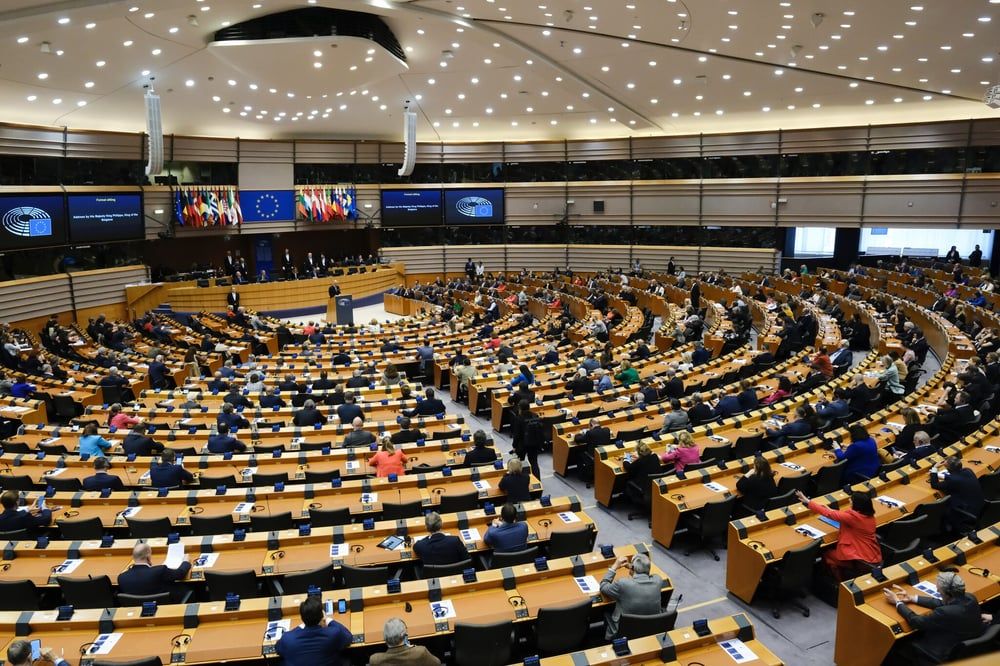
A significant development unfolded in the European Parliament on Thursday, as an alliance of the right and far-right successfully moved to scale back a crucial law concerning major corporations' social and environmental "due diligence." This outcome, approved by 382 votes to 249, represents a substantial shift in Brussels, effectively weakening the text's ambitions by limiting the number of companies covered and removing several key obligations. This vote came after a previously weakened version of the text had already faced rejection by MEPs on October 22, and it immediately sparked outcry among other political groups, breaking with the traditional "pro-European" majority.
The alliance, particularly between the European People's Party (EPP) and the far-right, drew sharp criticism. Social Democrat René Repasi lamented that the EPP had "torpedoed any moderate compromise," viewing the vote as a warning to the pro-European camp as Parliament begins addressing measures to "simplify" business life. Conversely, the far-right celebrated a "great victory," with Jordan Bardella's Patriots group declaring, "Another majority is possible" and "this is just the beginning." This move is seen as a direct consequence of the European Union's increasingly pro-business turn, influenced by intense competition from China and tariffs imposed by the US, pushing Brussels to further lighten administrative burdens on companies across the continent.
The due diligence law, adopted only eighteen months prior (or in 2024), was designed to hold companies accountable. Originally, it mandated companies with over 1,000 employees to prevent and remedy human rights violations—such as child labour, forced labour, and safety issues—and environmental damage throughout their global value chains, including among their worldwide suppliers. Backed by penalties, its implementation had already been postponed by a year, from 2027 to 2028, reflecting an earlier push to ease corporate pressures.
However, the new amendments significantly alter the law's scope and enforcement. In line with previous discussions among Member States, the European Parliament raised the thresholds for companies covered, now applying only to those with more than 5,000 employees and an annual turnover exceeding €1.5 billion. More critically, MEPs scrapped the European civil liability regime, which was intended to harmonise companies' obligations and their liability before courts in the event of breaches. Instead, this crucial aspect will now be left to national legislation. Furthermore, parliamentarians abandoned the requirement for companies to provide climate transition plans, a move strongly advocated by France, including President Emmanuel Macron, despite France having long boasted of creating the first national due diligence law.
The repercussions of these changes have been met with mixed reactions. Centrist Pascal Canfin lamented that the law is now "completely empty," calling the vote during COP30 in Brazil a "considerable setback for private-sector climate action." Environmental organisations, which had already voiced concerns, are now openly criticising "industrial lobbies" for their opposition to the original law. Swann Bommier of the NGO Bloom warned that the absence of European civil liability risks introducing "competition between the 27 Member States to see who has the most lax regime to try to attract companies." In contrast, MEP François-Xavier Bellamy on the right argued that this "simplification" would "save our businesses from regulatory asphyxiation."
Following this parliamentary vote, negotiations are set to commence with the Member States for the final adoption of the revised law. Jurei Yada of the E3G think tank believes it is "still possible to correct course," but also noted that the vote clearly demonstrates "the far right is gaining influence" and that the pro-European majority is "crumbling." Indeed, the calls to scrap the law entirely had been made earlier by leaders such as German Chancellor Friedrich Merz and French President Emmanuel Macron.
For many parliamentarians, this outcome is a bitter pill to swallow, particularly for those who had celebrated the law's "historic" adoption in April 2024 after years of internal struggle within the European institutions. At the time, superlatives were abundant, even among Macronists like Valérie Hayer, current president of the centrist Renew group. However, the political balance within the chamber has demonstrably shifted since the June 2024 elections, which saw a strengthening of the right and a breakthrough of the far-right. These groups are now openly advocating for rolling back the Green Deal and other environmental measures adopted during the previous term, signalling a potentially profound change in the EU's legislative priorities.