Europe's Fashion Giants Unite Against Ultra-Fast Fashion Flood
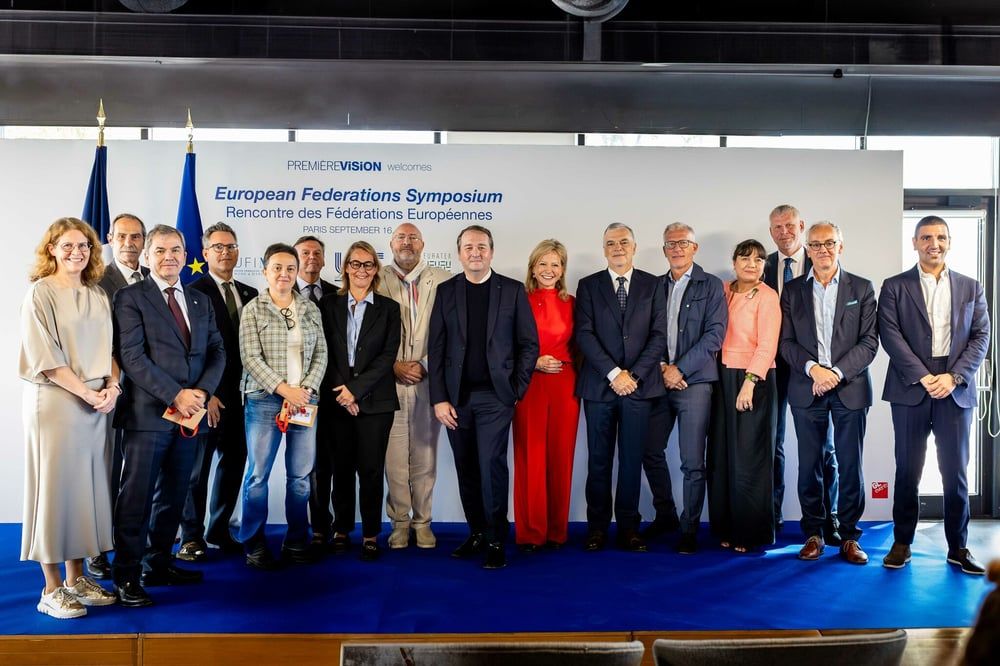
Representatives from more than twenty of Europe's leading textile and clothing federations convened in Paris on September 16th, gathering at Villepinte during the Première Vision Paris trade show. The occasion marked a pivotal moment: the signing of a joint declaration to aggressively combat the rise of ultra-fast fashion. This collective effort seeks not only to unite industry bodies but also to compel national and European authorities to take decisive action against the formidable competition posed by online giants like Shein and Temu. While an air of industry camaraderie was present, a palpable sense of urgency underpinned the meeting, driven by concerns over ultra-low-cost Chinese competition that appears to circumvent standard oversight, including critical customs checks.
The intensity of this situation was underscored by a striking development that very morning. Shein France chose the same day to announce its first agreement with a French brand, a move initially slated for the following day. This seemingly strategic counter-announcement amplified the existing tensions, highlighting the immediate and pervasive threat felt by European manufacturers and retailers.
At the heart of the signed declaration are several key demands aimed at European institutions. The federations unequivocally urged the swift abolition of the duty exemption for small non-EU parcels valued under 150 euros. Furthermore, they advocated for a dedicated levy on these parcels to finance necessary inspections, alongside comprehensive VAT collection. The document also called for accelerated investigations and penalties under the Digital Services Act (DSA) and the Digital Markets Act (DMA), and stressed the importance of establishing a constructive dialogue with Chinese authorities, whose stated sustainability goals often appear to diverge from the actual practices of local platforms.
Beyond European directives, the declaration also pressed Member States to adopt national measures designed to curb the aggressive marketing activities of ultra-fast fashion players, drawing inspiration from France's recently enacted "Fast Fashion Law," which legally defines and targets harmful business models. Crucially, the federations also called for active support for textile and clothing companies that are committed to investing in sustainability, quality, and innovation. The declaration did not overlook consumers, inviting them to make informed choices by favoring sustainable products and supporting brands actively engaged in the sustainable transition of the textile and clothing industry.
Industry leaders voiced their concerns with passion and conviction. Pierre-François Le Louët, president of UFIMH (Union Française des Industries Mode & Habillement) and initiator of the event, declared that "The fashion industry can't and won't wait." He emphasized the need for a multi-pronged battle, waged "country by country," with federations engaging legislators and the press, and pushing the European Commission for faster action. Mario Jorge Machado, president of the European textile industry confederation Euratex, echoed this sentiment, stating, "We have to stop being naive and pretending not to see what's happening to our market: these players are exploiting the fact that we play by the rules." He underscored the severe threat to creativity, intellectual property, innovation, quality, and design that defines the European industry.
"Enough is enough," asserted Olivier Ducatillion, president of UIT (Union Française des Industries Textiles), highlighting the widespread suffering across the sector. He noted that proposed local solutions often face skepticism due to concerns about circumvention at the European level, thus necessitating a broader approach. Ducatillion framed the signing of the declaration not as an endpoint, but as a critical "starting point" for collective action. Representatives from Italian, Portuguese, and Dutch sectors, among others, further reinforced the imperative for swift, coordinated action across the industry. Ralph Kamphöner, representing the German Textil+Mode federation in Brussels, notably pointed out the absence of a European Commission representative at the meeting, despite organizer efforts, signaling a gap in direct engagement.
The scale of the challenge is immense, as quantified by the federations. They estimate that a staggering 4.5 billion parcels were imported into Europe last year via Chinese low-cost platforms. This volume, they contend, now accounts for an alarming 5% of all clothing sales in Europe and a significant 20% of online clothing sales, demonstrating the profound impact these players have on the European market and underscoring the urgency for the unified European response.