Fashion Brands Power Bangladesh's Solar Textile Revolution
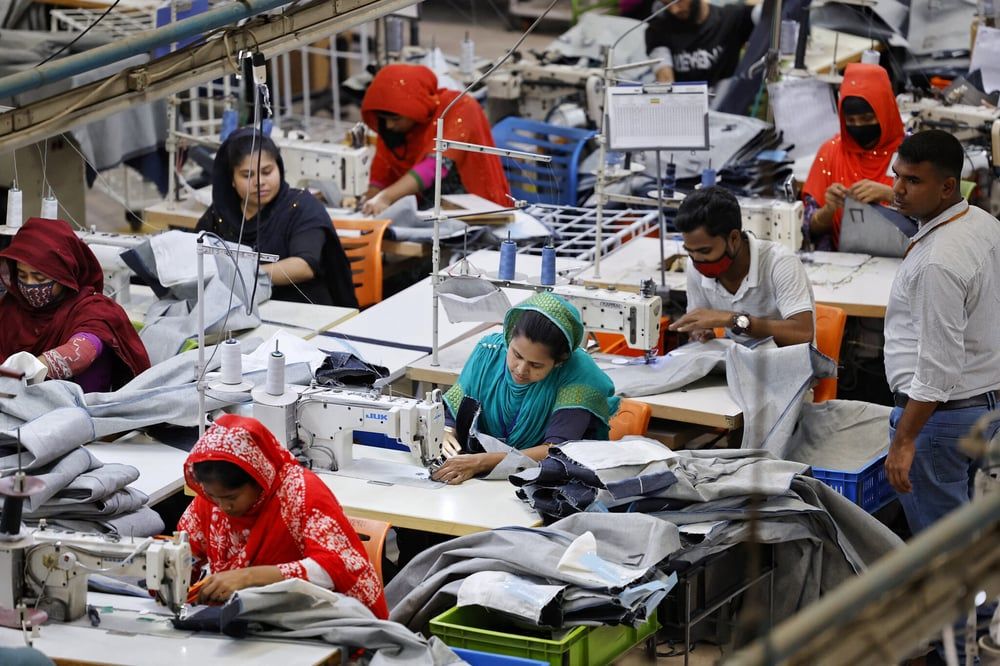
With land resources becoming increasingly scarce in Bangladesh, the nation's vital textile industry is leveraging its extensive roof space to contribute significantly to the country's clean energy transition through solar power. Under mounting pressure from global brands to adopt greener practices, textile suppliers, which collectively account for an impressive 85% of Bangladesh's exports, are actively seeking innovative funding mechanisms to expand their rooftop solar power systems.
However, a significant hurdle persists for the multitude of small and medium-sized enterprises (SMEs) that constitute the backbone of Bangladesh's garment and textile manufacturing sector. These factories frequently struggle to secure the necessary financing to construct their own solar plants. Furthermore, energy companies have been hesitant to make independent investments, wary of potential financial losses if smaller factories default on their obligations, thus creating a deadlock in solar adoption.
To overcome this impasse, a promising new model has emerged: fashion brands are collaborating directly with energy companies. This synergy involves co-investing in the development of rooftop solar capacity for their smaller Bangladeshi suppliers, combining brand commitment with energy company expertise. A notable illustration of this approach is the Greener Garments Initiative (GGI), where Danish clothing brand Bestseller partnered with solar energy company SOLShare to jointly fund and build rooftop solar installations at garment factories across Bangladesh. This scaling up of brand support, as noted by Aziza Sultana Mukti, Deputy CEO at SOLShare, holds the potential to significantly accelerate the industry's energy transition.
The involvement of fashion brands not only motivates suppliers to transition to solar power more rapidly but also renders the investment financially more secure for the solar energy companies responsible for installing the photovoltaic systems. This joint initiative, specifically designed to cater to small and medium-sized factories, has already achieved an installed capacity of over seven megawatt-peak (MWp) within the last two years. While this capacity may seem modest, GGI's solar installations have demonstrated remarkable growth, expanding by more than 200% in the past 18 months, with further expansion plans underway. Another initiative, the Apparel Impact Institute, is also exploring similar models by pooling contributions from brands and philanthropic organizations to aid Bangladeshi factories in developing rooftop solar capabilities.
Bangladesh's industrial sector, heavily dominated by textiles, possesses the potential to generate approximately 5,000 MW of solar power, which would represent about a fifth of the country's total generation capacity. Currently, however, rooftop solar installations account for less than 1% of this potential, as highlighted by an analysis from the Institute for Energy Economics and Financial Analysis (IEEFA). The primary reason industrial rooftop solar has yet to reach its full potential is the struggle many manufacturers face in accessing the required finance. Much of the progress in building rooftop solar capacity to date has been driven by larger manufacturers, such as the DBL Group, one of Bangladesh's biggest manufacturers, which has self-invested in a significant 5.42 MW capacity across its factory rooftops and plans further expansion.
For large suppliers like the DBL Group, securing finance for renewable energy projects is not a major obstacle, as they can typically fund such initiatives through their own capital expenditure. In contrast, smaller joint initiatives like the GGI by SOLShare and Bestseller are implementing operational expenditure (OpEx) projects within the textile sector. Under this model, an energy company builds, owns, and operates the rooftop solar plant, charging the factory for the electricity generated, while also selling any surplus power back to the grid. This OpEx model is particularly beneficial for smaller suppliers, effectively bridging their gaps in finance, knowledge, and technical expertise, according to Mohiuddin Rubel, former director of the Bangladesh Garment Manufacturers and Exporters Association.
For global fashion brands like Bestseller, supporting suppliers in reducing emissions is paramount to achieving their own decarbonization goals, especially since supplier emissions account for a staggering 96% of the sector's total emissions. Felicity Tapsell, head of responsible sourcing at Bestseller, affirmed their commitment to supporting suppliers in key sourcing regions like Bangladesh as they navigate increasingly stringent climate targets. Beyond solar, Bestseller is also considering supporting suppliers with other substantial clean technology investments, such as biomass boilers or heat pumps, recognizing that solar plants alone might not suffice for a comprehensive energy transition.
Ultimately, for decarbonization efforts to be truly sustainable, a holistic approach is required. This encompasses not only financial support for solar installations but also long-term partnerships from brands, access to low-cost financing, and supportive tax cuts from the government, emphasizing that a multi-faceted strategy is crucial for a lasting clean energy future in Bangladesh's textile industry.