Fashion's Thin Obsession Returns Amidst Body Inclusivity Backlash
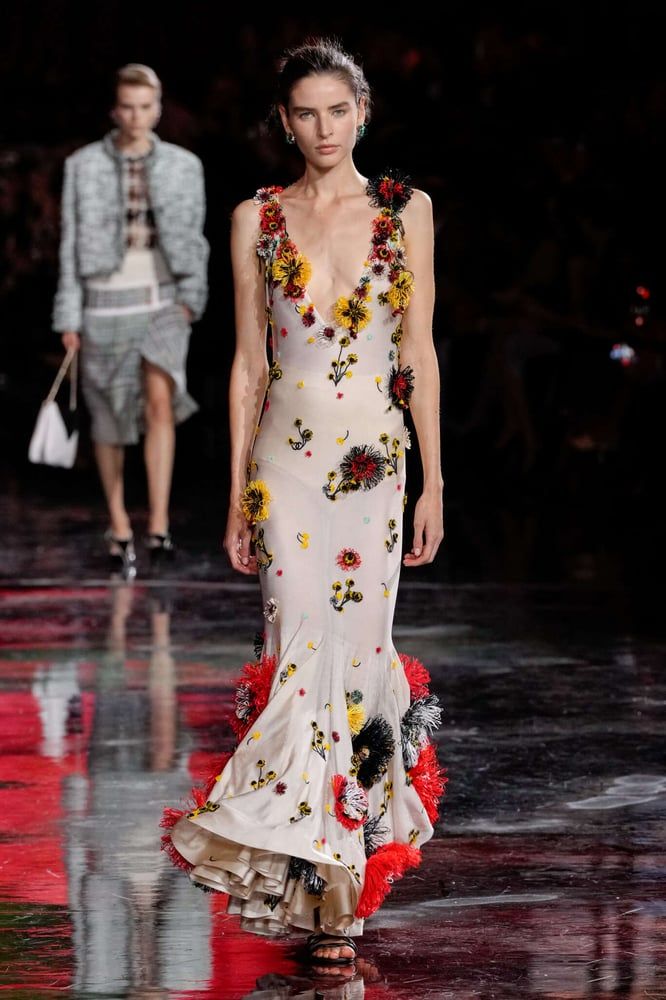
After a fleeting embrace of "body inclusivity" and the showcasing of plus-sized models, the fashion industry appears to be retracting, once again elevating extreme thinness as the predominant beauty ideal. This noticeable shift has created a challenging environment for models who do not fit the very small size category, as their opportunities on the runway are reportedly diminishing.
Confirming these anecdotal accounts, data recently published by Vogue Business, derived from an analysis of catwalk shows during the most recent Spring/Summer 2026 Fashion Weeks, provides stark evidence. Out of 9,038 looks meticulously examined across New York, London, Milan, and Paris, a staggering 97.1 percent featured models categorized as very small (equivalent to US 0-4, UK 4-8, or French 32-36 in France) in their size inclusivity report. In contrast, regular-sized models constituted a mere 2.0 percent of the body types observed, while "plus-size" models (US 14+, UK 18+, France 44+) accounted for an even smaller fraction at just 0.9 percent.
Industry professionals are keenly feeling the impact of this regression. Aude Perceval, a booker at Plus Agency, a pioneering firm for plus-size modeling in France, noted to AFP that there are "fewer and fewer plus-size models on the runways," a trend she observed to be particularly pronounced in Paris. Doralyse Brumain, a 31-year-old model who wears a French 40-42, confirmed to AFP a "real regression" since 2022, not only in the frequency of contracts but also in the associated fees.
This return to thinness presents a curious contradiction, as many designers are simultaneously incorporating elements like corsets into their collections that naturally aim to create curvy silhouettes. In some instances, models have even been seen with padding around their hips to achieve an hourglass shape, highlighting the industry's conflicted message around body ideals.
The current landscape marks a departure from the "body positive" movement that gained momentum in the 2010s, which advocated for the acceptance of diverse body types and sought to dismantle the unhealthy and often unattainable beauty ideal of extreme thinness. Instead, the industry seems to be reviving an aesthetic reminiscent of the "heroin chic" popularized in the 1990s by supermodels such as Kate Moss. French model casting director Esther Boiteux attributes this partly to a "false idea that being thin means being chic, being rich."
Furthermore, the increased availability of weight-loss drugs, such as Ozempic – originally a diabetes treatment now widely used to suppress appetite – has also been linked to this renewed emphasis on thinness. British Vogue editor Chioma Nnadi suggested last November that the drug "has something to do with it because we're seeing a lot of celebrities who are using it," pointing to a broader "shift in the culture around how we think about our bodies and how we address our bodies."
Beyond cultural and societal influences, practical considerations within the fashion industry also contribute to the prevalence of very small models. Garments for fashion shows are traditionally designed and manufactured in a single, standard size, catering to thin models. Adapting these designs for regular or larger models demands significant foresight and additional time in the production process, posing a logistical challenge for an industry often operating under tight deadlines.
Despite these ingrained practices, advocates and designers are pushing for change. Ekaterina Ozhiganova, a Russian-born model and founder of the Model Law association, which champions model rights, emphasizes that consumers are generally in favor of seeing models of various sizes. However, for true and sustainable inclusivity, she believes a "profound change in production" is necessary, arguing that the industry continues to perpetuate "an unattainable ideal." French designer Jeanne Friot shares this vision, asserting that fashion runways should be a platform where everyone can see themselves represented, calling for "larger sizes... older people, all ethnicities, all genders."
While sightings of regular-sized women on catwalks are becoming increasingly rare, this regression is not going unnoticed by critical voices. French fashion journalist Sophie Fontanel, for instance, took to Instagram in early October during the Givenchy show at Paris Fashion Week, urging, "We have to speak out when fashion messes up and establishes a standard it should abandon." The ongoing debate highlights a crucial juncture for an industry grappling with its past ideals and the evolving expectations of a diverse global audience.