France Rolls Out Groundbreaking Apparel Eco-Scoring System Paving Way for Greener Fashion
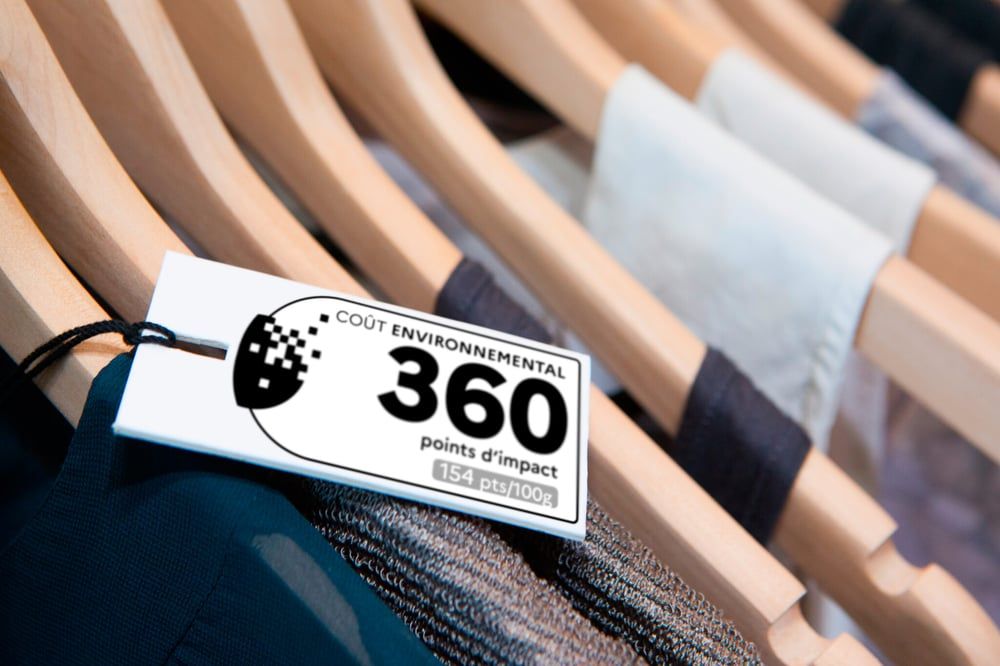
France’s environmental scoring system for the apparel distribution sector is moving from concept to reality, following its validation by the European Union in May. The decree on environmental labeling was officially published in the Journal Officiel on September 6, with its application set to begin on October 1. This significant regulatory shift has been eagerly anticipated by both apparel brands and the growing number of service providers specializing in environmental scoring, who are now poised to assist with complex garment impact assessments.
A key aspect of this new framework, which has sparked considerable debate, concerns the role of these third-party service providers. While they can conduct impact assessments on behalf of brands, the legal framework also permits them to publish an eco-score for a brand even without its explicit consent, should the brand fail to do so itself. Brands have expressed strong reservations, citing concerns about the potential for inaccurate or misleading scores due to service providers' limited access to reliable internal data. French authorities, however, maintain that this provision is a strategic move to encourage brands to publish their own data, as scores calculated and published by brands will legally supersede any third-party assessments.
Brands will, however, benefit from an initial grace period. From September 15, 2023, and for one year thereafter, only brands themselves are authorized to declare an eco-score on the official portal. Once this deadline passes, third parties will be permitted to publish scores on behalf of brands, even without their prior approval. This mechanism has led some industry observers to speculate that it could serve as an indirect path toward making environmental labeling a mandatory requirement for all apparel businesses in France.
Further questions within the industry revolve around the potential for environmental labeling to become intertwined with financial incentives. Manufacturers, in particular, are scrutinizing whether subsidies might eventually be linked to these eco-scores, thereby challenging the supposedly "voluntary" nature of the labeling system. A pertinent example cited is the "Texhabi" eco-design aid from Ademe (the French Agency for Ecological Transition), which already mandates the use of Ecobalyse—the calculation platform that underpins the new environmental labeling system.
It is crucial to differentiate the French eco-score from the European "PEF" (Product Environmental Footprint) score, which is now intended solely for professional use. France’s eco-label is a comprehensive system built upon 17 distinct factors. These include product type, weight, whether the item is remanufactured, the number of SKUs and price, company size, the origin and nature of materials, and a detailed breakdown of manufacturing locations covering spinning, weaving, knitting, finishing, printing, garment making, and washing. Additionally, factors like transport and accessories such as buttons, zippers, and underwiring are also taken into account.
The final score for each item incorporates 16 environmental impact categories, using a sophisticated system of normalization and weighting coefficients. A point of contention between public authorities and the textile and clothing industry arises when data is unavailable: in such cases, an average based on equivalent products is applied to the calculation. The industry is concerned that less sustainable actors might exploit this provision by claiming a lack of data to artificially inflate their scores, thus undermining the system’s integrity.
A late addition to the system is a score per 100 grams of product, similar to how food products display price per kilo. This score is designed to be intuitive: a higher score indicates a lower environmental impact. Pascal Dagras, who oversees the display project for the French government, announced in spring that a public awareness campaign explaining the eco-score will be launched in early 2026, spearheaded by Ademe. Until widespread consumer understanding grows, brands are expected to take the lead in educating their own customers about the meaning and implications of these new scores.
Beyond increasing consumer awareness, October 1 marks a significant regulatory milestone: any previous environmental scores displayed by brands that do not align with the new official methodology will henceforth be considered non-compliant. This also brings to the forefront the broader challenge of reconciling the French system with the European PEF, particularly given their differing perspectives on product durability—one focusing on physical wear, the other on broader lifecycle metrics. A legal convergence between these two approaches is widely viewed as an inevitable next step.