French Luxury's Indian Eldorado: Promise, Puzzles, and Potential Breakthroughs
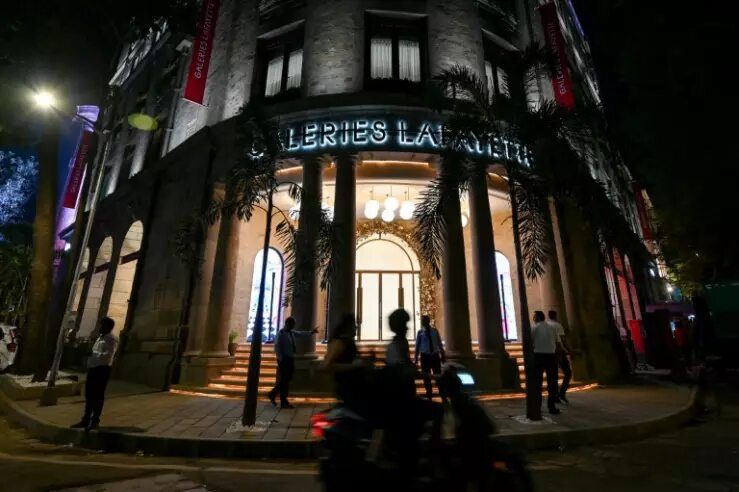
India presents a captivating, yet complex, landscape for French luxury brands, which for two decades have envisioned it as a new El Dorado. Despite its immense potential, the world’s most populous country has largely failed to meet their high expectations. Bénédicte Epinay, general delegate of the Comité Colbert, representing 85 French luxury companies, articulates this sentiment: "It's a promising market, but a complicated one." The recent inauguration of Galeries Lafayette’s first Indian store in Mumbai, developed in partnership with India’s Aditya Birla Group, marks a significant milestone, hailed by Epinay as "an important step that will bring a breath of the West."
The new Galeries Lafayette outlet, spanning 9,000 m² across five floors and featuring 280 luxury and designer brands, currently sees a majority of foreign brands. However, Philippe Pedone, director of international development, anticipates this balance shifting. Nicolas Houzé, chairman of the group's management board, further revealed plans for a second department store in New Delhi by 2029-2030, targeting annual sales of 20 million euros. The underlying market potential is indeed staggering, with 1.4 billion inhabitants and tens of thousands of new millionaires emerging annually. Estelle David, Director for South Asia at Business France, forecasts the luxury market, valued at 10 billion euros in 2024, to triple by 2030. Epinay adds that India "ticks all the boxes" with its growing wealthy population and rising middle class.
However, the reality on the ground is far more challenging than the promising statistics suggest. High taxes, stringent regulatory constraints, underdeveloped quality infrastructure, and a deeply entrenched cultural identity pose formidable obstacles. French luxury giants have largely remained silent when approached for comment, a silence experts interpret as a reflection of the "very few positive things" they can report. Ashok Som, a professor at ESSEC, notes that brands have "very little data to show that they are making a profit" or "achieving a return on investment" in the region.
The current situation stands in stark contrast to the early 2000s, when major luxury houses believed India would follow China as their next significant growth driver. A quarter-century later, the Indian market remains "infinitesimal," according to Epinay. Most brands operate only one to three stores in India, a stark difference to the 100 to 400 stores typically found in China. Epinay highlights that the only commonality between the two powers is their population size, with India lacking China’s "social, linguistic and territorial homogeneity." Som further points out that many still fail to grasp the nuances of this "poor country with a largely agrarian economy," contrasting it with China, which boasted "shopping malls everywhere" by the late 1990s and a "wealthy class eager for Western products." Today, India, the world’s fifth-largest economy, possesses only six high-end shopping malls.
Further exacerbating the challenges are high customs duties, non-tariff barriers, and cumbersome bureaucracy. These factors often make it economically rational for Indian consumers to take a return trip to Dubai, costing around 300 euros, to purchase a French luxury bag at a 30% to 40% lower price than in major Indian cities. Yet, a glimmer of hope emerges from ongoing negotiations between India and the European Union for a free-trade agreement, which both parties have pledged to conclude by year-end. Epinay believes this agreement "will give this market a real boost."
To truly succeed, luxury brands must "adapt to the culture, tastes and consumption patterns" of Indian consumers, stresses Ms. David. While foreign ready-to-wear brands have established a presence in megacities like New Delhi, Mumbai, and Bangalore, "Western silhouettes" remain a minority across the country. While men have largely adopted Western attire, women overwhelmingly continue to wear saris. To penetrate this segment, brands such as Louboutin, Dior, Chanel, and Bulgari are already engaging in collaborations with local designers, brands, Bollywood stars, and influencers. However, this strategy isn't without its critics, as illustrated by Sonal Ahuja, a 39-year-old human resources manager, who questioned, "why would you want to buy something from abroad that's trying to be Indian?"
Beyond traditional retail, French brands are also strategically leveraging e-commerce, tapping into India’s vast base of 900 million internet users. The significant Indian diaspora, comprising over 35 million people, represents another potential avenue, as many returning individuals bring Western lifestyles and preferences back to the country, potentially converting more local customers.