Giorgio Armani The Emperor of Fashion Leaves an Undying Legacy
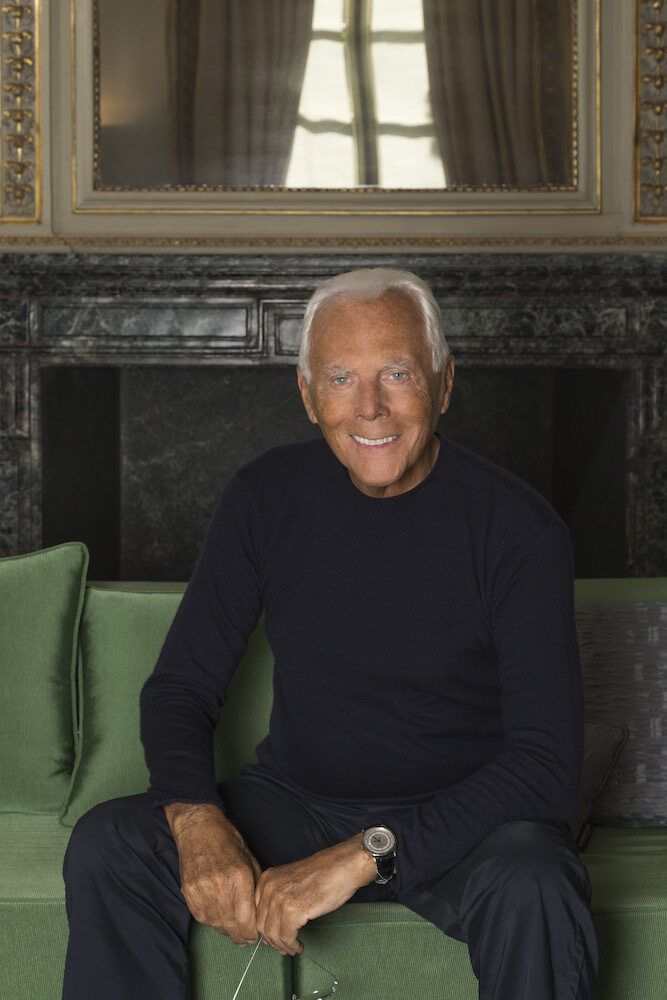
Giorgio Armani, who recently passed away peacefully amongst his family in Milan, will forever be revered as one of Italy's greatest individual designers and the driving force behind the remarkable resurgence of Italian fashion in the post-war era. It is genuinely difficult to overstate Armani's immense importance in the realms of fashion and design, a truth made even more evident following his passing, and his extraordinary name recognition that transcends geographical boundaries. Indeed, if one were to conduct a spontaneous poll, Giorgio Armani would undoubtedly be the most frequently named fashion designer globally.
Those privileged enough to have spent time with Armani—from the bustling streets of Milan and New York to the vibrant cities of Shanghai and Tokyo—were consistently struck by the effortless grace with which he navigated his profound fame. Gulf sheiks would instinctively place their hands on their hearts when meeting Giorgio; in Hong Kong, his leisurely strolls to lunch would bring traffic to a standstill; and backstage at his Milan shows, movie stars and Oscar winners would greet him with the deepest bows. A memorable incident near the Spanish Steps in Rome saw a passerby halt him, insisting on kissing his hand. Armani gently accepted, then, with a Shakespearean aside, quipped, "You know, I didn’t pay her ahead of time to do that!"
Despite achieving enormous wealth and global renown, he wore his success with an admirable levity and grace. He conversed with young assistants, security guards, or complete strangers with the same warm, avuncular tone he reserved for heads of state. While generally courtly, precise, and possessing a sharp wit, Armani was also known to exhibit a volcanic temper, but only when his exacting standards were not being met, a testament to his unwavering commitment to perfection.
Today, it is virtually impossible to visit any major global city without encountering the pervasive influence of Armani. His diverse and elegant collections—Armani Privé, Giorgio Armani, Emporio Armani, Armani Exchange—along with his extensive network of Armani cafés, Armani/Dolci, and Armani/Casa stores, collectively herald the distinctive blend of refined minimalism and Oriental fantasy that was his unmistakable signature style. Notably, in an era where countless designers sold control of their brands—Dior, Chanel, Valentino, and Versace being prominent examples—Armani departed this life as the sole owner of his colossal empire. Last year alone, his enterprise achieved a net profit of €398 million on a turnover of €2.3 billion, a powerful affirmation of his enduring business acumen.
Armani’s journey into fashion was not direct. Although he left his hometown of Piacenza in the early 1950s to pursue medicine in Milan, he shifted his career after two years of compulsory military service, becoming a window dresser at Italy’s largest department store, La Rinascente. This foundational training in display and meticulous editing remained with him throughout his life. This dedication was evident during a trip with Armani to open his first hotel in Dubai’s Burj Khalifa in 2006, where he spent 45 minutes meticulously altering lighting, repositioning chairs, straightening waiters’ shirts, and precisely folding napkins at an Armani café, embodying his true aesthete nature.
Like a devoted artist, he dedicated his life to creation, only considering socializing once he was 100 percent satisfied with his work. On another occasion, during his first "Armani One Night Only" event in London—a spectacularly cool and grand bash supporting the fight against AIDS in Africa and Bono’s charity RED—Giorgio’s commitment was palpable. Staged at Earl’s Court, transformed into an Ibiza nightclub, with celebrities like Leonardo DiCaprio, Alicia Keys, Lady Helen Taylor, and Minnie Driver in attendance, and Elle MacPherson and James Franco as MCs, the event featured multiple runway shows and performances by Beyoncé, Bryan Ferry, Alicia Keys, and Andrea Bocelli. Yet, what truly stood out was the night before, when Armani, engrossed in editing collections, dismissed a reminder from his communications director about a dinner in his honor with Tony Blair, harrumphing, "Qui, sto lavorando! Here, I am working!"—underscoring his unwavering devotion to his craft above all else.
An autodidact, Armani received his initial lessons in garment making from his mother, later naming both of his exquisite superyachts Mariù in her honor. After dedicating a decade to working his way up in the fashion industry, Giorgio, encouraged by his partner Sergio Galeotti, first established a design office and subsequently launched his own brand in 1975, reportedly financed by the sale of his Volkswagen. By October 1975, Giorgio debuted his first menswear collection to immediate critical acclaim. This moment was pivotal, as a cohort of exceptionally talented Italian designers—including Gianni Versace, Gianfranco Ferré, and Valentino Garavani—began to harness Italy's unparalleled artisans and manufacturing capabilities to challenge France’s long-standing dominance in fashion. Armani was the de facto leader among these brilliant peers, often affectionately nicknamed "Il Re della Moda" (The King of Fashion) or "Imperatore Giorgio." While generally publicly respectful of his contemporaries, he had a distinct aversion to his clothes being mixed with theirs, with the notable exception of high-octane Versace, whose dazzling style seemed to offend him.
In a world where practically every designer employed an independent stylist to craft their campaigns, Armani famously never did, meticulously avoiding any deviation from his strictest fashion vision. Giorgio’s signature style was perpetually a balancing act – the impeccable silhouettes of his menswear perfectly complemented by the opulent delicacy of his couture. Like most Italians, he harbored a deep love for cinema, and it was this medium that dramatically propelled Armani into global prominence when he designed the wardrobe for Richard Gere in the iconic 1980 film "American Gigolo." The famed scene of Gere casually tossing beautiful Armani shirts onto a bed before choosing a suitable seductive outfit elegantly articulated a new era of modern elegance and underscored fashion's suddenly vital role in contemporary living. This pivotal moment indelibly linked Giorgio to the world of cinema, where he would go on to costume over 100 films, from "The Untouchables" and "The Dark Knight Rises" to "Ocean’s Thirteen" and "Inglourious Basterds." Since "American Gigolo," no Armani front row was complete without a constellation of movie stars, football greats, sporting superstars, and cultural icons gracing his shows.
Two decades ago in Cannes, he extended a kind invitation to supper aboard Mariù I, a magnificent boat distinguished by its black hull, pale wood paneling, and muted non-colors – the antithesis of a typical superyacht. When a fresh group of about a dozen people, including Kevin Kline and Sheryl Crow, arrived after an evening screening, Giorgio personally had his three talented chefs prepare a large bowl of simple yet delicious pasta, made only with olives, garlic, pepperoncino, and Parmesan. He then insisted on personally serving everyone himself, a gesture of humility and hospitality rarely, if ever, witnessed from any other designer.
For many years, he staged the majority of his shows in his private show-space at his headquarters on central Via Borgonuova. It was there, in 1995, that the author, then a young, freshly appointed editor-in-chief of Vogue Hommes, first met him. Having spent five years in Italy, the author was able to converse with Armani in Italian. Armani himself spoke excellent French, though like many Italians born before the war, his English was limited. The author proudly presented his first edition, which featured a stunning shoot by Albert Watson titled "Mafia Crooner," depicting a dashing Latin couple with the man looking sensational in a classic cement-hued Armani double-breasted jacket inside a café in Little Italy. Giorgio seemed suitably impressed, shaking the author's hand firmly as he concluded their meeting. Later, however, he found the author at the door of his palazzo, visibly irate. "Have you seen this!?" he exclaimed, showing the crooner's shot. "Somebody has put an appalling Vivienne Westwood tie on my jacket! Allora?" To which the author responded, "Sorry, Signor Armani, but you know how difficult it is to control stylists." Armani, placated, replied, "Finally, an editor who knows what he is talking about!" Subsequent shows were staged in South Milan at the Armani/Teatro, an architectural marvel designed by Japanese architect Tadao Ando within a former Nestlé chocolate factory. This very location is where Armani's coffin will be placed in a funeral chamber this weekend, open to the public, and it was also the site of his final show in June, where, too frail to take a bow himself, his loyal right-hand man, Leo Dell’Orco, graciously took the bow. Dell’Orco, a faithful partner to the end, is expected to continue guiding the house alongside Armani’s surviving sister, nieces, and nephews.
Even into his 90s, Giorgio Armani never slowed down. Last November, he staged another "One Night Only" event, a star-packed show at the New York Armory, where luminaries such as Orlando Bloom, Liev Schreiber, and Pamela Anderson proudly posed. The day before, Giorgio had unveiled yet another ambitious project – a brand-new $400 million complex named Armani Residences on Madison Avenue, featuring three floors of retail space, two restaurants, and over twenty apartments. Giorgio, naturally, reserved the penthouse for himself. Indeed, many days in his final decade were dedicated to the development of Armani hotels and residences, with a series of luxury towers slated to open in the coming years. His November day commenced with a personal appearance at his boutique in Bergdorf Goodman, signing copies of his book "Per Amore." Outside, ten windows of the world’s most luxurious department store were custom-designed with looks from Armani’s men’s and women’s collections, an elegant tribute to his historic ties with Bergdorf—the first American store to carry the Giorgio Armani men’s collection back in the 1980s. All told, it was yet another remarkable two days orchestrated by the Italian maestro, the designer who seemed to defy sleep in the city that never sleeps.
At the time, when asked about his desired legacy, Giorgio responded, "The legacy I hope to leave is one of dedication, respect and an eye for reality. Success in fashion comes from observing people, understanding their needs and creating clothes that meet those needs. At the heart of it, I focus on making beautiful garments. Fashion is a serious but deeply rewarding profession." This encapsulates his life: the greatest brand builder in Italian design, arguably the hardest-working designer ever encountered, and a true gentleman who left this earth a far better place than he found it.
In a profound sense, Armani transcended the role of an iconic fashion designer. The broader Italian public, and indeed an international audience, revered Giorgio as the veritable president of Italian style and taste. His remarkable longevity and unwavering devotion to his art elevated him to a hallowed figure. In future years, when historians chronicle the fresh narratives of Italy, Armani will deservedly be ranked alongside titans like Galileo, Leonardo Da Vinci, Michelangelo, and Christopher Columbus. Beyond his vast fashion empire, hundreds of stores, Armani Casa skyscrapers, and a massive perfume business, his distinct aesthetic has influenced the past half-century more profoundly than any other living designer. In an era defined by style, he was undeniably the Doge of design. The Imperatore has departed, and we shall not witness his like again.