Iconic Star Brigitte Bardot, Animal Rights Champion, Dies at 89
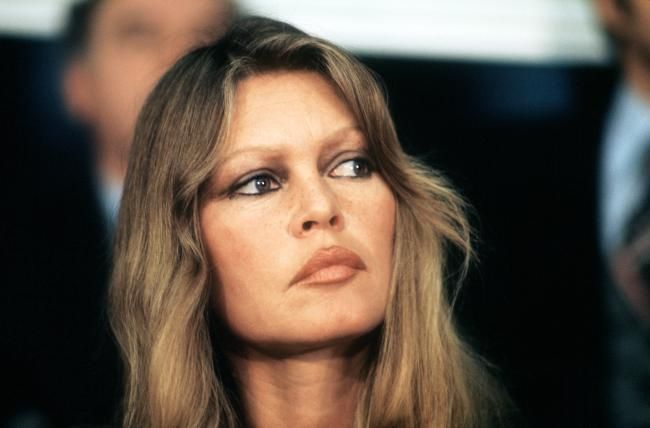
Brigitte Bardot, the iconic French actress and animal rights activist, has died at the age of 89. The Brigitte Bardot Foundation announced her death with “immense sadness,” noting she “chose to abandon her prestigious career to devote her life and energy to the defence of animals.”
Bardot passed away in the morning at her residence, La Madrague, in Saint-Tropez. A gendarmerie vehicle blocked the dirt track leading to the villa, as reported by an AFP journalist at the scene.
Local residents expressed their sorrow and fondness for the star. “We saw her often. I’d watch her go by and, when she was in a good mood, she’d blow us kisses,” said Nathalie Dorobisze, a 50-year-old Saint-Tropez resident, visibly moved. “It feels strange that she’s no longer here, because she’s always been here.” La Madrague held a special significance for Bardot, even lending its name to her fashion label.
Political figures also paid tribute. Marine Le Pen, leader of the Rassemblement National, described Bardot as an “incredibly French” woman – “free, indomitable, uncompromising.” Bardot was known for her affinity with Le Pen’s political party.
In recent years, Bardot, who symbolized the liberalization of social norms in 1950s France, became increasingly known for her controversial statements on politics, immigration, feminism, and hunting, some of which led to convictions for inciting racial hatred. She famously declared, “Freedom means being oneself, even when it's inconvenient,” a sentiment she included as an epigraph in her recently published book, "Mon BBcédaire."
Before her outspokenness, Bardot was a cultural phenomenon. She defied conventional moral, sartorial, and sexual codes, embodying a woman who “didn't need anyone,” as famously sung by Serge Gainsbourg in 1967. She was a familiar face in both Cannes and on Brazilian beaches.
Bardot was the first celebrity to pose for the bust of Marianne, a symbol of the French Republic, and was often compared to Marilyn Monroe – both blonde bombshells with explosive beauty and turbulent private lives constantly pursued by the paparazzi. Actor Francis Huster remarked, “I’m sure their two stars form the most beautiful duo in the sky.” Bardot herself recalled Monroe as “a woman who was exploited, whom nobody understood, and who died as a result,” a fate she consciously avoided by retiring at 39, leaving behind a legacy of around 50 films.
Two scenes from her filmography stand out: a passionate mambo in “Et Dieu... créa la femme” (1956) and a nude monologue listing her body parts in “Le Mépris” (1963). Former Cannes Film Festival president Gilles Jacob described her as “an unstable balance between caprice and damnation,” while another former president, Pierre Lescure, praised her “crazy, somehow new beauty – absolute and brazen.”
Born into a bourgeois Parisian family in 1934, Bardot initially pursued dance and modeling. At 18, she married Roger Vadim, who cast her in “Et Dieu... créa la femme,” the film that launched her career and cemented her status as a sex symbol. The film’s success led to a whirlwind of roles and intense public scrutiny.
In 1960, at the peak of her fame, she gave birth to her only child, Nicolas. Declaring a lack of maternal instinct, she allowed her husband, Jacques Charrier, to raise their son. She later married German millionaire Gunter Sachs and then industrialist Bernard d’Ormale, who had ties to the Front National.
Bardot’s life took a significant turn towards animal welfare. The catalyst was an encounter with a goat on the set of her final film, “L'histoire très bonne et très joyeuse de Colinot trousse-chemise” (1973), which she subsequently adopted and kept in her hotel room. She became a vocal advocate for animals, opposing ritual slaughter, bullfighting, and the consumption of horsemeat.
In 1977, she traveled to the ice floes to raise awareness about the plight of baby seals, a highly publicized event that appeared on the cover of Paris Match but left her with painful memories.
Much of her later life was spent out of the public eye, in the south of France, between La Madrague and a more secluded residence, La Garrigue. There, she rescued animals in need and ran the Brigitte Bardot Foundation, established in 1986. The foundation benefited from the enduring glamour associated with her early career.
The Brigitte Bardot brand continues to thrive, with a fashion label, Brigitte Bardot Paris, offering collections inspired by the 60s and 70s. A portion of the brand’s revenue is donated to Family Trademark TLM, which holds the exclusive rights to the Brigitte Bardot brand and funds the foundation. She also had a lingerie brand named Brigitte Bardot Lingerie.
In a May interview with BFMTV, Bardot expressed her desire for “peace, nature,” and to live “like a farmer.” She was hospitalized for an undisclosed operation this autumn. She reportedly requested a funeral free from “a crowd of arseholes.”