IKEA Bets on Lower Prices Despite Falling Sales
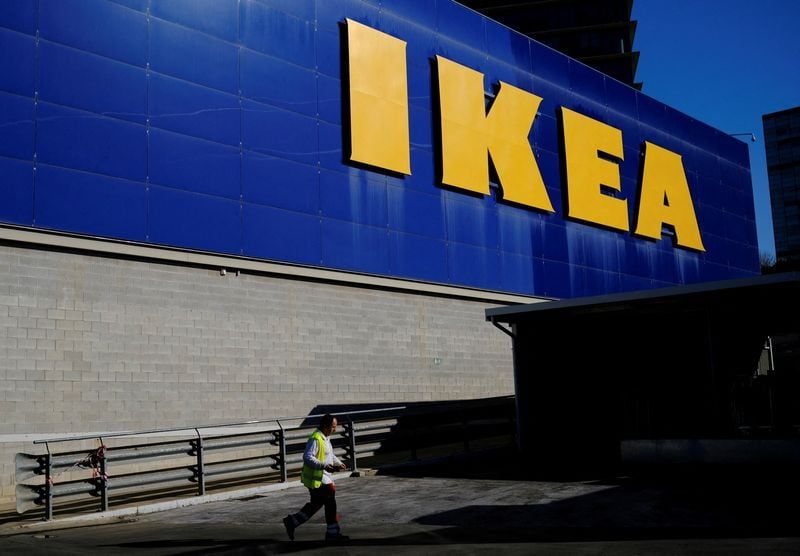
IKEA, the world's largest furniture retailer, has reported a second consecutive year of declining annual sales, a trend attributed to its deliberate strategy of price reduction. Despite the drop in revenue, the company remains committed to this approach, aiming to attract budget-conscious consumers and expand its market share within an intensely competitive retail landscape. This decision follows a period during the pandemic where IKEA, like many retailers, had increased prices due to widespread supply chain disruptions.
Over the past two years, IKEA has implemented an average price cut of 10%, a direct response to high global inflation and weakened housing markets that have significantly dampened consumer demand for furniture and home goods. For the 2025 financial year, which concluded on August 31st, global IKEA retail sales experienced a 1% decrease, or 0.3% when adjusted for currency fluctuations, settling at 44.6 billion euros ($51.9 billion). Interestingly, this revenue dip occurred even as the total number of products sold rose by 3%, accompanied by an increase in both customer numbers and store visits.
Jon Abrahamsson Ring, CEO of IKEA franchisor Inter IKEA, explained the rationale behind these strategic price cuts to Reuters, highlighting the company's private ownership. "One of the reasons we could take that decision was the fact that we are not on the stock exchange - we can be very long term together with our franchisees and decide that it's most important right now to have better prices," he stated. Ring further emphasized the challenging economic environment, noting, "We do that because we see that people in all our 63 markets, their wallets are thinner right now and we see that consumer confidence for many years has gone down."
Regarding the United States market, Abrahamsson Ring confirmed that IKEA has not yet raised prices despite facing higher import tariffs that have increased its operational costs. The company is actively working to absorb these additional expenses, though he did acknowledge the possibility of future price increases, stating, "We have not come to that point yet, but it will maybe eventually come." IKEA faces competition from retailers like Wayfair and Walmart in the US. However, a significant portion of IKEA's furniture is manufactured in European factories, providing a slight advantage over competitors heavily reliant on Chinese imports, which are subject to higher tariff rates. Abrahamsson Ring expressed the company's appreciation for the existing trade agreement between the European Union and the US, citing its "good predictability" and desire for its consistency.
Ingka Group, the largest IKEA franchisee operating stores in 31 markets, also reported its lowest annual sales since 2021, with a 1.6% decline to 39 billion euros. This reduction was similarly attributed to price cuts, yet the quantities of products sold by Ingka Group saw a 1.6% increase. Jesper Brodin, CEO of Ingka, expressed cautious optimism to Reuters about a potential rebound in consumer spending. He observed, "The impact of falling inflation and falling interest rates... it usually takes a while before people open their wallets. We are starting to see the tendencies towards that," while also acknowledging that global trade uncertainties and conflicts make precise predictions difficult.