India and France Weave a Textile Tale of Art and Exchange
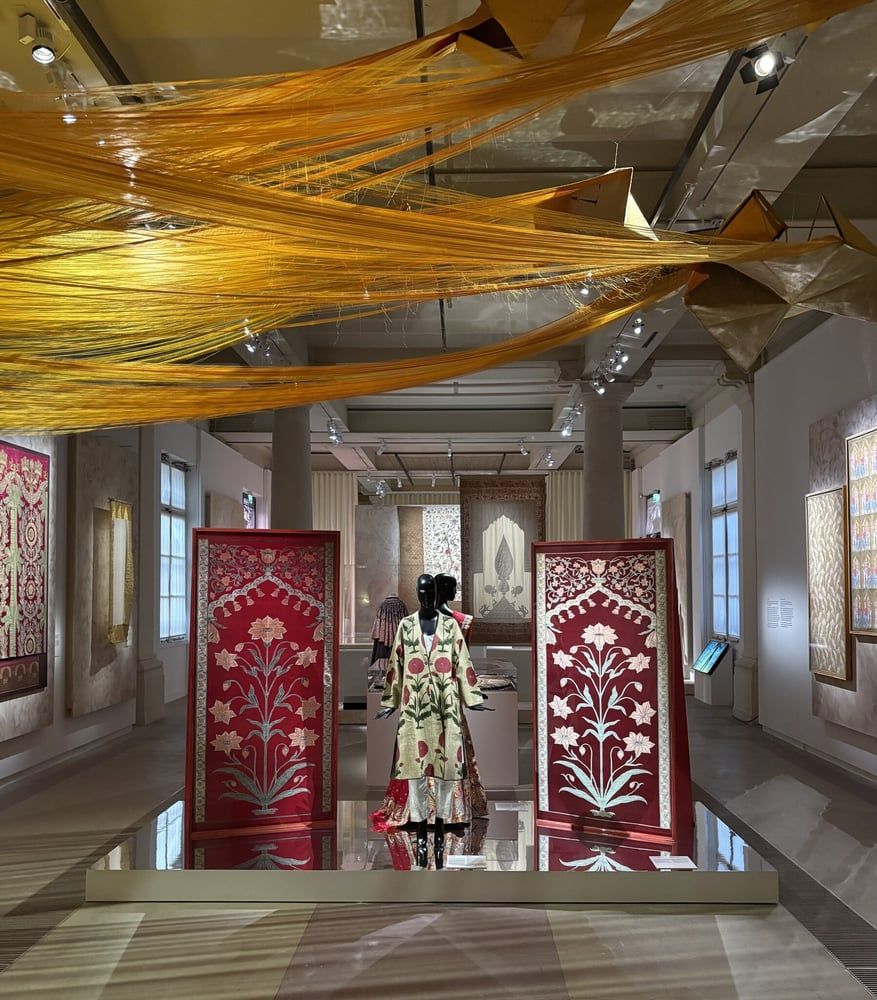
From December 5, 2025, to January 7, 2026, the Mobilier National will host a captivating exhibition titled "Ce Qui Se Trame - Histoires Tissées Entre l'Inde et la France." This significant project is dedicated to exploring the rich artistic and technical exchanges that have flourished between France and India through the medium of textiles.
This ambitious event brings together several esteemed collaborators, including 19M, the Métiers d'art cluster founded by Maison Chanel; the French Embassy in India, actively participating through its Villa Swagatam programme; and renowned designer Christian Louboutin, who lends his expertise and experience of India to oversee the artistic direction and scenography. The conceptual narrative, the organization of the exhibition sections, and the selection of works are masterfully curated by guest curator Mayank Mansingh Kaul.
In conjunction with the exhibition, Lesage Intérieurs, an embroidery and textile decoration house based at 19M, will host a special participatory workshop from December 4 to 7. This immersive experience will focus on the collective creation of an embroidered Indigo Tree of Life. Designed as a communal project, the workshop will offer visitors a unique opportunity to learn various embroidery techniques while contributing to a shared artwork, drawing inspiration from the historical textile exchanges between India and Europe.
The exhibition itself is thoughtfully structured across seven successive thematic spaces: L'Antichambre, Toiles Blanches, Modes Indiennes, Le Fil d'Or, Le Chic à l'Indienne, Sculpter Les Corps, and finally, Un Langage Universel.
The journey commences with L'Antichambre, a striking space designed to illustrate the artistic and commercial dialogues between India and France. It meticulously recreates an 18th-century French apartment, entirely adorned with an Indian textile. Christian Louboutin utilizes this setting to transport visitors back in time, featuring a traditional 18th-century motif specially crafted for the exhibition by artisans from the House of Kandadu. These artisans employed age-old techniques such as block printing and natural dyes, working entirely by hand. The exterior of this room draws inspiration from Indian nomadic tents, covered in Toile de Jouy—a quintessential French fabric whose origins are deeply rooted in Indian printing techniques.
Moving into Toiles Blanches, the exhibition returns to fundamental elements: fibres and threads. Presented without colour, these materials evoke the diverse cultural meanings of white in both Indian and French societies. This section showcases exquisite hand-spun and hand-woven Indian cotton muslins, which profoundly influenced women's fashion in France during the 17th and 18th centuries, alongside examples of French embroidery, embellishments, and delicate handmade lace.
Modes Indiennes delves into the arrival of hand-painted and hand-printed cotton fabrics in France from the 17th century onwards. Initially known as palampores or chintz, these textiles later inspired the creation of "indiennes," which became immensely popular in France. Their distinctive floral and botanical motifs beautifully blend the aesthetic styles of both cultures. The displayed works not only illustrate how these fabrics were utilized in period clothing and interiors but also trace the fascinating origin of the French paisley motif, directly inspired by Kashmir shawls.
Le Fil d'Or introduces visitors to the splendor of brocades—precious fabrics meticulously hand-woven from silk and metallic threads. Lyon historically served as the primary French hub for the production of these luxurious textiles. The 19th-century invention of the Jacquard loom revolutionized their production globally. This section highlights the transformative influence of this innovation on Indian textiles, particularly in Varanasi, through works that masterfully intertwine traditional craftsmanship with contemporary artistic expression.
Le Chic à l'Indienne begins dramatically at the foot of the gallery staircase with a vibrant textile installation inspired by the sari. This traditional garment, boasting over two millennia of history, is reinterpreted here by the Indian brand Raw Mango, celebrated for its modern approach to the sari while collaborating extensively with numerous artisans. This section explores the intricate interplay between French haute couture and Indian fashion, demonstrating how textiles can sculpt and define the human form. The large panels featured in this room are sourced from The Flowers We Grew project, a collaborative endeavor by the Chanakya School of Craft and artist Rithika Merchant.
In Sculpter Les Corps, the focus shifts to contemporary artists who integrate textile craftsmanship into their modern practices. The works on display reveal how textiles can transcend their traditional roles to become sculptural forms, capable of addressing significant social and political issues. Employing a diverse range of techniques, artists from both India and France explore themes of the body, texture, volume, and drape. Notable works by Mrinalini Mukherjee, Simone Pheulpin, Sheila Hicks, the Ateliers Chanakya collective, and Jeanne Vicerial are prominently featured.
Finally, the exhibition culminates with Un Langage Universel, a salon space inspired by India and entirely enveloped in denim. This iconic fabric, originally developed in Nîmes in the 19th century using indigo from India, is now predominantly produced in India itself. This concluding space invites visitors to reflect upon the enduring and dynamic connections between India and France. It features the "After Paris" tapestry by Indian artist Viswanadhan, woven at the prestigious Gobelins, and includes a poignant reminder of Le Corbusier's architectural legacy in India, particularly his work in Chandigarh.