India EU Trade Talks Heat Up Amid US Tariffs and Geopolitical Shifts
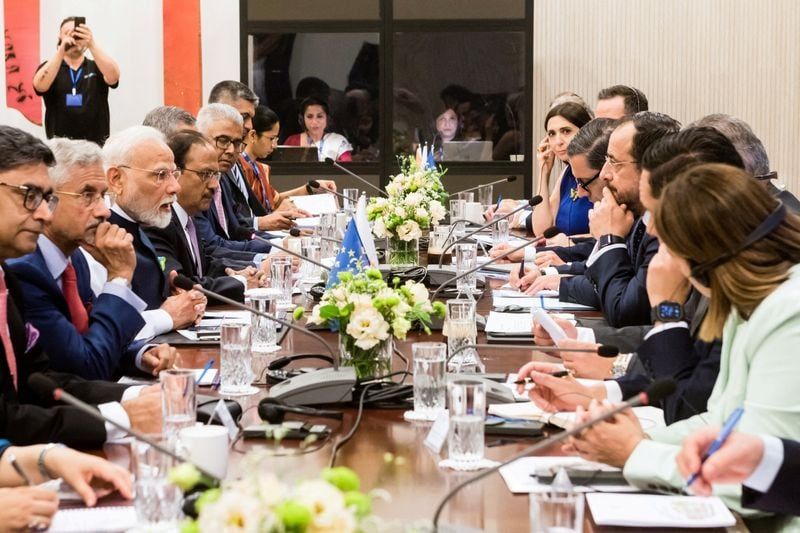
India and the European Union are engaged in potentially decisive trade negotiations in New Delhi this week, aiming to bridge differences over critical areas such as agriculture, dairy, and non-tariff barriers. Both sides are working towards an ambitious end-of-year deadline for a comprehensive deal. An Indian government source confirmed positive momentum, noting Prime Minister Narendra Modi’s recent call with European Commission President Ursula von der Leyen, during which both leaders pledged to conclude the agreement this year.
India's drive to deepen global partnerships is a significant motivator for these talks. This urgency has been amplified following the U.S. President Donald Trump’s decision last month to double tariffs on Indian goods, reaching 50%, in response to India's Russian oil purchases. This move has notably impacted key Indian exports like textiles, leather, and chemicals. The negotiations, which were relaunched in 2022, have gained considerable pace since Trump's re-election, underscoring the strategic importance of this pact for New Delhi.
Brussels, too, faces similar pressures from Trump’s tariffs, accelerating its pursuit of trade alliances globally. The EU has already sealed deals with Mexico and the South American Mercosur countries and is intensifying talks with India, Indonesia, and the United Arab Emirates. Beyond economic considerations, a successful pact with the EU could also serve to draw India closer to the West, addressing some of the unease that followed Prime Minister Narendra Modi’s recent visit to China for a summit attended by Russian President Vladimir Putin and other leaders.
Significant progress has been reported in the ongoing discussions, with 11 of the 23 negotiating chapters already finalized. These completed areas include crucial aspects such as customs procedures, digital trade, intellectual property rights, competition policy, subsidies, dispute settlement mechanisms, and anti-fraud measures. This level of progress indicates a robust foundation has been laid for the broader agreement, reflecting a commitment from both parties to find common ground.
Despite the advancements, several key sticking points remain. India has firmly ruled out concessions on agriculture and dairy, citing the imperative to protect farmers’ livelihoods. Conversely, the EU is pressing for greater access to India’s market, particularly for its automobiles and alcoholic beverages. Further differences persist concerning rules of origin, food safety standards, labor and environmental obligations, and what Brussels views as restrictive Indian quality control orders that act as non-tariff barriers, as highlighted by an EU official.
Another sensitive issue that could impact the negotiations is India’s continued purchase of discounted Russian oil. EU officials view these purchases as undermining sanctions against Moscow. While this matter is unlikely to dominate the trade discussions, it could potentially cast a pall over the talks and lead to resistance in the European Parliament, which would ultimately need to approve any final deal. This geopolitical dimension adds another layer of complexity to the ongoing economic discussions.
High-level engagements are planned to further advance the discussions. European Agriculture Commissioner Christophe Hansen and EU trade chief Maros Sefcovic are scheduled to be in Delhi later this week for meetings with their Indian counterparts. In parallel, the EU’s Political and Security Committee, led by Chair Delphine Pronk and comprising ambassadors from all 27 member states, will visit India from September 10-14 for meetings with officials, defence executives, and think tanks. A contentious issue also on the agenda is the EU’s carbon border tax, set to levy carbon-intensive imports like steel and aluminum from 2026. Indian officials view this as a disguised trade barrier, while Brussels insists it is central to its climate policy, though EU officials have indicated readiness to offer flexibility in its implementation to address concerns of small and medium-sized businesses.