Italian Fashion Faces "Silent Swarm" of Imports and Tariffs Demanding Urgent Government Action
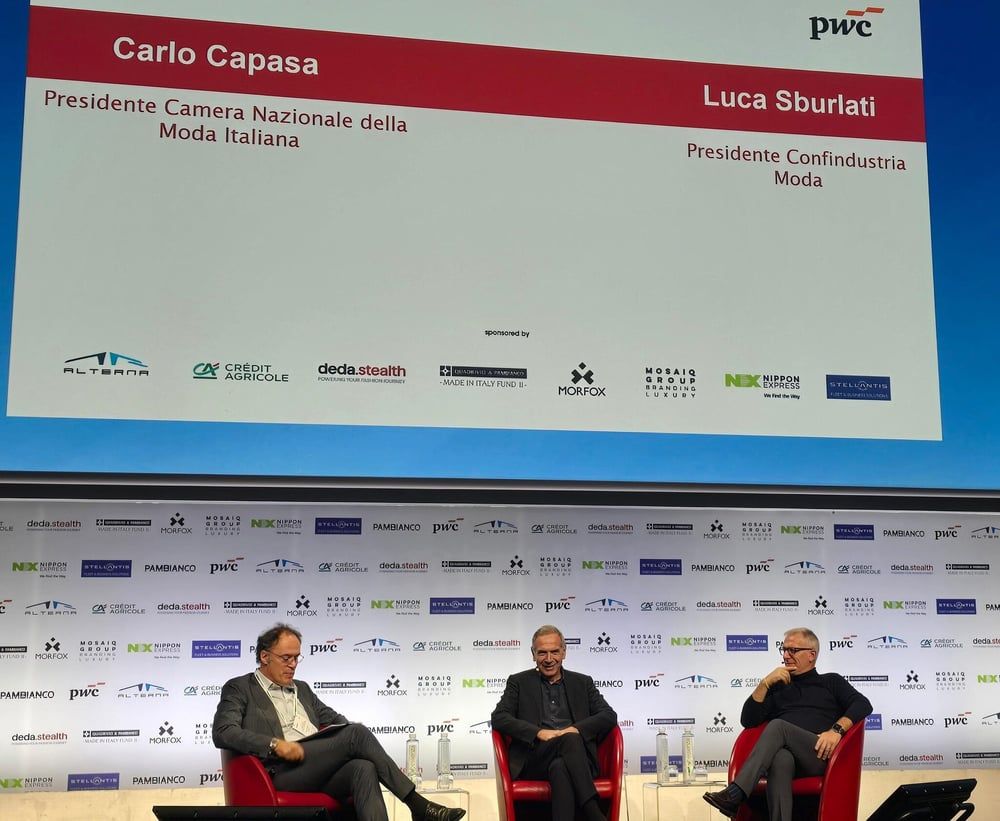
Italian fashion is currently facing significant threats, as articulated by Luca Sburlati, president of Confindustria Moda, the Italian fashion producers’ association. Speaking at the 30th Pambianco Fashion Summit in Milan, Sburlati revealed concerning trends from July figures, indicating a 3% drop in Italy’s fashion exports while imports grew by 5%. This import surge was primarily driven by an 18% increase from China, highlighting a critical shift in market dynamics.
The primary source of this challenge stems from China, particularly through the influx of small parcel deliveries valued up to €150 each. These parcels, estimated to reach €4.5 billion in total for 2024, benefit from exemptions on customs duties and VAT, allowing them to "silently swarm" into Italian homes and markets, undercutting local producers.
A second major challenge originates from the United States, presenting a "double whammy" for Italian fashion. This includes the implementation of new tariffs on goods, coupled with a weak dollar that makes Italian exports more expensive for American consumers. Furthermore, there is a strong and increasing push for local U.S. brands, intensifying competition for Italian products in a key international market.
To counteract this multi-faceted assault, Sburlati emphasized the urgent need for government intervention with a comprehensive, long-term 10-year plan. He warned that despite the market's historical 8% annual growth over the past three decades, the trend has now reversed. Without decisive action, Italy risks seeing its second-largest industry fall into similar difficulties as its automotive sector.
In a positive development, Sburlati lauded the Europe-wide collaborative effort against fast fashion, which culminated in a joint demand for EU action from various national associations in Paris. This advocacy quickly yielded results, with a new regulation expected to be approved soon. This regulation aims to abolish "de minimis" thresholds and impose tariffs on all shipments, a measure that Italy has actively championed. Italy specifically called for actions similar to France, where a law imposing a tax on parcel deliveries and prohibiting misleading advertising was unanimously approved.
Domestically, Sburlati noted that the Italian government is actively developing measures to combat labor exploitation within the industry. He also highlighted the potential for the textile sector's adoption of extended producer responsibility (EPR) measures, which could stimulate a new specialized industry in Italy focused on regenerating both raw and processed materials, aligning with circular economy principles.
Looking ahead, Sburlati expressed hope for the introduction of R&D tax credits for product sampling and prototyping in the upcoming budget. Acknowledging the state's financial constraints, he proposed an innovative solution: leveraging Italy's significant household savings—the second highest in Europe—and major private and national insurance funds. By offering small tax incentives, these substantial private resources could be directed towards investing in Italian companies, providing a much-needed financial injection.
Finally, Sburlati underscored significant untapped opportunities in high-tech textiles, particularly for the medical and aerospace sectors. He projected that failing to exploit these advanced material applications through a national strategic plan could lead to a substantial €19 billion loss in revenue, which could otherwise compensate for negative performances in other traditional sectors.