Italian Leather Exports Slip Amidst Shifting Global Demand
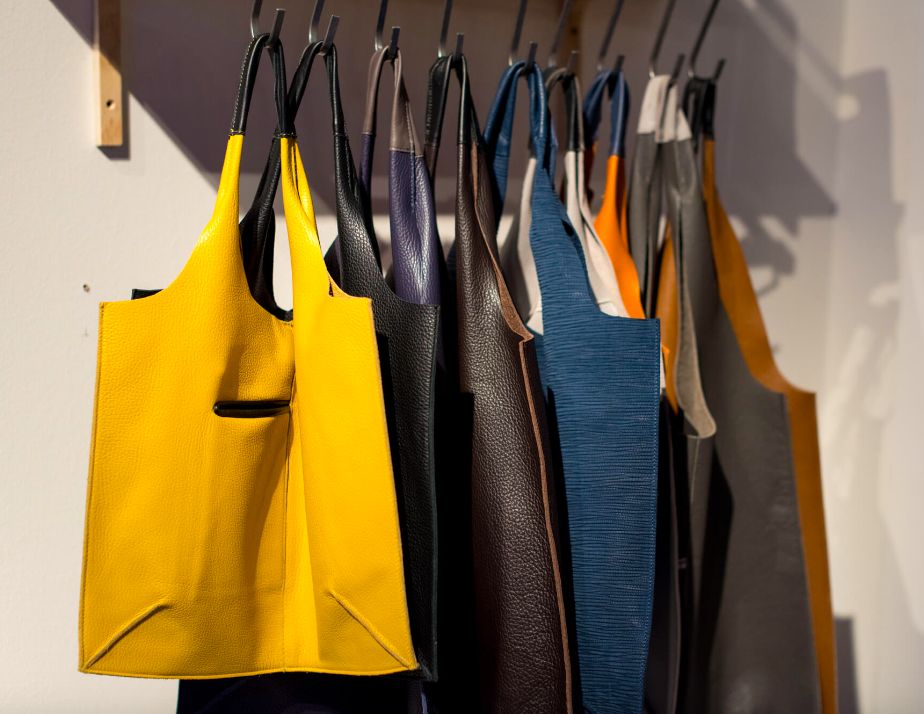
Italian leather goods exports experienced a notable decline in the first five months of 2025, falling by 7.5% to just over €4 billion. This downturn follows a nearly 9% slump recorded throughout 2024, marking a challenging period for an industry where export sales typically constitute more than 85% of its annual revenue. The persistent negative trend underscores the current difficulties faced by Italian manufacturers in a competitive global market.
A closer examination of regional data reveals a mixed performance across key markets. Exports to fellow EU nations saw a modest decline of 1.5%, while non-EU markets registered a more substantial drop of 10.6%. This latter figure is particularly impactful, as non-EU exports are characterized by higher average prices and account for nearly two-thirds of the total export revenue for Italian leather goods. Within the EU, Italy's two largest European markets, France and Germany, exhibited contrasting trajectories: exports to France decreased by 3.8%, whereas sales to Germany actually saw a positive increase of 1.1%.
Despite the overall challenging landscape, certain non-EU regions delivered encouraging results. The Middle East emerged as a strong performer, with exports surging by an impressive 26.4% in the first five months of 2025. This growth was largely propelled by significant increases in sales to the UAE (up 35.7%) and Qatar (up 49.9%). Furthermore, Turkey also demonstrated robust demand, recording a substantial 16.7% rise in exports from Italy.
Conversely, several other non-EU territories presented significant setbacks. The Far East experienced a sharp decline of 17.3%, while the former USSR region saw an overall decrease of 4.3%, with even heavier losses reported in the crucial markets of Russia and Ukraine. Exports to the UK also suffered a substantial drop of 13%. Switzerland, a traditionally important market, continued its downward trend, losing 39% in value, a phenomenon attributed primarily to logistical and distribution challenges rather than a decrease in demand for the products themselves.
The North American market, though showing an overall near-parity with last year, presented a nuanced picture. Total exports to the region were up by a marginal 0.9% in value. However, this was skewed by a 13% fall in exports to Canada, which was partially offset by a modest 2.1% increase in sales to the USA, indicating varying demand dynamics within the continent.
An analysis by product type reveals divergent trends within the industry. Exports of genuine leather products exhibited a relatively contained loss of just 3.6% in value, whereas items made from leather substitutes experienced a more significant drop of 15.8%. Handbags remained the dominant category, generating €2.83 billion in export revenue and accounting for nearly 70% of total exports, despite a 9% decrease compared to 2024. Exports of luggage and travel goods were down by 12.4%, while small leather goods lost only 2.4%, with genuine leather articles within this category notably growing by 3.7%. Belts, however, bucked the trend, recording a healthy increase of 4.7% in export value.
Looking ahead, the outlook for the second half of 2025 remains cautious. Forecasts suggest that current difficulties are likely to persist, potentially compounded by the introduction of new tariffs on exports to the USA under a potential Trump administration. The full impact of such measures is currently difficult to quantify, but they pose a significant risk. Consequently, it is widely anticipated that Italian leather goods exports will face a second consecutive year of downturn in 2025.