Italy's Luxury Fashion Faces Scrutiny as Exploitative Practices Surface
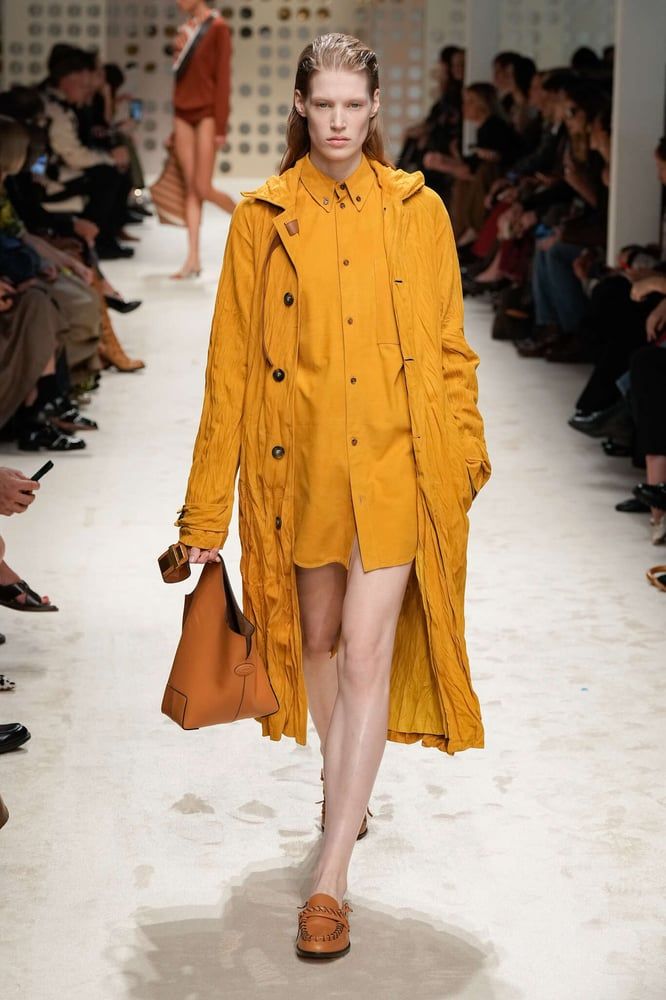
A series of recent investigations into exploitative work conditions within Italy's luxury fashion subcontractors has sent ripples through the industry, prompting a strong defense from the government against perceived attacks on the "Made in Italy" reputation.
Since 2024, five fashion brands have been placed under court administration following probes by Milan prosecutors. These investigations have unearthed worker abuses and a concerning lack of oversight within the supply chains of some of Italy's most prestigious labels. Most recently, lawyers for luxury leather company Tod's were scheduled to appear in a Milan court, where prosecutors are seeking a temporary advertising ban and the appointment of outside administrators, citing "malicious" actions by the company.
These inquiries, spearheaded by prosecutor Paolo Storari, have starkly illuminated the often-hidden darker side of the luxury industry. At the heart of the issue is the widespread practice of brands subcontracting work to suppliers, who then further subcontract to others. This multi-tiered system operates amid ever-tightening margins and minimal oversight of labor conditions. To date, investigations have targeted prominent names such as Loro Piana, Dior's Italian subsidiary Manufactures Dior, Giorgio Armani Operations, and Alviero Martini, with prosecutors suggesting that more probes may be on the horizon.
Italy's government has reacted defensively, with Industry Minister Adolfo Urso stating that the reputation of Italian brands is "under attack." In response, the government has proposed a voluntary certificate for luxury companies, designed to demonstrate compliance with current law. However, critics have largely dismissed this measure as "toothless," arguing that its voluntary nature would unduly shield brands from liability rather than ensuring genuine accountability.
Further intensifying the scrutiny, prosecutors last month alleged that Tod's – a brand known for its leather loafers often exceeding $1,000 – and three of its executives possessed "full awareness" of the exploitation of Chinese subcontractors. Despite this knowledge, the company reportedly failed to establish adequate systems to prevent such abuses. Tod's allegedly disregarded its own audits that revealed violations concerning working hours and wages, with some workers reportedly paid as little as 2.75 euros per hour. Additionally, breaches of safety measures and "degrading" sleeping areas within the factory were cited by prosecutors.
Under Italian law, companies can be held responsible for offenses committed by representatives, such as approved suppliers, when acting in the company's interest. For decades, advocates for fashion industry workers have consistently highlighted widespread abuses prevalent in the supply chain. Deborah Lucchetti, national coordinator of the Clean Clothes Campaign in Italy, points out that suppliers "are at the mercy of big brands that impose commercial conditions, starting with prices that are too low to cover all costs."
This relentless pressure, Lucchetti explains, perpetuates a system where first-tier suppliers, facing stringent demands, turn to subcontractors and impose even more rigorous terms. This cascade ultimately leads to labor abuses, most frequently impacting migrant workers, forming what she terms a "chain of exploitation." Italy's fashion supplier landscape is predominantly composed of small- and medium-sized companies, tens of thousands of which have closed in recent years due to a luxury downturn and increased production costs. Unable to invest or grow due to a lack of guaranteed work from commissioning brands and hyper-thin margins, these suppliers remain small. When large orders arrive, they often resort to subcontractors for quick assistance, a system that "effectively pushes players in the supply chain to engage in illegal conduct," according to Lucchetti.
Prosecutors cited clear evidence, stating that both Tod's and Loro Piana could not have been unaware that one of their main suppliers was externalizing all its production. This conclusion was drawn from the fact that the supplier's facility conspicuously lacked any production equipment, such as sewing machines.
The companies targeted in these investigations have responded in various ways, including cutting ties with the implicated suppliers, condemning their actions, or shifting blame by asserting that abuses were concealed. Amid the significant reputational risks, some brands have actively sought to reassure consumers. Last week, Prada, one of Italy's top luxury brands, invited journalists to its Scandicci factory outside Florence, showcasing the meticulous, step-by-step transformation of supple leather into luxury handbags.
When questioned about the ongoing investigations, Prada's Chief Marketing Officer Lorenzo Bertelli, who also oversees social responsibility, asserted that production has never been an afterthought for the company. Bertelli suggested that other fashion executives sometimes fail to view production "as an area of responsibility," a mindset which, he believes, "has led to many of things you have read in the newspapers." While Prada does not disclose the exact percentage of its production that is in-house, it claims to have the highest in the industry, owning 25 factories, 23 of which are located in Italy. Bertelli described the effort to keep Prada's supply chain clean as a "constant battle," emphasizing the necessity to "constantly carry out inspections or checks on suppliers; this is the daily work we do."