Kiabi group introduces new unifying logo to reflect strategic shift to brand ecosystem.
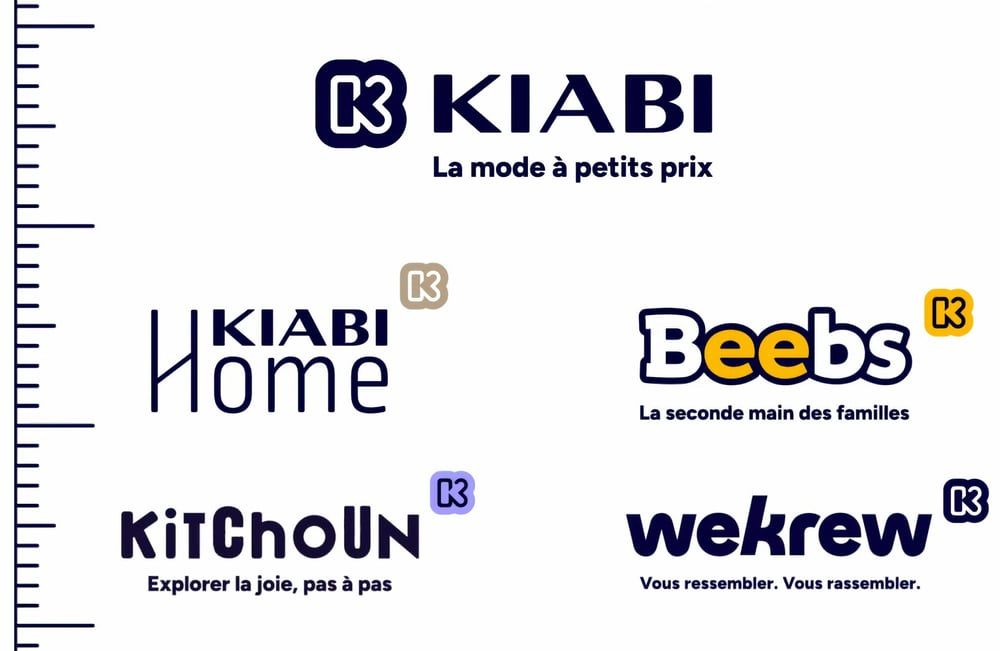
To signify a strategic transition from its traditional identity as solely a retail brand, the Kiabi group has introduced a new logo designed to unify its expanding portfolio of entities and services. The core element of this new visual identity is a stylized "K," which will serve as a common identifier across all Kiabi entities' logos. This change aims to simplify the recognition of the different facets of its comprehensive offering, reflecting the group's evolution into a broader ecosystem of brands.
The new "K" symbol, distinguished by a thick white outline, is incorporated into the logos of various brands under the group's umbrella. For example, it appears in the top right-hand corner of the Kiabi Home logo. The symbol also features prominently on Beebs, the brand dedicated to second-hand products, and Kitchoun, which offers footwear for babies from birth to nine months. Additionally, the stylized "K" is included on Wekrew, the B2B brand recently launched by the northern France-based group to meet specific demands for coordinated and customizable textile products for businesses.
In communicating this shift on social media, the group described the move as a new adventure representing "our transition from a fashion retailer to an ecosystem of brands and services, centred on a strong promise: to always do more for families." The new logo, the group added, is "More than just a symbol," as it "embodies our evolution, our new identity and our ambition. It reflects the quality, style and accessibility that define Kiabi's DNA, upheld every day by our teams around the world."
As noted recently, Kiabi is managing a growing portfolio of brands within the French apparel market. The family fashion brand reported revenue of €2.5 billion in 2024. Currently, Kiabi operates a vast network comprising 647 stores and employs 10,000 staff members across 83 countries worldwide.
Further demonstrating its commitments, Kiabi used the recent Circular Fashion Week in Lille, held on December 4 and 5, to formally announce its membership in the Dutch Denim Deal coalition. This initiative aims to increase the scale of jeans recycling processes, turning old denim into new garments.