Kids Beauty Boom Sparks Expert Concerns Over Health and Self-Image
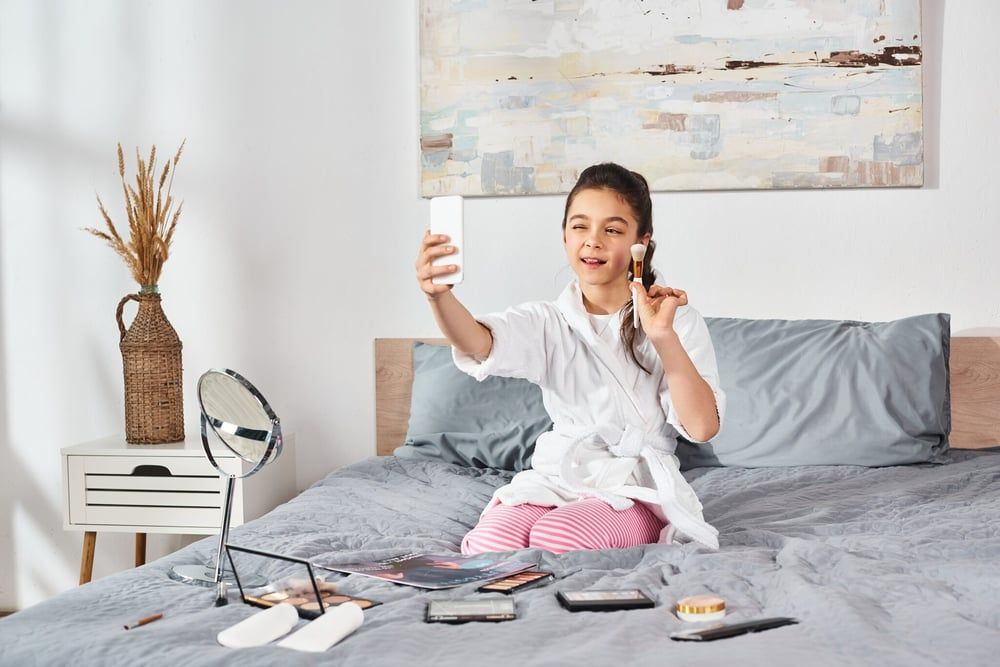
A concerning trend has emerged in the cosmetics industry, where brands are increasingly targeting children with beauty products featuring playful designs like pandas, unicorns, and Barbie. This marketing strategy capitalizes on a generation raised on social media beauty routines, exposing young children to products dermatologists warn are unnecessary and potentially harmful.
Canadian actress Shay Mitchell, for instance, launched her cosmetics brand, Rini, in early November, unusually aiming its range at children from the tender age of three. Rini's website offers moisturising, after-sun, or everyday masks adorned with popular child-friendly motifs such as unicorns, pandas, or puppies, each retailing for approximately €5. Mitchell's venture is not isolated; many brands are identifying this demographic as a lucrative market. Evereden, a U.S. brand established in 2018, has rapidly grown, surpassing $100 million in sales, by offering "mists," toners, and moisturisers specifically for pre-teens. However, Professor Laurence Coiffard, a pharmacology expert specializing in cosmetology at the Faculty of Nantes, emphasizes that "children don't need cosmetics, apart from hygiene products, of course — toothpaste and shower gel — and sun protection products, when there's exposure."
The rise of what have been dubbed "Sephora Kids" highlights the profound influence of social media. Children in Generation Alpha are adopting skincare and beauty routines at increasingly younger ages, often imitating their favorite influencers on platforms like YouTube and TikTok from as early as seven. TikTok itself has become a significant hub for beauty brands, reporting a surge in their presence from 5,000 to 16,500 in France over just six months, with beauty being the leading sector represented, according to Arnaud Cabanis, its head for France and Southern Europe.
Despite the innocent appearance of these products, professionals warn of significant risks. Scientific studies have demonstrated that exposing children to adult cosmetics, often packed with chemicals, can lead to contact with endocrine disruptors and phytoestrogens. As Laurence Coiffard explains, these substances can interfere with hormonal development and elevate the risk of skin allergies, posing serious health concerns for developing bodies.
To investigate this phenomenon, American researchers Molly Hales and Sarah Rigali from Northwestern University in Chicago conducted a study, spending several months posing as 13-year-old girls on TikTok. They analyzed 100 beauty videos posted by 82 minor profiles, publishing their findings in June in the US journal *Pediatrics*. The researchers documented alarming instances, including one video where a child developed a rash and burns after applying 14 different products to her face, and another where a child recounted waking at 4:30 am to perform her beauty "routine" before school. Molly Hales expressed her shock to AFP at "the scale of what I was seeing in these videos, particularly the sheer number of products these girls were using."
The research revealed that, on average, the analyzed videos featured six products, frequently comprising anti-ageing creams intended for adults, at a typical cost of €145. A detailed examination of 25 videos showed that these products contained, on average, 11 — and up to 21 — substances potentially irritating to children's delicate skin. Popular brands identified in the videos included Glow, Drunk Elephant, and The Ordinary, which often market themselves as healthier, natural alternatives to their chemical-laden competitors.
While Rini co-founder Shay Mitchell justifies her brand by stating "children are naturally curious, so we might as well offer gentle, safe products that parents can trust," experts counter that the impact extends beyond physical harm. Molly Hales notes that these products "perpetuate a certain beauty norm" by normalizing the use of a "very expensive and time-consuming" array of beauty treatments. On a psychological level, Pierre Vabres, a member of the French Dermatology Society, warned in a November press conference in Paris that "the risk is to give the child a distorted, even eroticised, self-image." He stressed a crucial point: "Just as a child is not a miniature adult, a cosmetic is not a toy."