Lilly Pulitzer Embraces Heritage and Future with Key West Fashion Show
Lilly Pulitzer recently orchestrated a high-profile fashion show in Key West, the southernmost inhabited island in the Florida Keys, where the road symbolically ends and the Gulf of Mexico begins. This iconic location was chosen to honor the brand's origins, which trace back to Palm Beach, Florida, in the mid-1950s. The event brought together the international fashion press and numerous influencers, underscoring the brand's enduring appeal and its strategic new direction.
The brand's vibrant journey began with Lillian Lee “Lilly” Pulitzer, a New York high society member who, after marrying Pete Pulitzer, heir to the Pulitzer Prize and an orange grove entrepreneur, sought a creative outlet. She opened a fresh juice stand in Palm Beach, but the messy process of squeezing citrus led her to commission a seamstress friend to create practical, sleeveless, lightweight shirt dresses adorned with bright patterns—lemons, flowers, and palm trees—designed to camouflage juice stains. These distinctive printed dresses quickly overshadowed the fruit juice, becoming an instant hit with customers and laying the foundation for the Lilly Pulitzer brand.
A crucial part of Lilly Pulitzer's early success was its partnership with the Key West Hand Print Fabrics factory, a textile benchmark where fabrics were printed. From 1962 to 1985, American textile designer Suzie Zuzek, based in Key West, was the brand's primary design supplier, contributing over 2,000 unique patterns. Her tropical prints and a vibrant palette of turquoise, coral, and lime green quickly captured attention. A pivotal moment occurred in 1962 when Jacqueline Kennedy, a childhood friend of Lilly's, appeared on the cover of Life Magazine wearing a lemon yellow Lilly Pulitzer dress, causing sales to skyrocket and transforming the brand into a cultural phenomenon. By the late 1970s, Lilly Pulitzer boasted 30 stores across the US, with over 500 people employed at the Key West print factory, a testament to its profound local impact. The factory's sudden closure in 1985, following Lilly Pulitzer's acquisition of a majority stake in the early 1980s, left a significant void in the community and a lasting mark on its residents.
After a period of dormancy, the brand was successfully revived in 1993 by Sugartown Worldwide Inc. In 2010, Oxford Industries acquired Lilly Pulitzer for $60 million, integrating it into a prestigious portfolio that includes Tommy Bahama, Johnny Was, and Southern Tide. Without ownership of the original prints, the brand forged ahead by commissioning new designs, continually reinventing its iconic aesthetic while staying true to its joyful spirit.
Significantly, Lilly Pulitzer is now poised for a new chapter. For the first time in decades, the brand will regain full rights and access to its extensive archives starting in January 2025. Michelle Kelly, CEO of Lilly Pulitzer, describes this as "big news for the brand," emphasizing that "The collection of prints from 1962 to 1985 is a true American treasure. It represents the unification of the artwork and the trademark and a completeness of the brand over 65 years of history, as well as an incredible platform for the future of the brand.” This milestone promises to unlock a wealth of heritage for future collections.
Leading up to the archive-focused fashion show, the Lilly Pulitzer team hosted an intimate welcome dinner at Ernest Hemingway's historic Key West home. Mariel Hemingway, co-hosting with Lilly Leas Ferreira, Lilly Pulitzer's granddaughter, spoke of her grandfather's love for Key West, its tropical climate, and its creative inspiration. She drew parallels between the island's "joyful, colourful, magical world" and the Lilly Pulitzer aesthetic, recalling her mother wearing the brand's vibrant dresses. Guests, all adorned in the brand's signature patterns, toasted to Lilly's legacy and the power of prints. The evening showcased vintage patterns depicting Palm Beach scenes, zebra stripes inspired by New York's Club El Morocco, and new prints by Dee Ocleppo, featuring alligators, elephants, and flamingos, all celebrating the quintessential Florida lifestyle.
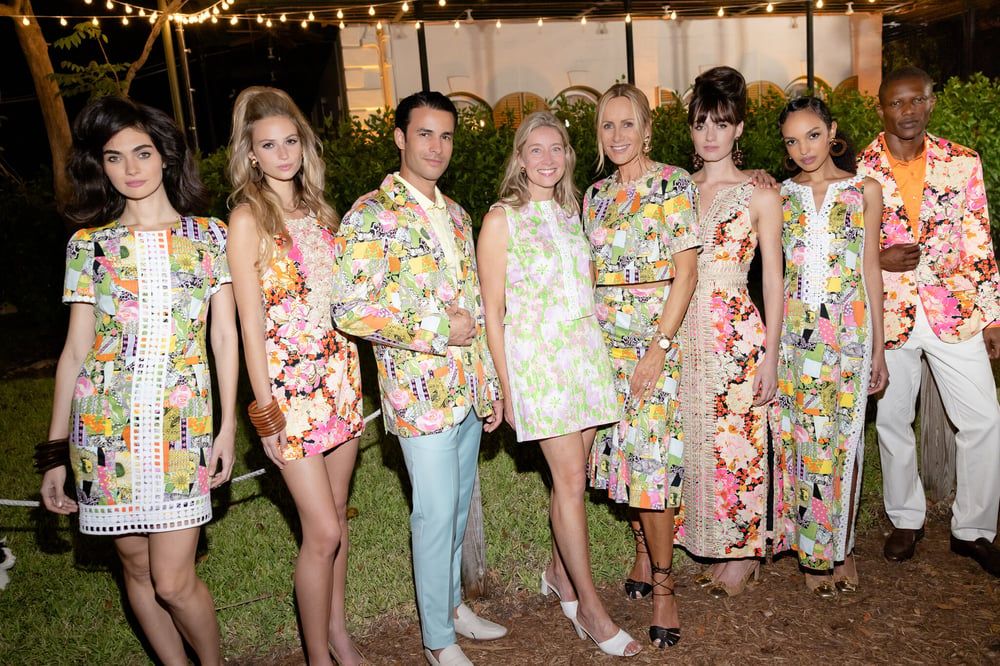
The main event, the Spring/Summer 2026 fashion show, unfolded the following day on the expansive terrace of the Casa Marina Resort hotel. Under the honey-colored light of Key West, the show began spectacularly with a small plane flying overhead and a Jackie Kennedy lookalike making a surprise appearance. The runway featured a succession of short and long dresses, often embellished with embroidery, showcasing an "avalanche" of floral and plant motifs—rose petals, lily of the valley, palm leaves, daisies, corn, and lilies among them. Mira Fain, Chief Creative Officer at Lilly Pulitzer, explained that these "Bohemian-style patterns are all based on the brand's archives, all hand-painted and most created in the 1970s," perfectly embodying the "Resort Chic" spirit of comfort, easy care, and sophisticated wear.
The Spring/Summer 2026 collection was rich with nostalgic nods to the 60s and 70s, presenting relaxed shift dresses paired with headscarves, floral rompers complemented by tweed jackets, and gingham-patterned bustiers evoking Saint-Tropez. A notable addition was the inclusion of male models, showcasing full floral suits with flip-flops or a smart ensemble featuring a black and white blazer, floral pants, and loafers, indicating the brand's expanding reach.
Lilly Pulitzer continues its modernization efforts, marked by a recent logo revamp, a significant media and social media campaign last year, and increasing collaborations, including those with French brand Saint-James and Natalie's Orchid Island Juice. Mira Fain highlighted these initiatives, along with the launch of a successful men's collection a year ago, a tabletop home collection, and the redesign of the Palm Beach flagship store. These strategic moves are attracting a new generation of customers, some drawn to vintage pieces, others discovering the brand through social media or in its retail locations.
With 70 boutiques across the US and 300 wholesale outlets, Lilly Pulitzer is actively planning further expansion. Michelle Kelly noted that while the brand's retail history began in Florida, it expanded north to Chicago and west to California and Hawaii. Future plans include opening four to five new stores annually and continuing renovations. The brand is also increasingly looking toward international markets, seeing resort towns as key gateways, with Saint-Tropez—where their latest campaign was shot—Spain, and Greece identified as promising territories.
Following cocktails along the beach and relaxation on custom-branded deck chairs, guests departed Key West. The most devoted fans had the unique opportunity to extend their stay in the exclusive Lilly Pulitzer suite, available for reservations for one month. This immersive space is entirely adorned with wallpaper and artwork featuring the brand’s signature motifs: flowers, turtles, suns, butterflies, and the famous rooster, an emblem of Key West, providing a truly unforgettable experience.