London Fashion Week Sunday: Surrealism, Debutante Drama, and Sporty Chic Collide
London Fashion Week delivered an intensely experimental Sunday, showcasing surrealist couture, avant-garde takes on tradition, conceptual fashion, and ergonomic sporty chic across several prominent designers. Erdem, Simone Rocha, Kent & Curwen, and Johanna Parv each presented collections that pushed boundaries and redefined their brand's aesthetic narratives, often drawing from unexpected sources of inspiration.
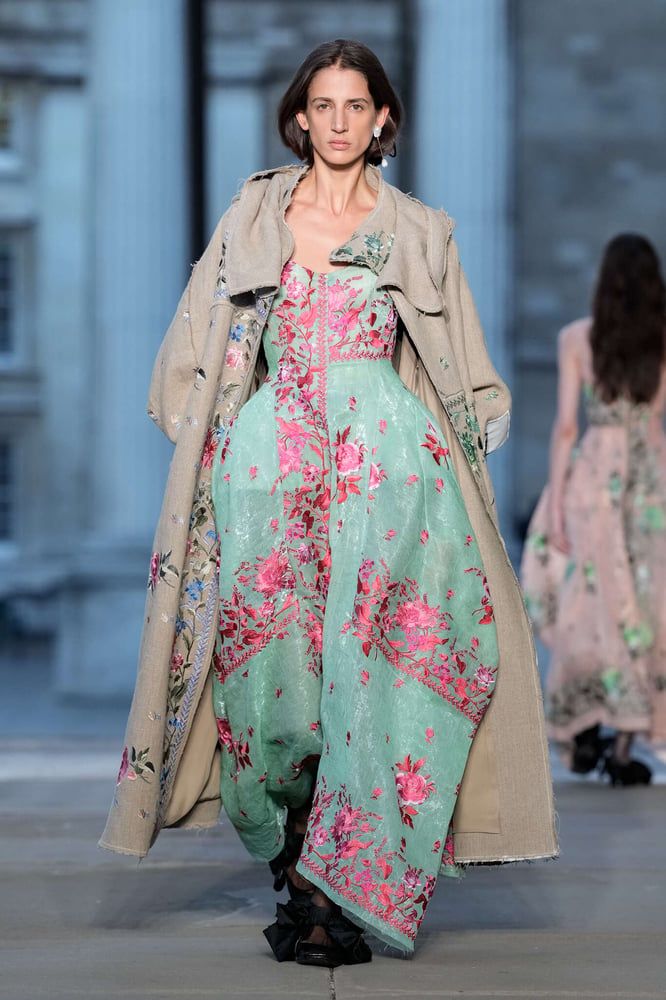
Erdem Moralioglu’s latest collection drew its deep wellspring of inspiration from the obscure surrealist artist Hélène Smith, also known as Catherine-Elise Muller. Celebrated by early Surrealists as the "muse of automatic writing," Smith's unique texts were intricately embroidered onto lace chess piece sheaths, densely adorned with fabric petals and flowers. These motifs also appeared on superb starch tulle corset cocktail dresses and moulded bustier designs. Smith's other notable claim to fame was her belief in being a medium, purportedly communicating with figures like Victor Hugo and Cagliostro, and undertaking trance-induced voyages to Versailles, Rajasthan, and even Mars. These imagined journeys were visually translated into high lace-collared gowns, structured paniers reminiscent of Marie Antoinette, and neon crushed embroidered linen sculpted dresses worn with courtesan-ribboned shoes, reflecting her Indian sojourns mingled with space travel. Psychologist Théodore Flournoy, who documented her experiences in "From India to the Planet Mars," inspired a selection of mannish blazers and striped double-breasted jackets. Though Smith died in obscurity, her spirit was galvanized into a moment of fashion glory during Erdem’s magnificent show under the columns of the British Museum.
The afternoon brought a distinctive change of pace with Simone Rocha's highly experimental collection, staged fittingly at the Mansion House in the City of London. A sprawling 52-look presentation by London standards, the collection masterfully jumbled epochs and eras, creating a narrative of "disgruntled debutantes" and "a young woman forced to wear her mother’s clothes." For next spring, Rocha favored sateen georgette, floral jacquards, and silk organzas, crafting them into crinolines, Venetian tailcoats, or hoop skirts. Many of these intricate pieces were then rebelliously covered in transparent plastic coats and trenches, adorned with confetti prints. The opening looks exemplified this tension: a refined organza crinoline embroidered with tiny flowers was defiantly paired with a silver sequin bra with black lace trim, followed by an oversized trapeze dress embellished with two huge fabric flowers. Rocha aimed to "push a button" on her fundamental codes, exposing crinolines through semi-sheer organza and adding "a soupçon of perversity" by layering mini corsets over many dresses. Referencing her own childhood, where she would wear her mother's skirts as dresses pulled high to better showcase shoes—a vital component of her brand, this season featuring Georgian-moulded platforms or Perspex escarpins. Her women’s wear intentionally avoided overt ladylike sophistication, often exposing underwear, while her menswear embraced a positively foppish aesthetic with scarlet red jacquard cloaks, trumpet lilies, and ruffled soutanes. Driven by a compelling soundtrack by Frederic Sanchez, featuring Marianne Faithfull and Salem, Rocha’s risk-taking performance garnered a huge cheer and prolonged applause.
A distinctive change of gear and tone unfolded at Kent & Curwen, where designer Daniel Kearns aimed to lighten the mood and materials, while maintaining a tight focus on the brand’s iconic three lions logo and DNA. The show, artfully produced by Robin Scott-Lawson, featured ten large LED screens projecting idyllic scenes of London parks—children playing, football games, boat trips, and grand plane trees—creating an immersive backdrop. Guests were even provided with smart striped blankets, perfect for a conceptual picnic. The collection itself skillfully blended haute-couture fabrics like jacquard and chiffon with techy nylons, allowing the garments to operate on multiple levels and offering an agreeably conceptual take on the storied brand. Pieces included a fabulous short tennis dress, a superb ivory coat dress where a blazer met a plissé chiffon skirt, white multi-petal swimsuits for girls, and shirts for guys in this co-ed presentation. Kearns ventured into Japanese-inspired territory with chiffon minis topped by feathered bra tops. The brand’s roots were revisited with bold graphic rugby colors used in pink and blue trench coats, and its English heritage was honored with great sweaters embroidered with fabric roses, culminating in a bravura finale of Photoshop English floral pants and tops—Kearns' most investigational collection for the house.
The day concluded with Johanna Parv’s vision for the "all-action woman," where the cast dashed about the catwalk in a bold and brilliant display of transformative sporty chic. Parv, utilizing techy fabrics, crafted clothes that were simultaneously sporty yet professional, protective yet chic, and practical for changing weather conditions while remaining sleek and stylish. Her designs offered plausibility from a bike ride to a boardroom meeting. The collection kicked off with gym exits—taut shirts and tops dissected with her signature action bags—followed by impeccable sporty jerkins and pants cut diagonally at the ankle to suggest speed. Cleverly incorporated angled zips and ties ensured multi-functionality. The result was a collection that powerfully reinforced women’s independence through fashion, featuring updated sheriff’s dusters in anthracite, charcoal nylon track jackets, blousons, and culottes. A standout was her 'Frame' hybrid bags, which could be worn as a backpack, ergonomic fanny pack, or a wrap-around messenger bag attachable to a bicycle frame, embodying coolness and versatility. As BFC CEO Laura Weir insightfully commented, "Johanna Parv brings out the inner Lime rider in us all." In her program notes, the Estonia-born designer referenced Deborah L. Parsons' "Streetwalking the Metropolis," a study of female writers' experiences in urban landscapes, underscoring how this collection is perfectly suited for today’s urban jungle.