Louvre Heist Sparks Hunt for Stolen Jewels in Antwerp's Shadowy Diamond Underworld
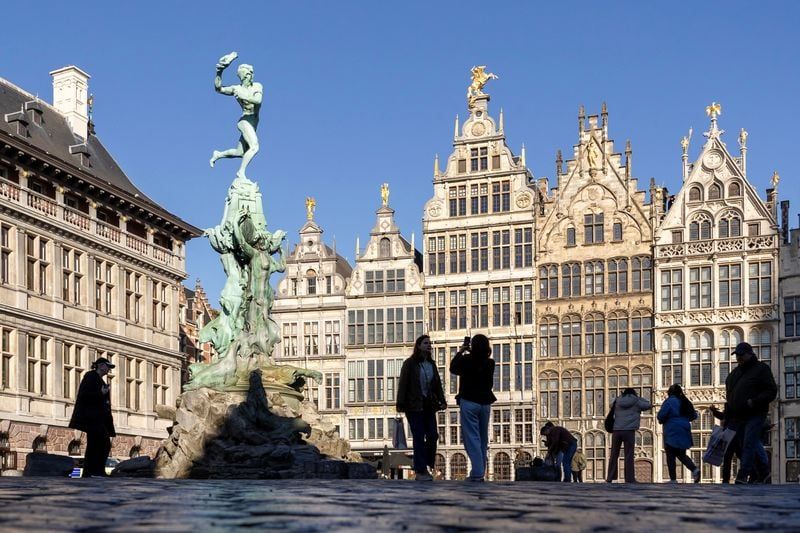
In the aftermath of the high-profile Louvre heist, Belgian police received an urgent alert from their French counterparts, disseminated through the "Pink Diamond" network. This secure channel, overseen by Europol, connects investigators specializing in high-value thefts and called for vigilance regarding anyone attempting to offload the stolen jewels. The focus quickly turned to Antwerp, a historic Belgian port city that has been central to the world's diamond trade since the 16th century, with wholesalers trading nearly $25 billion worth of stones last year alone.
However, over the past three decades, Antwerp has grappled with the expansion of a significant underworld. This illicit economy encompasses hundreds of gold and jewellery shops, many operated by individuals of Georgian descent, according to law enforcement and municipal records from Belgium and France. While most of these establishments are legitimate, a notable number provide a conduit for criminals across Europe to sell stolen gold and jewels—a process commonly known as "fencing." French authorities have formally investigated four individuals in connection with the Louvre heist, but the $102 million worth of jewels remain unrecovered. While details of the ongoing hunt are scarce, the Paris prosecutor's office confirmed that "all hypotheses are being considered," implying Antwerp is a potential focal point.
Upon receiving the "Pink Diamond" alert, Antwerp police mobilized immediately. Officers reviewed security footage for French license plates, leveraged informants for leads on individuals attempting to sell the stolen items, and issued warnings to certain jewellers against handling the iconic booty. Citing the ongoing French investigation, Belgium's federal police declined to comment on their specific actions.
The influx of Georgian traders to Antwerp began in the 1990s following the collapse of the Soviet Union. Many brought with them experience in metals trading and established connections within the city's long-standing Jewish diamond trading community. Today, approximately 300 jewellery shops operate just outside the main diamond district, with police estimating that a quarter of these are involved in fencing stolen goods. The Antwerp World Diamond Centre, a key trade body, has expressed concern that its reputation is "occasionally put at risk" by association with jewellers engaged in "questionable... money laundering practices."
This illicit trade compounds other challenges facing Antwerp's legitimate diamond sector, including a G7 ban on Russian gems and a flood of lab-grown stones, both contributing to historically low prices and calls for a bailout. Yet, for some involved in illegal activities, business is thriving. Suspected fences are reportedly seen driving high-end vehicles, frequently opening new shops, and acquiring expensive foreign real estate. As one officer noted, "You clearly have two worlds here... Those who work hard, are legal... and are struggling to survive, and those who apparently do good business in the same neighbourhood selling the same products."
The criminal corridor between France and Belgium has proven a reliable source of income for Antwerp's illicit jewellers. Following the 2016 robbery of Kim Kardashian in Paris, the mastermind confessed to selling her melted gold and diamonds in Antwerp for over 25,000 euros. French and Belgian officials suspect Georgian fences purchased the loot, though no charges were filed due to the items never being recovered. Since then, multiple investigations have unveiled a consistent pattern: Balkan burglars transport stolen goods to couriers in France, who then deliver them to buyers—most often Georgians—in Antwerp. Yakout Boudali, head of intelligence for the French Gendarmerie's Central Office for the Fight Against Itinerant Delinquency, confirmed that in several cases, the Antwerp fences were "of Georgian nationality or held dual nationality," while also cautioning against "stigmatizing" any particular group or city.
Antwerp's illicit jewellery trade is part of a broader struggle against organized crime, including drug gangs utilizing Europe's second-largest port for multi-tonne cocaine shipments. An anonymous Antwerp judge recently warned that Belgium risks becoming a "narco-state." Recognizing the problem, Antwerp formalized a specialized police force in 2021 to oversee the diamond and jewellery sectors. A comprehensive report from the mayor's office at the time highlighted "a strong link between fraudulent jewellers and the criminal drug environment," suspecting them of "laundering of millions of euros in criminal proceeds." Antwerp City Hall declined to comment on these findings.
Penetrating these close-knit criminal networks is challenging, partly due to an "omerta" among many Georgian jewellers and Indian diamond traders. Efforts to enhance transparency have been met with resistance. For instance, a 2017 municipal decree by then-Mayor Bart De Wever, aimed at driving criminal networks out of the city, mandated security cameras with facial recognition in jewellery shops, with images accessible to police. Jewellers appealed the edict, eventually striking a deal: cameras could be installed but would not be activated. Kris Luyckx, who represented over 100 jewellers, confirmed the agreement, arguing the law was overly invasive and unfairly targeted the predominantly Jewish community, creating "a sort of criminal ghetto." The decree was ultimately revoked in 2020 after a state auditor deemed it an overreach and a violation of privacy laws.
The process of selling stolen goods in Antwerp is notoriously quick and straightforward. Jewellers inspect the gold, stones, or watches, offer a price, and pay from undeclared cash reserves. Once acquired, the items swiftly disappear. Gold is often melted down in small, back-room smelters into one-kilo bricks, making it untraceable. However, the Louvre loot may prove too "hot" even for these networks. The jewels are predominantly set in silver, which has low melt value, and their oversized sapphires and diamonds are instantly recognizable. This means the limited circle of Antwerp cutters and polishers would likely refuse to handle them, and the pool of potential buyers for the distinctive pearls is minuscule. "It's not easy money," one officer concluded, suggesting the unique nature of the stolen treasures makes them difficult to fence discreetly.