Louvre Jewel Heist: Priceless Treasures Vanish, Thieves Face Grim Options
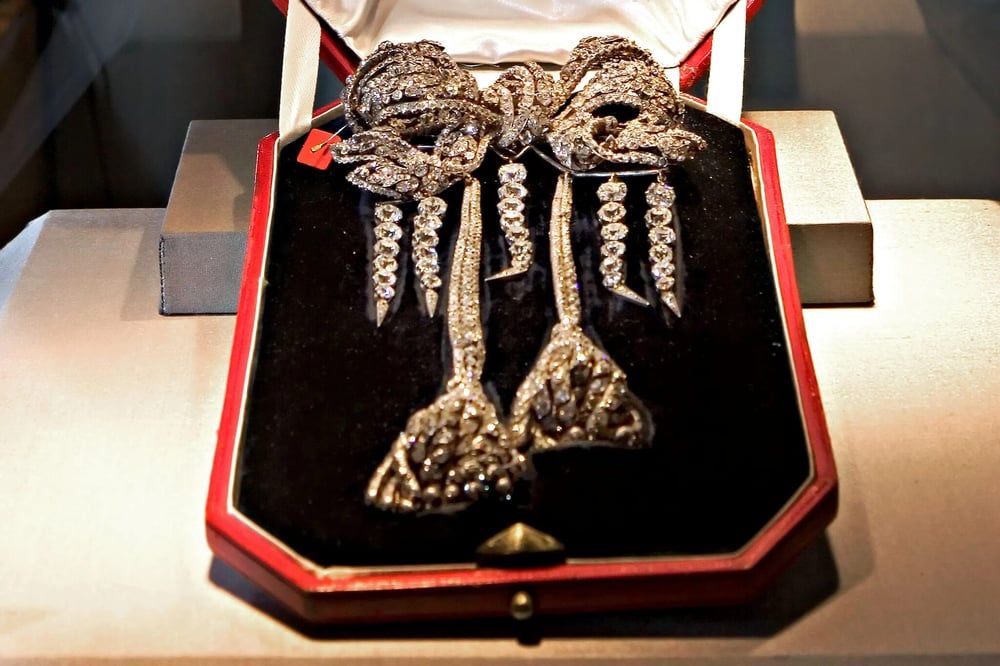
A daring raid on the Louvre Museum in Paris has resulted in the theft of an array of priceless jewels, including a diamond-encrusted bow that once belonged to Empress Eugenie. While French authorities deem the stolen artifacts invaluable, records show Empress Eugenie’s bow was last sold for a reported €6.72 million ($7.8 million), highlighting the immense challenge in quantifying their current worth just days after the heist. The total value of the eight stolen items, which include royal necklaces, tiaras, and earrings, is officially estimated at €88 million by Paris Prosecutor Laure Beccuau, though this figure dramatically changes if the nearly 9,000 small and large stones are sold individually.
The widespread publicity surrounding this "Ocean's Eleven-style" robbery immediately renders the jewels "burned" in art-market parlance. This means they cannot be openly sold or worn, forcing potential transactions into black markets where deep discounts are the norm. Even attempting to sell individual pieces discreetly would be fraught with difficulty, leaving the thieves with a stark choice: either hold onto the high-profile loot indefinitely or consider breaking it down.
One grim alternative is the dismantling of these exquisite jewels – diamonds, emeralds, sapphires, and gold – into their constituent parts. Charlotte Chambers-Farah of the London-based Art Loss Register explains that while gems hold significant value, their identifiers like size and weight can make them traceable. To circumvent this, stones might be recut and reassembled, making them nearly unrecognizable. Tobias Kormind, managing director of 77 Diamonds, estimates the stolen gemstones alone could be worth around £10 million ($13.4 million), with a substantial portion of this value residing in four large diamonds from one of the stolen brooches. He suggests a scenario where buyers might acquire the pieces at a tenth of their market value, holding them for years before gradually breaking them up. The gold, unlike the gems, offers less individual value, but its price has surged by almost 60% this year, and once melted, it becomes almost impossible to identify.
The precision of such heists often captures the imagination, but moving the high-profile loot proves equally, if not more, perilous. Chambers-Farah notes that thieves often realize the risk is too great if they cannot offload the goods within six months to a year, turning the stolen items into a heavy burden. The destruction of these pieces for their material value would, however, irrevocably erase their historical and cultural significance. This unfortunate outcome is not unprecedented; last month, a 3,000-year-old gold bracelet stolen from the Egyptian Museum in Cairo was melted down, according to the country’s interior ministry.
The heist has drawn strong criticism towards French police, politicians, and the Louvre’s security staff. The perceived lax outdoor surveillance, which allowed a furniture hoist to park unnoticed outside the museum, potentially made it a more appealing target than tightly guarded jewelry stores. Art crime detective Arthur Brand observes a decade-long shift in museum targeting, moving from paintings to precious metals and diamonds. While art thieves typically expect about a third of an item’s value upon resale, the market for these particular, highly publicized jewels remains uncertain. Rob van Beurden, an Antwerp-based diamond expert, believes it's more likely the jewels were stolen to order, cautioning against the idea of them being sold for "scrap value," as no legitimate dealer would want to get involved with "something this hot."
Many of the "priceless jewels" had documented histories and price tags before entering the Paris museum’s vitrines. Empress Eugenie's large corsage bow, for instance, was acquired by the Louvre in 2008 with the help of the Friends of the Louvre donor group for €6.72 million. This was a private purchase, made after the brooch was slated for auction at Christie's in New York. Prior to that, it had been sold at a public auction in 1887 for 42,200 French Francs (then equivalent to €85,000). Other notable acquisitions by the Louvre include an emerald necklace and earrings of Empress Marie-Louise, purchased from Baron Elie de Rothschild in 2004, and a Tiara of Empress Eugenie, donated in 1992 after being sold at Sotheby’s for over $1 million. The stolen collection also encompassed items from Queens Marie-Amelie and Hortense, acquired in 1985, and a reliquary brooch, the oldest acquisition from 1887.
Questions have also arisen about the professionalism of the thieves themselves. They notably left the 140-carat "Régent" diamond untouched and even dropped a crown adorned with over 1,000 diamonds. It is not uncommon for stolen art to resurface years or even decades later, sometimes abandoned in public places. Examples include two crowns and an orb belonging to the Swedish monarchy found atop a trash can in a Stockholm suburb in 2018, and antique gold snuff boxes stolen from an English stately home recovered intact after four decades. Julian Radcliffe, founder of the Art Loss Register, also points out that stolen items can be used as leverage by gangs seeking reduced prison sentences for their members. President Emmanuel Macron has voiced his hope for the recovery of the crown jewels intact, pledging that the perpetrators will be brought to justice.