Luxury Giants Brace for Margin Squeeze as Gold Soars and Demand Falters
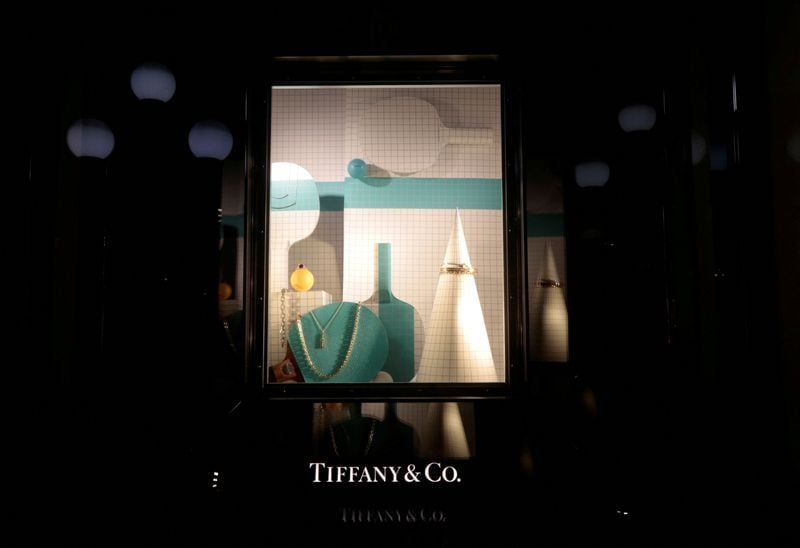
The global luxury goods industry is currently navigating a complex economic landscape, with key players like LVMH, owner of Tiffany, facing significant pressure on their gross margins. A confluence of factors, including a doubling of gold prices in the past two years, the imposition of US tariffs, and a weakening dollar, has created a challenging environment. Jon Cox, head of Swiss equities at Kepler Cheuvreux, notes that while any one of these elements could typically be managed by high-end branded jewellery and watchmakers, their combined impact makes it exceedingly difficult to prevent profit margins from eroding.
The surge in gold prices has been particularly notable, with the metal recently surpassing $4,000 an ounce to reach a record high. This rally is primarily driven by investors seeking safe-haven assets amidst escalating economic and geopolitical uncertainties, alongside expectations of further interest rate cuts in the US. Cox anticipates inevitable margin pressure for luxury brands, suggesting that they will likely resort to gradual price increases for consumers to mitigate the impact of higher input costs.
LVMH, the world’s largest luxury conglomerate, exemplifies these challenges. Industry analysts anticipate the company to report flat third-quarter sales, with a projected 4% decline in its fashion and leather goods division, contrasted by a modest 1% growth in watches and jewellery. Looking at the first half of the year, LVMH's watches and jewellery segment saw flat sales but a 13% drop in profit. Its larger fashion and leather goods division, encompassing iconic brands like Louis Vuitton and Dior, experienced an even sharper decline, with profits plummeting 18% on a 7% reduction in sales. Watches and jewellery contribute over 12% to LVMH's total sales, while fashion accounts for approximately half of the group's revenue. Tiffany and Bulgari are recognized among LVMH’s top five brands in terms of annual earnings.
Despite the sharp rally in gold prices, the metal constitutes a relatively small proportion of the overall input costs for luxury jewellery brands. Manuel Lang, an equity analyst at Vontobel, estimates that gold accounts for just 10% of jewellery sales on average. This figure drops even lower, to between 5% and 8%, for designer brands at the very high end of the market, according to Bernstein analyst Luca Solca. Consequently, Solca suggests that even a modest retail price increase could effectively offset significant increases in gold prices, offering a potential strategy for brands to maintain their margins.
Within the luxury sector, jewellery brands such as LVMH’s Tiffany and Bulgari, Richemont’s Cartier and Van Cleef & Arpels, and Kering’s Boucheron have recently demonstrated stronger performance compared to their fashion-focused counterparts. However, the broader economic pressures remain. Analysts caution that while price adjustments might be necessary, brands must exercise extreme caution to avoid passing on increases too aggressively, which could dampen consumer demand. For Swiss-listed Richemont, despite its strong focus on jewellery and outperforming peers, these external factors like volatile currency rates and gold prices – which are "completely out of their control," as noted by UBS analyst Zuzanna Pusz – have prevented upgrades to its earnings forecasts, underscoring the pervasive nature of these challenges across the luxury industry.