Macy's Surges on Stronger Sales Outlook Beating Expectations
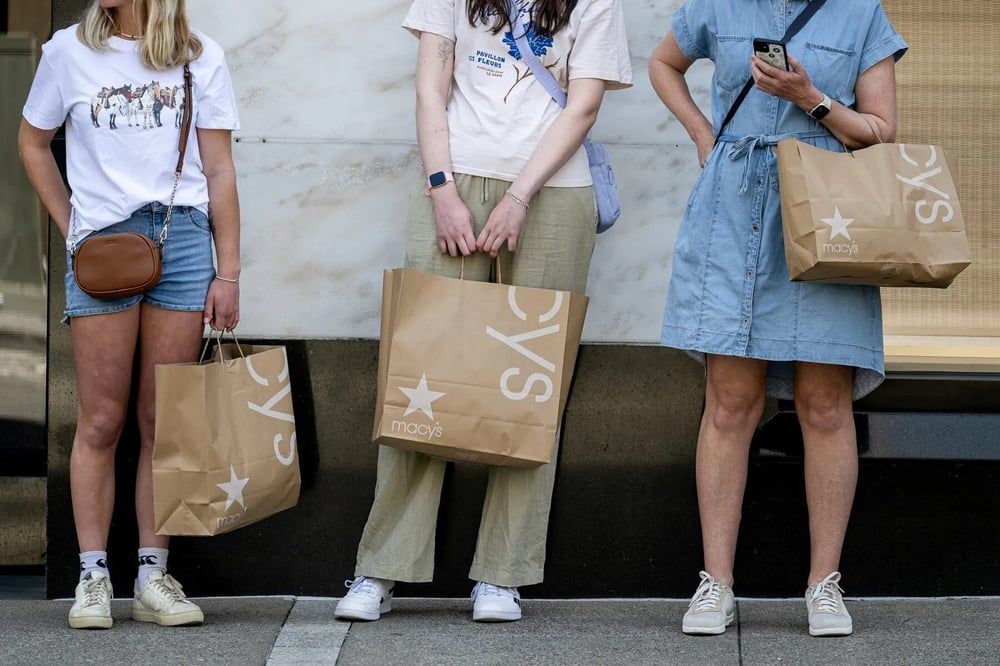
Macy’s Inc. has delivered a strong signal of consumer resilience, raising its annual outlook and reporting its most robust comparable sales growth in three years. The retailer announced an anticipated net sales figure of up to $21.45 billion for the fiscal year, a slight increase from its previous guidance of $21.4 billion and a positive surprise for analysts. This performance suggests that American shoppers are continuing to spend, even amidst ongoing concerns about inflation and tariffs, providing a boost to the company's recent revitalization efforts.
Chief Executive Officer Tony Spring, who took the helm in 2024, characterized this positive shift as "the beginning of a momentum change at Macy’s." He noted the promising start to the back-to-school season, viewing it as a reliable indicator for the crucial upcoming holiday shopping period. Spring’s strategy since assuming leadership has centered on enhancing Macy’s locations with the highest growth potential through increased staffing, targeted marketing, and updated in-store displays, while simultaneously planning to close approximately 150 underperforming stores by 2026.
The positive news was well-received by investors, with Macy’s stock surging as much as 22% in New York trading, marking its most significant intraday gain since 2023. This jump provided a welcome rebound, as the shares had previously declined by 20% year-to-date through Tuesday’s close. The New York-based retail giant, which also operates Bloomingdale’s and Bluemercury alongside its flagship Macy’s stores, simultaneously increased both the top and bottom ends of its profit guidance and improved its comparable sales forecast to a decline of approximately 0.5% to 1.5% this year, a better projection than the 2% decline anticipated in May.
Management highlighted robust consumer demand across several key categories, including home furnishings, women's and men's apparel, fine jewelry, watches, and mattresses. Its luxury brand, Bloomingdale’s, demonstrated particular strength, achieving its fourth consecutive quarter of growth with strong performances in denim, beauty, and fragrances. Looking ahead, CEO Spring indicated that Bloomingdale’s is actively exploring new brand partnerships and planning to expand its presence with additional small-format "Bloomie’s" stores.
Macy’s improved performance aligns with a broader trend across the U.S. retail sector, where companies continue to report sustained sales momentum despite rising prices and economic uncertainties. Competitors like Kohl’s Corp. also saw their shares surge after raising full-year forecasts, while TJX Cos., parent company of TJ Maxx, and Ross Stores Inc. similarly observed that consumers are still spending, albeit with an increasing preference for lower-cost options.
Despite the optimistic outlook and solid second-quarter results, Macy’s management tempered expectations by acknowledging potential consumer caution in the coming months. The company has faced a long-term challenge, with revenue declining year over year for 13 consecutive quarters. Spring noted that shoppers are becoming "more surgical" in their purchasing decisions and warned that Macy’s expects to implement price increases due to pending tariff hikes. "We’re going to have price increases. We’ve had some price increases," Spring informed analysts, emphasizing a thoughtful approach to which categories could best absorb the additional costs.
For the three months ending August 2, Macy’s delivered better-than-expected results, driven by strong performances from Bloomingdale’s, Bluemercury, and the 125 upgraded Macy’s locations, with both net sales and comparable sales surpassing analyst forecasts. David Silverman, an analyst at Fitch Ratings, commented that "These results suggest the company’s recent efforts to drive sales are bearing fruit," while also cautioning that "The company will continue to face a choppy environment in the near future, with cost pressures from tariffs and a somewhat uncertain consumer."