Madrid Fashion Week moves to Cibeles Palace celebrating 40 years with a fresh vision
MBFWMadrid celebrated its momentous 40th-anniversary edition with a significant relocation, moving from its traditional venue at IFEMA to the iconic Palacio de Cibeles. This symbolic shift brought Spain’s premier fashion event to the very heart of the capital, opening in the resplendent Crystal Gallery where sunlight dramatically filtered through its intricate glasswork. This milestone edition felt both a celebration of its legacy and a definitive step towards the future, reflecting the new leadership under director Asier Labarga and creative director Valentina Suárez-Zuloaga.
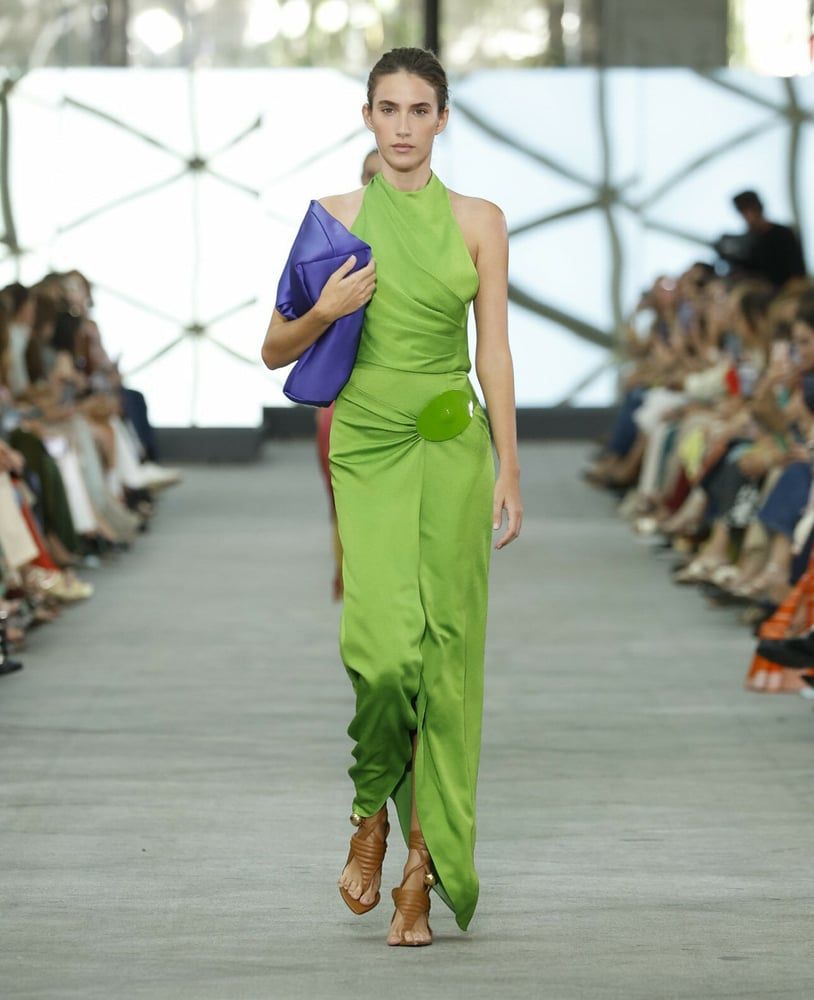
The decision to host the event in such an emblematic city-center building underscored a strategic move to integrate its program more deeply into Madrid's cultural fabric. Equally impactful was the choice of Colombian designer Silvia Tcherassi to open this special edition. Her Spring 2026 collection captivated with its airy silhouettes, bold and vibrant colors, fluid draping, and distinctive long-fringed bags. Tcherassi, who opted to debut her collection in Madrid instead of New York this season, expressed the deep personal significance of the city, noting it was where she opened her first European store a decade ago, predating even Italy. She emphasized her brand's global reach, production in Colombia, and US base, highlighting its 15 boutiques worldwide and plans for further expansion across fashion, lifestyle, and other ventures.
Following Tcherassi’s impactful debut (and a nod to Palomo, who unveiled his collection featuring womenswear for the first time at the Palace Hotel), Pedro del Hierro presented "La gran metrópoli" ("The Great Metropolis") in a truly tailor-made setting within Madrid’s urban core. The collection showcased a broad range of menswear and womenswear, set to a diverse soundtrack featuring artists from Rosalía to Concha Velasco, aiming to evoke the inviting, culturally vibrant spirit of Madrid on the cusp of summer. This might well have been an allegory for the city itself.
Linen, silk, organza, next-to-skin knitwear, and metallic accents were recurring elements in Pedro del Hierro’s show. The menswear, in particular, stood out for its bold color choices, transitioning from orange to fuchsia and lilac. Álex Miralles, menswear creative director at Pedro del Hierro and Cortefiel, and co-author of the collection with womenswear creative director Nacho Aguayo, explained their approach: "We have a solid base of ecru, white, khaki, or black that is always present. We then season it with touches of color, incorporating the tones of summer sunsets – ranges of yellows and oranges merging with reds of varying intensity, leading to lilacs and purples."
Special anniversaries call for special guests, a sentiment evidently shared by the MBFWMadrid organizers who invited Adolfo Domínguez to grace the opening day. Tiziana Domínguez, design director at Adolfo Domínguez, lauded the Palacio de Cibeles, calling it "spectacular" and noting its ability to elevate fashion to an aspirational level. She highlighted the brand’s commitment to honoring the 40th anniversary as a Spanish brand and its own impending 50th anniversary next year, seeing it as a fitting symmetry and a prime opportunity for collaboration. This marked a significant return for Adolfo Domínguez, who had last shown at MBFWMadrid almost 15 years prior, having since favored presentations in key expansion markets like Mexico and Dubai.
In its return to the Madrid runway, Adolfo Domínguez unveiled "Zenit," a conceptual collection for both menswear and womenswear that resonated with the brand's core DNA. Key pieces included trousers and skirts with double waistbands, deconstructed shirts, delicate embroidery, and intentionally unfinished details. The thoughtfully curated color palette featured earth tones and neutrals harmonizing with salmon, aquamarine, and butter yellow. Tiziana Domínguez elaborated on the collection's name: "'Zenit' refers to the ascent to the top of our personal development. We explore two paths: shedding ballast, evident in tailoring with unexpected draping and technical experimentation, and accumulation – the small efforts, diligence, and knowledge that elevate us. This is conveyed through embroidery, where fabrics are worked stitch by stitch, and threads, never-ending, fall like fringes, symbolizing the accumulation necessary to reach the zenith."
Closing the opening day of shows, Simorra presented its Spring 2026 collection, "Fractal," envisioning a season of pastel shades, deep greens, nudes, and salmon. The collection explored volume, transparency, cut-outs, and asymmetric necklines. Eva Dimas, CEO of Simorra, explained the symbolism behind "Fractal": "Fractals are geometric repetitions found in nature, invisible yet fundamental to its order and structure, like a formula describing natural beauty. As a family-owned company with textile origins, we capture this in our fabrics, dedicated to telling stories through them."
Simorra, with a strong retail presence in Spain and active expansion into Mexico and France, views its participation in MBFWMadrid as a strategic move to heighten its desirability. The brand articulated its philosophy: "Today, building a brand means cultivating aspiration — aiming higher. While physical stores maintain customer proximity, desire must be created. The catwalk helps us project that aspiration, giving the brand greater visibility and emotional impact." While MBFWMadrid will return to IFEMA from Thursday to Sunday, its inaugural foray into the city center has undeniably laid the groundwork for a new catwalk model, one that embraces presentations beyond traditional shows and incorporates parallel activities like roundtables, signaling an exciting evolution for the event.