Manolo Blahnik Opens Largest European Flagship in Milan, Cementing Italian Roots
Manolo Blahnik has significantly expanded its European footprint with the grand opening of its first standalone store in Milan. Located at Via Pietro Verri 5 in the prestigious Quadrilatero della Moda, this expansive 300-square-metre space, with 200 square metres dedicated to retail, now stands as the brand’s largest European flagship. Globally, it is second only in size to the brand's New York store, as confirmed by Kristina Blahnik, the company’s CEO and niece of the founder, in an interview with FashionNetwork.com.
This Milan flagship represents a crucial milestone in the London-based luxury footwear and accessories label's strategic expansion. The brand, which gained significant global recognition thanks in part to the hit TV series Sex and the City, is also fulfilling a long-held promise by Manolo Blahnik himself to his dear friends Anna Piaggi and Franca Sozzani. Kristina Blahnik highlighted their role in introducing her uncle to Italian culture, underscoring the personal significance of this Italian venture.
The substantial investment underpinning this new store reflects the company's robust growth trajectory. Kristina Blahnik projects a 5% revenue increase for 2025 compared to 2024, which closed at €86.4 million, with similar growth trends anticipated for 2026. This expansion strategy includes recent openings in Miami and Milan, with an upcoming store slated for November at South Coast Plaza in California. Looking ahead, China is on the agenda for next year, after which the company plans a period of consolidation, as Blahnik stated, "we want to enjoy what we’ve done, without rushing."
The selection of the Milan location, spread over three floors with two accessible to the public, was a meticulous process spanning years. Kristina Blahnik acknowledged that the brand should have opened in Milan decades ago, given that its shoes are expertly crafted in Italy. The company maintains deep roots in the country, where its collections are manufactured before being shipped to over 30 countries worldwide. This profound synergy with Italy was further solidified in 2019 with the strategic acquisition of its long-standing partner, Re Marcello, a historic footwear factory in Vigevano. This transaction, according to Kristina Blahnik, "sealed the union of two families" and marked a pivotal moment, enabling the company to gain comprehensive control and understanding of its supply chain.
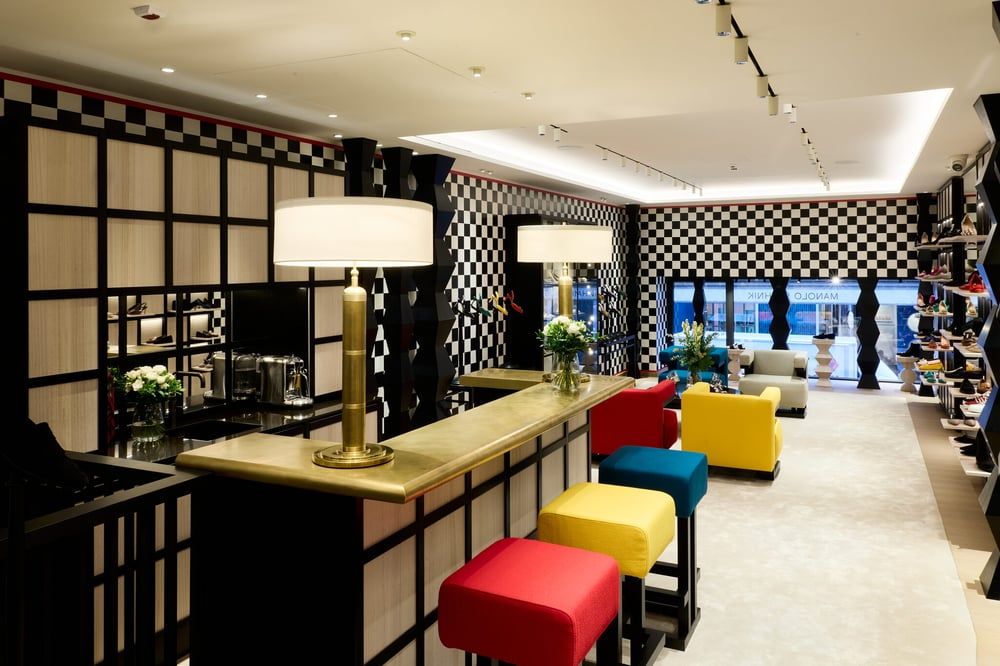
The design of the Milan boutique draws inspiration from the Blahnik family kitchen in Spain, featuring distinctive black-and-white tiles, augmented with references to the design principles of Josef Hoffmann. Kristina Blahnik, an architect by training, spearheaded this project. She joined the family business 16 years ago, a time when the brand operated with just 10 employees and a single store that also served as its headquarters. Recalling her early experiences, she shared, "I grew up in the store, where I shipped shoes and photographed lookbooks. As a child, after school, I brushed suede and vacuumed." This personal connection shapes her vision, as she aims for each Manolo Blahnik store to feel like a "living room." She emphasizes that their purpose extends beyond selling shoes; it is about "telling stories." The kitchen motif, she elaborates, evokes a familial atmosphere "where everything happens, we are happy and socialise," envisioning a space where visitors can "relax, look out, have a coffee, have a drink, read a newspaper."
Today, the Manolo Blahnik brand thrives with 250 employees and operates 20 stores globally, enjoying the fruits of a comprehensive development strategy initiated in 2018. This strategic pivot was a response to evolving market dynamics, including shifts in department store models, the rise of e-commerce, and changing consumer shopping habits. At that time, direct-to-consumer (DTC) sales constituted only 1% of the business, with the remainder being wholesale. Kristina Blahnik proudly notes that the company now maintains a healthy balance, expecting DTC to reach approximately 44% this year, with an ultimate goal of 50%.