Marras’s Salt Dune Runway Melds Literary Dreams with Sardinian Soul
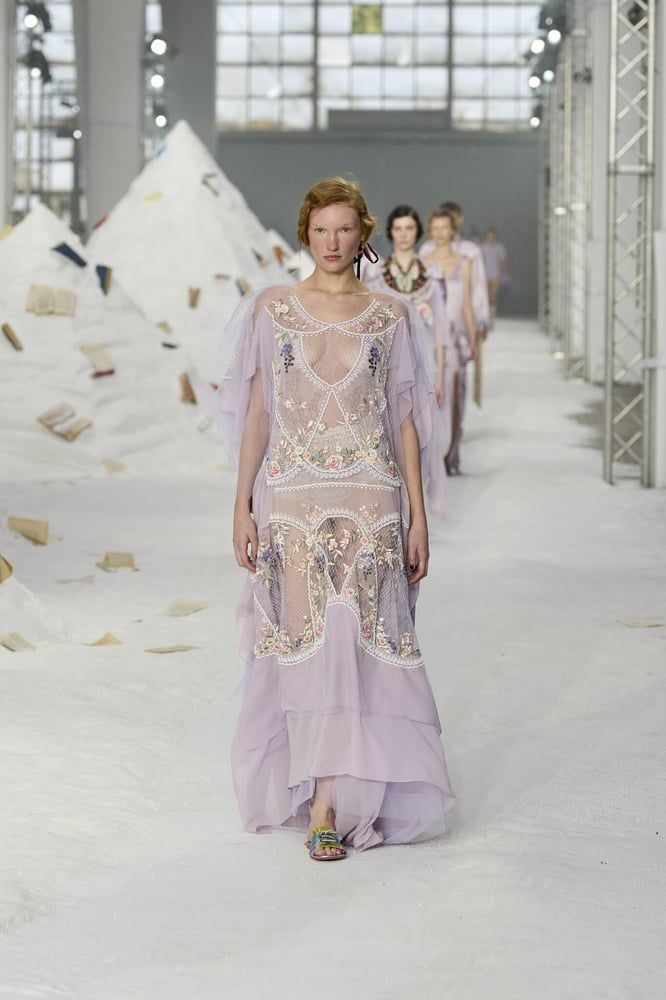
Antonio Marras unveiled his Spring/Summer 2026 collection with a captivating runway show, infused with his characteristic emotional depth and heartfelt homages to his Sardinian heritage. The dramatic presentation unfolded in the unexpected, ethereal landscape of Alghero's dazzling white salt flats. Against this surreal, expansive backdrop, models transcended a mere walk; they ran, played, and ascended the pristine salt dunes with the unbridled joy of children discovering snow for the very first time, creating a visually striking and emotionally resonant opening.
Littered across the stark beauty of the salt dunes were open books, serving as a powerful visual cue to the collection's profound literary underpinnings. Marras drew inspiration from a tangible historical event: the 1921 sojourn of renowned British writer, poet, and painter D.H. Lawrence, celebrated for his work "Lady Chatterley’s Lover," to Sardinia. Lawrence was accompanied by his lover, Frieda von Richthofen, a German baroness who famously left her husband and children to follow Lawrence across Europe. Marras revealed backstage that this collection weaves together fact and fiction, stating, “We brought a story to the runway that’s part real and part imagined.”
Marras expanded upon Lawrence and Frieda’s original journey, which culminated in the book "Sea and Sardinia," by imaginatively adding Alghero and its salt flats as a new stop. His creative vision didn't end there; he envisioned Frieda extending an invitation to prominent members of the Bloomsbury literary circle, including luminaries like Katherine Mansfield, Virginia Woolf, and Ottoline Morrell, to join them on this Sardinian adventure. This blend of authentic history and imaginative storytelling formed the rich narrative tapestry for the collection.
To embody the diverse characters within this reimagined literary saga, Marras conceived his collection as “a kind of kaleidoscope, made up of different moments, situations, and emotional states born at different times.” He elaborated on his design philosophy, expressing his affection for blending disparate volumes and styles, and for crafting contrasts that initially appear incongruous but ultimately coalesce to form a unique, enchanting magic. This approach allowed for a rich interplay of aesthetics and moods throughout the range.
The kaleidoscopic vision was vividly translated into a palette of delicate, whisper-soft tones, encompassing lilac, cadmium, pink, gold, ecru, violet, chocolate, plum, cream, powder, bronze, and faded black, punctuated by subtle hints of sand and copper. This extensive color story was further enriched by an abundant variety of patterns. The collection featured checks, jacquard stripes, damasks, lace, tartan, faux fur, polka dots, pinstripes, Prince of Wales, Cornely embroidery, geometric prints, rose motifs, and faded tapestry effects, creating layers of visual texture and interest. Complementing these were floral prints, ruffles, draping, pleats, moulage techniques, intricate inlays, and sophisticated patchwork, completing a visually immersive narrative.
Silhouettes in the collection presented a captivating interplay of contrasts, both clashing and harmonizing. Some designs were inherently flowing and seductive, while others adopted an androgynous and sharp precision. The range included oversized robes reminiscent of old Hollywood glamour, alongside gentlemanly coats that evoked the classic elegance of Hercule Poirot. Traditional men’s tailoring was juxtaposed with grand soirée gowns, chic cocktail dresses, relaxed pajama sets, dramatic capes, rugged leather, versatile denim, and intricate knitwear designed to mimic fine embroidery. Marras masterfully paired men’s and women’s garments crafted from identical fabrics, reinterpreting them through distinct forms. The cumulative effect was a compelling fusion of diverse traditions, dress codes, and artistic influences, culminating in a deeply personal and instantly recognizable aesthetic.
A crucial element of the collection was the inclusion of authentic traditional Sardinian garments, which Marras deemed “too beautiful to be reinterpreted, too important not to be shared.” These pieces served as a powerful testament to his roots. Among the show’s most poignant moments was the appearance of Giuseppe Ignazio Loi, a Sardinian shepherd who also starred in Riccardo Milani’s film "La vita va così." Loi's true story of resisting a major real estate group's attempts to buy his land has made him a powerful symbol of profound love for one's homeland and heritage, lending an additional layer of emotional depth to the presentation.
The show culminated in a memorable finale as all the models returned to the ethereal salt runway, accompanied by the nostalgic strains of Rita Pavone’s “Questo nostro amore.” Antonio Marras then emerged, walking arm-in-arm with Giuseppe Ignazio Loi, as guests erupted in applause. This fitting conclusion beautifully encapsulated a runway event that seamlessly wove together memory, imagination, personal identity, and an abiding love for one’s origins, leaving a lasting impression of poetic beauty and profound connection.