MBFWMadrid Embraces Global Ambition with New Formats and Strategic Vision
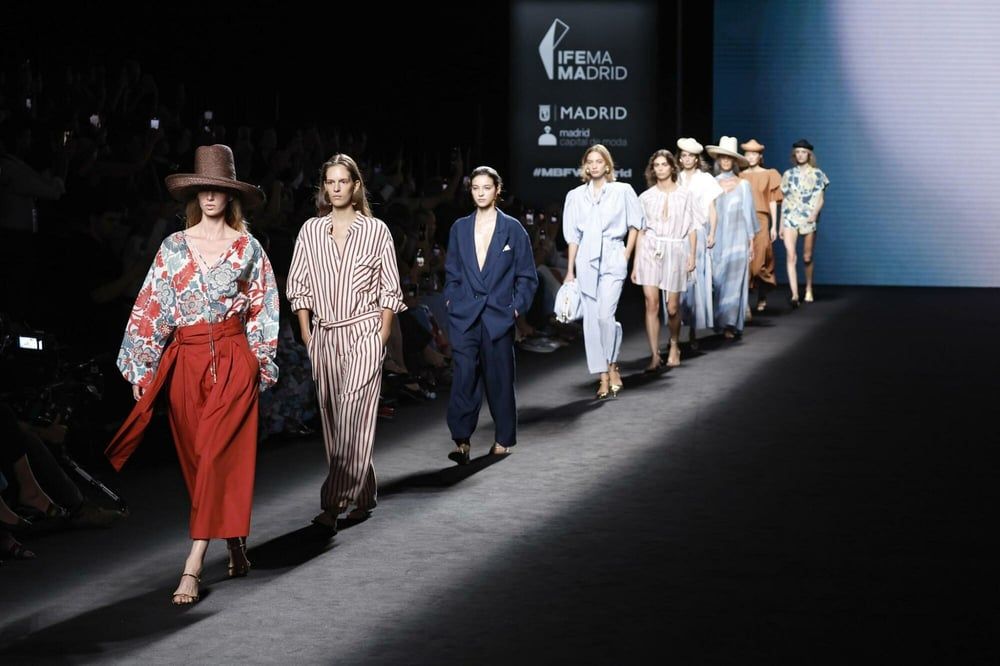
MBFWMadrid marked a significant strategic shift this season, commemorating its 40th anniversary by stepping beyond its traditional confines. The opening-day shows on September 17 took place at the iconic Palacio de Cibeles, centrally located in Madrid. This move, more than a symbolic gesture, underscored a broader evolution for the capital’s fashion week, which also encompassed Madrid es Moda (September 13–16) and, exceptionally, a Carolina Herrera show in Plaza Mayor. From September 18 to 21, the event returned to Pavilion 14 at Ifema, the customary trade fair complex, where its new direction, characterized by a clear international outlook and a commitment to diverse presentation formats, was further evidenced.
A key innovation this season was the introduction of presentations in the Berta Benz Room, designed to allow new brands to join the official calendar and showcase their collections in alternative ways. Paris64, an Aragonese brand renowned for its handbags, inaugurated this format. They offered an immersive experience, demonstrating the intricate craftsmanship of their designs live with two artisans. María Alfonso, co-founder and creative director of Paris64, highlighted the format’s value: "Thanks to this format, which differs from the conventional runway, we have been able to showcase what is key to our brand and our product: fine craftsmanship... It’s something that is very difficult to convey within the traditional runway format." This brand primarily conducts its business internationally, with aspirations for retail expansion into New York.
The Berta Benz Room line-up was further enriched by performances from Flabelus, María Lafuente, and Paloma Suárez. Asier Labarga, making his debut as director of MBFWMadrid alongside creative director Valentina Suárez-Zuloaga, emphasized the importance of these varied formats. He explained to FashionNetwork.com that they enable the inclusion of brands and designers who either don't require or don't desire a traditional runway show. He stressed that MBFWMadrid serves as a vital showcase for Spanish fashion, needing to embrace a wider range of products, including handbags and footwear, particularly with an international market in mind.
Internationalisation emerged as a crucial topic in discussions surrounding the runway and the Spanish fashion industry. Labarga outlined Ifema’s commitment to supporting this expansion beyond national borders. He asserted that "the runway content is fundamental—both in excellence and clarity. The press and international buyers must know precisely what they are going to see and whether it interests them." He detailed efforts to actively facilitate communication between buyers, press, and brands, aiming to maximize their experience at the event. While buyers weren't invited to this specific edition, it remains a goal for future phases. The current focus is on mapping and aligning brands’ goals with professional opportunities, offering a personalized, tailor-made service to cater to the diverse strategic stages and sizes within the Spanish fashion landscape, ultimately driving economic objectives.
Labarga identified several key geographical regions with a strong appetite for Spanish fashion. Europe remains a natural and traditional market, while the United States is considered crucial due to its vast size and consumer volume. Emerging territories include the Middle East and Eastern Europe, with Latin America showing significant growth. He noted that "The Latin American market is growing strongly due to the cultural exchange of recent years with Madrid, especially residents, travellers, students, investors... All of this has greatly amplified interest in Spanish fashion—and it shows."
Beyond the city-center shows and new formats, another cornerstone of MBFWMadrid's refreshed strategy was the invitation extended to Colombian designer Silvia Tcherassi. She not only presented her collection on the opening day but also received the International Talent Award on September 16. In the national talent category, Palomo Spain was similarly recognized, presenting his inaugural womenswear collection at Madrid’s Palace Hotel on the 17th. Labarga underscored that "Both the fashion shows in the centre of Madrid and the invitation to international designers, as well as the awards, are pillars of our new strategy—something we want to maintain beyond this 40th anniversary edition." The organization plans to introduce four awards in total, each corresponding to a strategic pillar: talent, industry, internationalisation, and craftsmanship, with the remaining two slated for the February edition.
This edition also celebrated significant returns and debuts. Adolfo Domínguez marked his return to the Spanish runway, showcasing his "Zenit" collection for spring 2026. Simultaneously, the Catalan label The Label Edition made its runway debut at Ifema. Véronique Vaillant von Siebenthal, founder and creative director of The Label Edition, expressed the brand's enthusiasm: "It is our first time showing in Madrid, a very important city for our business; moreover, it is a European capital that is 'on fire'. As this was a special 40th-anniversary edition, we wanted to be there." Based in Barcelona and well-established in the French market (stocked at Le Bon Marché), The Label Edition aims to expand its current thirty multi-brand stockists to one hundred in the medium term.
Addressing the question of whether established designers like Adolfo Domínguez or newer labels like The Label Edition will continue to participate, Labarga emphasized "excellence." He articulated a vision for a calendar that is "varied, engaging and, above all, excellent. Only the best we have should show and take part here; we should be so useful that selection even becomes difficult." He stressed that the goal is not to force permanence, but to offer what is most beneficial for the brands, hence the addition of more formats. Brands are empowered to choose what best fits their strategic moment, even if it means opting for other platforms, reflecting a commitment to defining MBFWMadrid's product offerings and expanding its portfolio effectively.
With the opening day’s relocation to the city center and intentions to continue this practice, questions arose about Ifema's ongoing role. Labarga clarified, "Some people asked me at Cibeles why we didn’t stage all the shows there. First, because it isn’t viable. Second, because then Ifema wouldn’t be adding anything." He explained that Ifema provides crucial venue and resources, and the city-center shows serve a specific purpose: visibility. "The challenge is to invest wisely—where you put it to achieve your goal; it’s not about staging beautiful shows for the sake of it... Creating beautiful things is easy; creating commercial formats is hard. And I’ve been put here not only to deliver a good show, but to drive the fair," he stated, highlighting the focus on commercial viability over mere aesthetics.
Beyond geographical location, the new leadership is also committed to revamping the Ego competition, traditionally dedicated to emerging talent and supported by Mercedes-Benz. Labarga noted, "Ego turns 20 in February and has produced some of the biggest names in the Spanish fashion industry." He explained that while its original alignment with global trends for transgressive talent from schools was pioneering, the landscape has changed. The competition is being updated to embrace "new talent," including "entrepreneurs," a term less common two decades ago. A fashion committee has been established for this edition, with further refinements planned for its 20th anniversary in February.