Milan Fashion Week Ignites with Devilish Debuts, Couture Dreams, and Refined Race-Ready Style
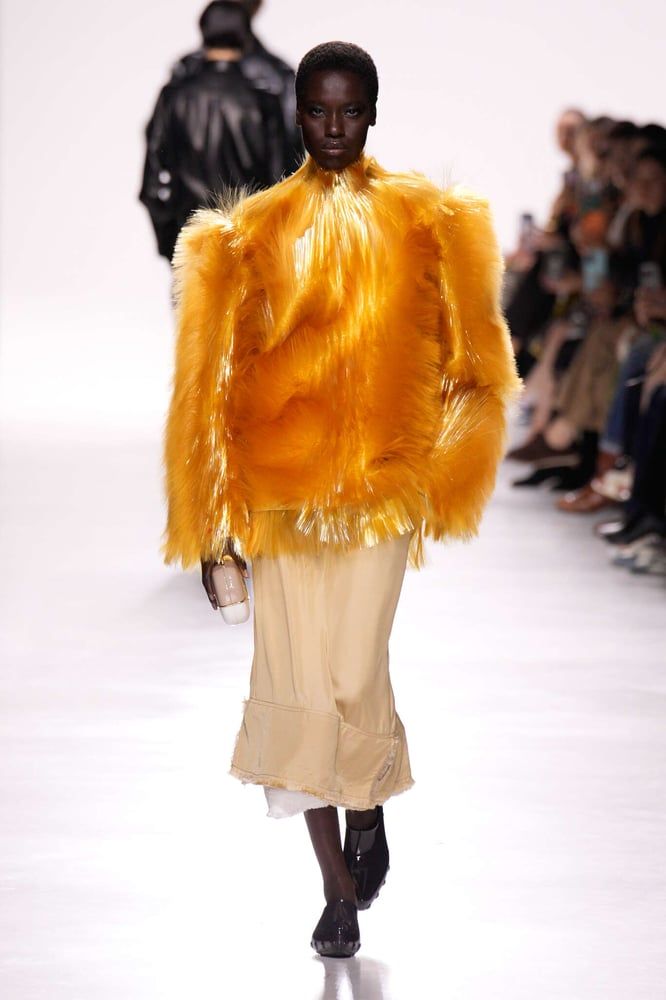
Saturday in Milan delivered a vibrant array of fashion statements, marking a memorable day that saw the "Devil" appear at Dolce & Gabbana, a powerful and highly anticipated debut from Louise Trotter at Bottega Veneta, and a refined, uncluttered aesthetic at Ferrari.
Louise Trotter’s inaugural collection for Bottega Veneta was a standout, bringing the fundamental concept of a "bottega" — or workshop — back to the forefront. Her vision resulted in a collection that often evoked the precision and artistry of couture. This show was one of the most keenly anticipated of the season, not least because Bottega Veneta is one of three major Kering houses introducing a new designer this month, alongside Gucci and Balenciaga. Trotter’s powerful debut showcased her strong branding, integrating the house’s signature "intreccio" woven leather into nearly every look, even extending it to the show invitation itself—a square of treated leather ingeniously forming a string bag when manipulated. The multi-sensory experience was further enhanced by an "aural intreccio" on the soundtrack, featuring an audio artwork commissioned from Oscar-winning director Steve McQueen, blending Nina Simone's and David Bowie's recordings of "Wild Is the Wind." Trotter reflected on the collaborative effort, stating, "This was a collective work by our team. I took my time, and I am still taking my time, as it’s such a big house. There is a willingness to push and continue to create, which is tremendous."
For her presentation, Trotter deliberately chose the same south Milan warehouse location as her predecessor, Matthieu Blazy. The show commenced with super lightweight leather looks, featuring trenches, cloaks, and blazers for men, alongside cunningly draped off-the-shoulder dresses and panelled gowns for women. Every piece was meticulously detailed with intreccio — appearing on collars, sleeves, lapels, trim, and woven belts. A highly skilled tailor, Trotter injected new life into flamboyant double-breasted coats, cut with dramatically wide shoulders and deep waistlines, paired with high-collar surgeons' smocks, creating cinematic, Edwardian-inspired silhouettes that emerged as the season’s best new tailoring. The collection’s practicality was evident in the malleable bags carried by most of the cast, including soft squash messenger versions, bent-framed totes, and folded oversized clutches, all embodying a blend of softness, functionality, and chic design.
The collection then transitioned into an exciting display of hyper-experimental dresses that moved with the fluidity of cornfields or rushes, crafted from thousands of hand-sewn strips of recycled glassware, a direct nod to Venetian glass-making. Trotter humorously clarified, "I know it looked like Tencel, but it wasn’t." She also seized the opportunity to refresh the Bottega Veneta logo with a new typeface, updating a truly unique luxury brand set to celebrate its 60th anniversary next year. Born in Sunderland, UK, Trotter brought an impressive CV to BV, with successful stints as creative director at Joseph, Lacoste, and Carven after early experiences with Calvin Klein and Tommy Hilfiger in New York. Her Milan debut, undoubtedly her biggest gig to date, was an unequivocal triumph, a hit show and collection where Louise Trotter masterfully seized the moment.
Meanwhile, Dolce & Gabbana’s Saturday collection perfectly encapsulated the "naughty mood" currently permeating Milan, earning it the apt moniker "Boudoir & Gabbana." The event was watched over by none other than Meryl Streep, reprising her role as the icy editor Miranda Priestly, in Milan to shoot "The Devil Wears Prada 2." Dressed in white-rimmed shades and a beige patent leather coat, Priestly made a dramatic entrance 37 minutes past schedule, accompanied by her fictional art director Nigel Kipling (played by Stanley Tucci) in a snappy pale gray silk suit. The iconic duo took their seats directly opposite Anna Wintour, who greeted her fellow editor with a rare smile and a flutter of her hand. The soundtrack, a blend of classic hits interpreted by the wonderfully smoky voice of Patty Pravo, notably "Notti Bianche" (Italian for a night of lovemaking), set the sensual tone.
The collection itself saw the cast emerge as if from a boudoir, in various stages of undress. The opening looks featured a score of men’s striped pajamas covered in strass, worn openly to reveal sequined bras, tulle tops, and lace knickers. Domenico Dolce and Stefano Gabbana seamlessly integrated their signature sharp chalkstripe suits, pinstripe mess jackets, and boleros. For eveningwear, a parade of sexy Sicilian "merry widows" appeared in abundant black lingerie or semi-undone corsets, marching confidently on stilettos. Each ensemble projected an air of a woman on her way to a rendezvous with a "lusty Lothario," perfectly aligning with the show’s invitation: a ruffled black silk eye mask.
Ferrari presented a monochromatic and minimalist collection, where designer Rocco Iannone concentrated on precision of cut, line, and silhouette, delivering one of his most successful collections for the house. The former logos and graphics were gone, replaced by excellent draping and cutting in a collection whose intention was clearly articulated by its title: "Ferrari Officina." Rocco envisioned dressing his Ferrari clients for work in sophisticated, elongated coat-dresses; blazers paired with cargo pants; wrap tea dresses; superb jersey columns with knotted midriffs; and canvas donkey jackets. The initial dozen looks were all in white—clean, lean, and majestic. The collection then ventured into sponged leathers and acid-dyed denims in hues like faded blue and burnt caramel, applied to everything from striking jumpsuits to Aran sweaters. These total looks were accessorized with a new soft Ferrari Dino bag or elegant silver padlock jewelry.
The show, held under bright lights, was punchy, with models dashing about to dramatic sounds like "Final Symphony" by Classix Nouveaux. Rocco's program notes stated, "Whether cars or clothing, the thinking and process are the same: one edits, chooses, reduces, decides." To underscore his point, three magnificent Ferraris were parked outside his south Milan show venue. It was an active weekend for the brand, as its patron John Elkann spent Friday in Rome, where he had an audience with Pope Leo XIV, gifting the pontiff—reportedly an auto enthusiast—a miniature Ferrari and the steering wheel of a Formula One racer. In a notable sign of the evolving landscape of Italian fashion following the passing of Giorgio Armani, senior Armani executives were observed in the front row at the show, reflecting the late designer’s stake in Stellantis, the holding company that controls the automobile group owning Ferrari, Fiat, Chrysler, and Jeep.