ModaLisboa's 65th edition ignites Lisbon with daring designs sustainability and emerging stars
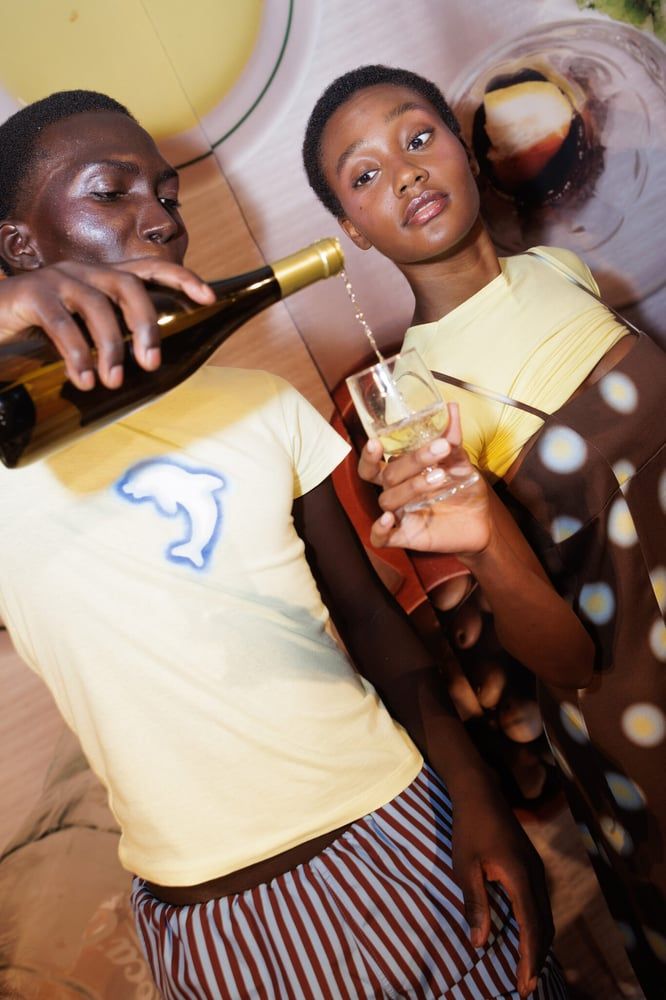
The 65th edition of Lisbon Fashion Week, ModaLisboa, captivated audiences from October 1 to 5, running concurrently with Paris Fashion Week and showcasing a vibrant spectrum of Portuguese and international design talent. The event unveiled collections from 53 designers and labels across numerous catwalk shows and presentations, delving into themes of designer fashion, sustainability, technology, and experimentation. A notable highlight was the debut of Portuguese couturier Miguel Castro Freitas at Mugler, alongside many other emerging talents. The fashion week officially kicked off on the evening of September 30 with a captivating show by 13 talents from the IED in Milan, held at the Italian Embassy in Lisbon, beautifully bridging cultures, knowledge, and creativity.
A significant new initiative this season was the inauguration of the Fashion House at Palacete Gomes Freire on Thursday, October 2, as ModaLisboa Base’s latest project. This new hub featured performative exhibitions by Roselyn Silva, Ana Margarida Feijão (who also debuted at Lisbon’s CUPRA City Garage), and Gandaia, a brand formerly known as Mustique that unveiled its rebranding at ModaLisboa Base. Amidst four days filled with performances, workshops, and sound healing, a standout moment on Saturday, October 4, was João Magalhães' thought-provoking performative installation. He shifted his approach to explore his own experimentation in situ, creating a "creative laboratory behind bars" as if depicting a prison environment.
Beyond the runways, ModaLisboa also embraced social consciousness, notably with the exhibition of a dress made from Palestinian scarves by Luís Carvalho for Marisa Liz. This piece aimed to raise awareness and encourage donations to Médecins Sans Frontières, an international medical-humanitarian organization dedicated to assisting all individuals regardless of their background. The event also championed emerging talent, announcing the five finalists of the Sangue Novo 'supported by Seaside' young designer competition: Adja Baio, Ariana Orrico, Mafalda Simões, Mariana Garcia, and Usual Suspect. On the catwalks, Bárbara Anastásio of Workstation Design 'supported by Jean Louis David' presented designs that toyed with anarchy, while Alves/Gonçalves surprised with innovative textures and palettes, signaling a new era for their label. Another exciting debut at ModaLisboa Base was 2B, the new brand from young singer Bárbara Bandeira.
The established designers presented diverse and compelling collections. Béhen, on Saturday, October 4, charmed with bridal (or Sunday) looks crafted from repurposed noble materials like embroidered tablecloths and napperons, drawing inspiration from the Belle Époque for her unique "Bem Me Quer, Mal Me Quer" collection. Gonçalo Peixoto continued to explore his sexier side, demonstrating greater mastery of haute couture fabrics and cuts for his spring–summer 2026 collection, where lace and sheer prints provocatively hinted at skin and femininity. The day concluded with Kolovrat, who introduced a range of new bag typologies in "Stone Age," a collection leaning into earthy tones and black, sculpting strikingly contemporary forms in cotton and organza.
Carlos Gil followed into the night with "Urban Flow," a collection unfolding in two acts, marked by shades that were subtly vibrant, with reminiscences spanning from the 1960s to the 1990s, evoking the speed, movement, and graffiti of city streets to symbolize creative freedom. The grand finale of the Lisbon catwalk arrived with Constança Entrudo at the inauguration of Castle HI HI HI, where she presented a capsule collection in collaboration with Paraíso and Humana, previously pre-launched at Lux Frágil. Off-site from the main Pátio da Galé venue, Nuno Baltazar took over MUDE’s sunlit terrace, showcasing sequinned dresses, brocades, cinched silhouettes, sharp suiting, and bolder shades than his usual palette, including striking pink, blue, and orange.
Other designers also made a strong impact. Çal Pfungst offered more wearable looks than usual via Workstation Design 'supported by Jean Louis David', a notably successful endeavor. DuarteHajime delved into Greek mythology and the martial arts, featuring heroines and heroes like Athena, Hermes, Medusa, and Perseus, blended with their signature sportswear camouflage. Valentim Quaresma played ingeniously with zips of various sizes and applications in ultra-creative looks that intertwined, opening and closing pathways to showcase his mastery of cut-and-sew, consistently proving himself ahead of the curve. Dino Alves, while staying true to his brand DNA in some evening and party looks, innovated with his "MAIS ALÉM" concept, defined as “an exercise in freedom as an essence, of thinking without borders, of dressing without conventions and of expressing oneself with authenticity.” He explained that this collection was designed to evolve previous ideas, not necessarily through elaboration, but through purification and simplification. This season also marked the Dino Alves X Rêve de Flo partnership in women’s footwear, a Portuguese label that has previously shod the cast of Patrick McDowell at London Fashion Week.
Luís Carvalho had the honor of closing ModaLisboa Base with brilliant, somewhat unusual materials for his label, favoring white, light blue, and striking contrasting shades such as lemon yellow, turquoise, or green, which, when combined in stripes, created a psychedelic effect, signaling a direction towards red carpet glamour. The Lisbon catwalk concluded with the unifying concept of "UNION," described as a “manifesto of unity in a fragmented world,” with twisted pleats and ribbing unfolding like sculptural elements, suggesting intertwined bodies and visible gestures of intimacy. This season highlighted Lisbon's position at the forefront of Portuguese designer fashion, while also acknowledging the vibrant synergies radiating from the north with Portugal Fashion, which showcased its talents at major Fashion Weeks in London, Milan, and Paris. The enduring spirit of Portuguese creativity, embodying heroes from Greek mythology as evoked by DuarteHajime and the centuries sung by Camões, remains an unforgettable presence.