M&S Navigates Cyberattack Fallout with Sales Growth Despite Profit Dip
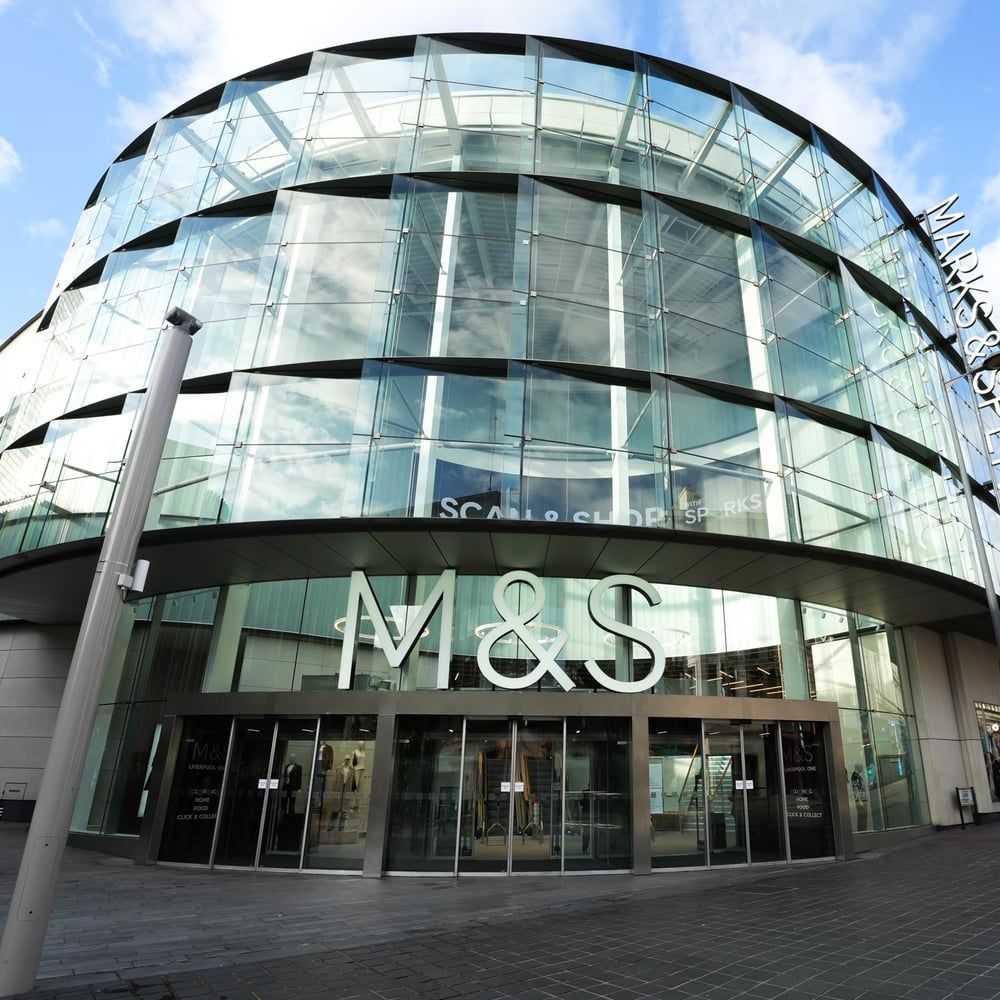
Industry observers paid exceptionally close attention to M&S's latest financial results, published on Wednesday, particularly in the aftermath of the cyberattack earlier this year. The retail giant acknowledged the period as "an extraordinary moment in time," as profits saw a significant downturn. However, the company emphasized that its "underlying strength" and "robust financial foundations" provided the necessary resilience to navigate the challenges, confirming it is now "getting back on track."
Delving into the figures for the 26 weeks ending September, total sales impressively climbed by 22.1% to just over £7.965 billion. Despite this top-line growth, operating profit before adjusting items saw a sharp decline of 45.7% to £251.4 million. Adjusted profit before tax for the group fell by 55.4% to £184.1 million, impacted by adjusting items totalling £167.8 million. Free cash flow from operations also turned negative, recording £193 million, a stark contrast to the positive £21.1 million reported in the prior year. On a statutory basis, net profit was almost entirely eroded, plummeting 97.8% to £6.2 million from £282.1 million previously. A mitigating factor was the £100 million insurance income received, which helped recover some of the losses incurred from the cyberattack.
M&S underscored its efforts in "regaining momentum" and accelerating its transformation strategy despite the significant distraction of recovering from the cyberattack. The company focused on investing in key priority areas, including the opening of 15 new or refurbished stores in the first half of the year, with plans for over 20 more in the second half. Crucially, the cyberattack highlighted the need to strengthen its technological infrastructure, a strategic imperative the company has actively pursued.
The Food division continued its impressive trajectory, outperforming the wider market with three consecutive years of monthly volume growth. Food sales specifically increased by 7.8% during the period, showcasing the division's consistent strength and customer appeal.
In contrast, the Fashion, Home & Beauty (FHB) division experienced a slower recovery curve than Food. This was largely attributable to the temporary cessation of online operations from late April to early June and a subsequent gradual recovery throughout the summer months. Home delivery services were reinstated first, followed by click & collect options in early August. Physical store sales in this division were also affected by reduced product availability and fewer customer visits. While in-store sales saw a comparatively modest decline of 3.4%, online sales for FHB plummeted by 42.9%, though recent improvements have been noted.
The combined effect of lower sales and increased stock management costs led to an operating profit of just £46.1 million for FHB, with the operating margin contracting significantly to 2.7% from 12%. With warehouse systems now fully restored, both the website and stores are seeing improved availability, contributing to a recovery in trading. Despite the challenges, M&S asserted its stronger style credentials meant its fashion offerings were "resonating," and the company continued to lead the market in quality and value. Womenswear sales were particularly robust in knitwear, trousers, and accessories, with lingerie outperforming due to an expanded range of £10 bras attracting younger customers. Menswear found success in casual categories and saw renewed momentum in smart outfits, including the Autograph performance range. Kidswear lagged the market, but Home and Beauty categories demonstrated growth in-store sales for bedding and own-label fragrances.
Internationally, sales were down by 11.6%. However, the International division "made progress" through strategic initiatives such as restructuring franchise agreements, launching new wholesale partnerships, and actively developing the M&S brand across new channels. Given the prolonged period without online order capabilities, the Fashion and International figures were deemed to be better than initially anticipated under the circumstances.
Looking ahead, with operations largely normalized in the second half, M&S anticipates profit to be "at least in line with last year," providing a solid foundation for the new financial year and future growth. While acknowledging significant industry headwinds like higher costs, the company highlighted substantial areas within its control and reiterated that accelerating its cost reduction programme would help mitigate these challenges. Confident in its full recovery and getting "back on track" by the financial year-end, M&S declared that "it's all to play for." The company continues to enhance both its store network and online capabilities, with a goal of expanding to 420 Food stores—which will also serve as vital click & collect locations for Fashion—and approximately 180 full-line stores. Online sales are projected to grow towards 50% of Fashion, Home & Beauty sales, with an ambition to increase market share in this category by at least 1% between 2022/23 and 2027/28 and achieve an ongoing operating margin exceeding 10%. Over the long term, M&S believes it has the potential to double its online sales.