Nike's New Chief Urges Designers to "Create Epic S--t" for Innovation Revival
For decades, Nike Inc. inspired customers with the mantra "Just Do It." Now, an internal rallying cry, "Create epic s--t," is driving the company's designers, engineers, and scientists. This bold directive originates from Phil McCartney, Nike's newly appointed chief innovation, design, and product officer. After nearly three decades with the sportswear giant, McCartney, appointed in May, faces the critical task of revitalizing Nike's innovation engine, which has been identified as a significant factor in the company's recent struggles.
"By nature, I’m pretty impatient," McCartney stated in a recent interview at Nike’s Beaverton, Oregon headquarters. His approach prioritizes speed and boundary-pushing, aiming to release products up to 12 months ahead of schedule. This renewed focus is intended to reignite consumer excitement, as the brand has acknowledged losing ground by over-relying on retro lifestyle sneakers and neglecting its core athletic gear. The company experienced a $5 billion revenue decline last year, replaced its chief executive, and has seen six consecutive quarters of currency-neutral revenue drops, with shares down 8.7% this year.
McCartney is actively working to invigorate departments responsible for iconic breakthroughs such as the Air cushioning system, Flyknit digital engineering, and ZoomX lightweight foam. He describes this intensified effort as "appropriate acceleration rather than rushing," emphasizing a strategic push. His efforts are evident at the Nike Sports Research Lab within the new LeBron James Innovation Center, one of the many state-of-the-art testing facilities on Nike's expansive campus. Here, features like force plate-embedded tracks, motion-capture cameras on courts, and climate chambers for studying sweat science underscore Nike's commitment to advanced athletic research.
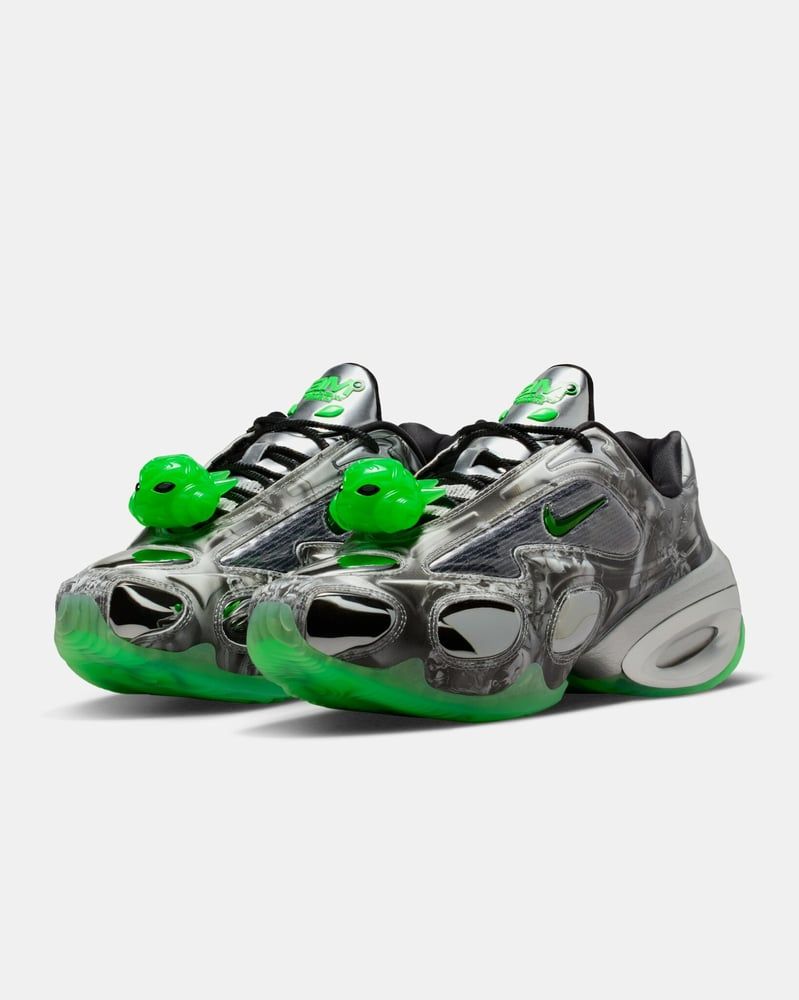
During a recent visit, McCartney showcased four cutting-edge creations from his team of over 4,000, all in various stages of development. While prices and release dates are yet to be announced, these include Nike Mind, a shoe designed to calm athletes by stimulating specific brain regions; the Air Milano jacket, set for the next Winter Olympics, featuring an all-new construction allowing wearers to inflate and deflate the garment for temperature regulation; and AeroFit fabric, a lightweight mesh structure nearing launch that also aids in body heat regulation. The most ambitious project, Project Amplify, is a powered footwear system that prototypes resembling "retrofitted robo-legs" aim to spring users forward, enhancing walking or running distances. While still far from commercial viability, with a projected market entry no earlier than 2028, its iterations are continuously becoming sleeker.
The importance of this innovation drive cannot be overstated. Poonam Goyal, an analyst at Bloomberg Intelligence, notes, "Innovation and product development is everything—they need products to resonate to get shoppers interested. Should they fail, the turnaround fails." Nike’s innovation staff are even encouraged to dedicate 20% of their efforts to "moonshot concepts"—a policy typically seen in Silicon Valley startups rather than traditional shoemakers. McCartney acknowledges, "I’d expect a much lower hit rate" from such experimental projects, embracing the inherent risks.
McCartney’s rise is integral to a broader corporate restructuring initiated by CEO Elliott Hill, who returned from retirement last year. This overhaul, completed in August, involved significant C-suite changes, with Hill replacing most of his direct reports. Additionally, 8,000 employees were shifted into new roles focused on specific sports like basketball and running, alongside a layoff of less than 1% of the corporate workforce. Hill's ambition is clear: "I want us to go faster. Make stuff people want, need, and when we’re at our best, make stuff that people don’t even know is imaginable."
An elite runner from Newcastle, England, McCartney joined Nike after studying sports science in college. He has collaborated with Hill in various capacities over the years and most recently served as general manager of the company's footwear division, often working alongside executive chairman and former CEO Mark Parker. Currently, he is overseeing improvements across Nike's global football footwear, apparel, and equipment, including products like Tiempo cleats, in preparation for the 2026 World Cup. He is also extending his influence to Converse, Nike’s smallest label, aiming for deeper R&D involvement to help reset the Chuck Taylor sneaker line following a 28% revenue decline last quarter. Furthermore, McCartney is focused on revitalizing Nike’s running category, which faces increasing competition from brands like On and Hoka.
A testament to his team's efforts, runner Faith Kipyegon, in a recent experiment, wore custom Nike track spikes developed under McCartney’s purview while attempting a four-minute mile in Paris. Although she fell short of the four-minute mark, she broke her own world record with an unofficial time of 4:06:42. This performance encapsulates McCartney's overarching innovation philosophy for Nike: "Make athletes better. If it’s not, we shouldn’t do it."